- Home
- Trend
- Weight Loss Strategies
- Acne Tips
- Hair Health Information
- Blemish Removal Tips
- Acne Scar Removal Tips
- Muscle Building Techniques
- Intimate Care Tips
- Postpartum Intimate Care
- Eye Bags Wiki
- Tips for Face Slimming
- Secret of Permanent Hair Removal
- Breast Enlargement Tips
- Cure to Snoring
- Marionette Lines
- Skin-Tightening Secrets

Have you ever heard of pelvic floor muscles, especially after giving birth? Many new moms notice they start having issues like frequent urges to pee or accidental leaks postpartum—and it can be seriously embarrassing! But here’s the thing: it’s all tied to the strength and control of your pelvic floor muscles. When those muscles weaken or relax too much, it not only affects intimacy, but also leads to bladder, vaginal, and bowel control issues—including urinary incontinence.

1. What Are Pelvic Floor Muscles?

Many moms notice their abdominal muscles feel looser after giving birth—but it’s not just your abs. Your glutes, back, and even deeper internal muscles like the pelvic floor can become weak, leading to visible changes in body shape and invisible problems like urinary incontinence and vaginal laxity.
The pelvic floor muscles (also known as pelvic base muscles) are a group of muscles that stretch like a sling across the bottom of the pelvis, connecting the pubic bone to the tailbone. Think of them like a hammock that holds up key organs like the bladder, uterus, vagina, urethra, and rectum, keeping them in place so they can function properly.
When this “hammock” loses its elasticity, its ability to support those organs weakens. This can lead to issues like organ prolapse, incontinence, and decreased sexual function.
Key Functions of the Pelvic Floor Muscles
1. Supporting Pelvic Organs
Their main job is to keep your pelvic organs in the right position, so they don’t shift or drop during everyday activities. These muscles also work together with your core—like your transverse abdominis and multifidus—to stabilize your pelvis and spine and prevent injuries.
2. Controlling Urination and Bowel Movements
Because the bladder and rectum rest on the pelvic floor, the urethra and anus pass through these muscles. Their ability to contract and relax gives you control over when to go—so if they weaken, leaks can happen.
3. Enhancing Sexual Function
Strong pelvic floor muscles help the vaginal muscles contract more firmly during sex, enhancing sensation and making it easier to achieve orgasm. In short, they play a big role in your sexual well-being.
2. Is Pelvic Floor Weakness Only a Problem for New Moms?

Some women believe that only those who deliver vaginally are at risk for pelvic floor issues—but that’s not true. Even moms who have C-sections can experience muscle weakness. Let’s look at who’s most at risk and why:
High-Risk Group 1: Postpartum Women
During pregnancy, the body produces high levels of the hormone relaxin, which loosens joints and muscles—including the pelvic floor. As the baby grows and gains weight, the uterus expands and puts increasing pressure on those muscles, stretching them out and weakening their elasticity. Moms of twins, larger babies, or those who’ve given birth multiple times are especially vulnerable.
High-Risk Group 2: Aging Women
Pelvic floor weakness is more common among middle-aged and older women. As estrogen levels drop during menopause, these muscles—like the rest of the body—begin to lose strength, increasing the risk of incontinence and organ prolapse.
High-Risk Group 3: People with Obesity
Obesity is linked to a wide range of health issues—and pelvic floor dysfunction is one of them. Excess weight adds pressure to the abdomen and pelvic muscles, reducing their strength and elasticity. A heavier belly also shifts your center of gravity forward, pushing on the bladder and urethra and making leaks more likely.
High-Risk Group 4: People with Chronic Constipation or Cough
Straining to go or coughing constantly raises intra-abdominal pressure, putting long-term strain on the pelvic floor muscles and causing them to weaken over time.
High-Risk Group 5: Physically Demanding Jobs
If you do a lot of heavy lifting—like warehouse workers or athletes—you may be overexerting your pelvic floor. Regular straining raises abdominal pressure and pulls on these muscles, eventually leading to laxity and dysfunction.
免費體驗
BTL Emsella Treatment
1 Minute Self-Registration
Date should not be before minimal date
3. What Happens When the Pelvic Floor Weakens?
As mentioned earlier, the pelvic floor helps with support, control, and sexual function. When these muscles lose strength, it can affect your life in a big way:
1. Organ Prolapse
When the muscles can’t support pelvic organs properly, they may start to sag or drop out of position. This can lead to bladder, rectal, or uterine prolapse, causing discomfort, pressure, or even the sensation that something’s falling out of the vagina. In severe cases—like advanced uterine prolapse—the cervix may protrude, increasing the risk of bacterial infections and gynecological problems.
2. Stress Urinary Incontinence (SUI)
When the muscles controlling the urethra weaken, even minor pressure from laughing, coughing, or lifting can cause urine to leak. This often comes with frequent urges to pee and can disrupt daily life—not to mention causing odor, discomfort, and social embarrassment that leads some women to isolate themselves.
3. Impact on Intimacy
Weakened pelvic floor muscles reduce vaginal tightness and can cause a lack of sexual sensation, even leading to decreased libido. In some cases, organ prolapse can cause pain during sex, putting strain on intimate relationships and creating emotional distance between partners.
4. Lower Back and Pelvic Pain
The pelvic floor is connected to the ligaments in the lower back and sacrum. When it weakens, pelvic alignment can shift, increasing strain on the back and causing chronic aches and fatigue.
4. Pelvic Floor Muscle Training: Kegel Exercises
If you've been following pelvic health topics, you've probably heard of Kegel exercises. Originally developed by Dr. Arnold Kegel in 1948, these exercises are designed to strengthen the pelvic floor muscles by actively contracting and relaxing the pubococcygeus (PC) muscles. Strengthening these muscles can help prevent and improve symptoms of pelvic floor laxity. Let’s go over how to perform Kegel exercises correctly.
How to Perform Kegel Exercises Properly
Before starting, it’s important to locate your pelvic floor muscles to ensure you’re targeting the right area. An easy way to find them is by trying to stop your urine mid-flow—those are the muscles you’ll be working.
Once you've emptied your bladder, lie on your back on a yoga mat with your knees bent and feet flat on the floor. Contract your pelvic floor muscles—as if you're holding in your urine—and hold the contraction for 4 to 5 seconds. Then relax for another 4 to 5 seconds. Repeat this cycle 10 times, completing 3 sets a day. These repeated contractions and relaxations help build muscle strength over time.
During the exercise, try to keep the rest of your body relaxed and focus solely on engaging your pelvic floor. Avoid tensing your abdominal, gluteal, or thigh muscles.
Other Pelvic Floor Strengthening Exercises
1. Glute Bridges
Glute bridges are a favorite among fitness influencers for pelvic floor training—some even call them an advanced version of Kegels.
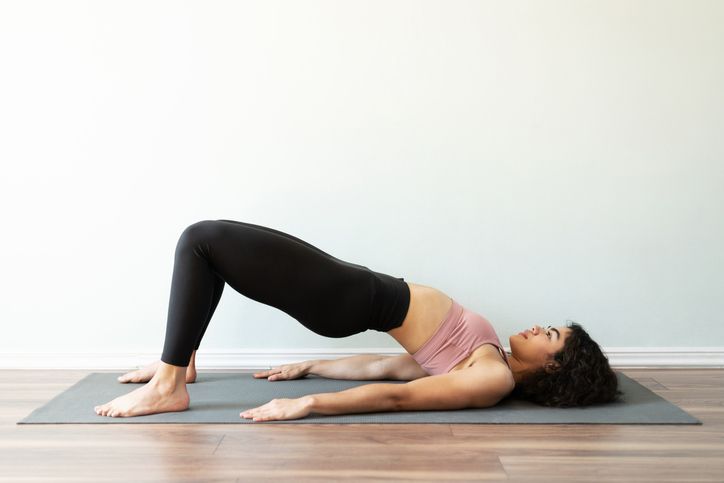
To do this, lie flat on a yoga mat with knees bent and feet flat on the floor. Keep your arms at your sides. Squeeze your glutes and lift your hips off the ground until your body forms a straight line from shoulders to knees. Hold for 1 to 2 seconds, then slowly lower back down. This move strengthens not only the pelvic floor but also the glutes and hamstrings.
2. Cat Stretch
The cat stretch (also known as cat-cow pose in yoga) helps strengthen pelvic muscles while relieving lower back tension.
Start on all fours with hands aligned under shoulders and knees under hips. Inhale as you draw your belly in, round your back, and lift your chest slightly while tightening your pelvic floor muscles—imagine your spine stretching one vertebra at a time. Hold for 2 to 3 seconds, then exhale and return to the starting position, relaxing the pelvic floor. Repeat as needed.
3. Supine Leg Openers
This exercise targets the pelvic floor, inner thighs, and core.
Lie on your back with your knees bent at 90 degrees, feet lifted off the ground. Slowly open your knees outward, keeping your legs elevated. Pause briefly, then return to the starting position. This controlled motion strengthens the pelvic floor while engaging the abdominal and inner thigh muscles.
5. Can Kegel Exercises Completely Reverse Pelvic Floor Laxity?
For women with mild pelvic floor weakness, consistent Kegel exercises can be quite effective in improving muscle strength and alleviating symptoms. However, for those with moderate to severe laxity, exercise alone may not be enough. In these cases, medical devices or even surgical intervention might be necessary to see significant improvement.
Also, if you're someone who struggles to stick to a regular workout routine, Kegels may not be the most practical solution—results typically take 2 to 3 months of consistent effort. And for those experiencing active gynecological issues like urinary tract or vaginal infections, it’s best to avoid doing Kegels until the condition is fully stabilized.
Prevention is Better Than Cure
As the saying goes, prevention is key. Don’t wait until symptoms become severe before taking action. Strengthening your pelvic floor before pregnancy can reduce the risk of muscle weakening during and after childbirth. It's also important to maintain a balanced diet and avoid overeating during pregnancy to prevent excessive weight gain and pressure on the pelvic floor.
After childbirth, don’t slack off! The first 42 days to 3 months postpartum are known as the "golden window" for pelvic floor recovery. Once postpartum bleeding has stopped and any pain from wounds has subsided, new moms should get a pelvic floor assessment and begin rehabilitation as soon as possible.
免費體驗
BTL Emsella Treatment
1 Minute Self-Registration
Date should not be before minimal date
6. Can C-Section Moms Improve Urinary Leaks and Diastasis Recti?
Does the BTL Emsella Chair Treatment really work?
Everyone knows that recovery after a C-section is no walk in the park. On top of a slower healing process, many moms also face abdominal muscle separation (diastasis recti), urinary leakage, difficulty with bowel movements, excessive gas, and stubborn belly fat. It makes you want to jump back into exercise immediately just to feel like yourself again!
Although doctors usually say it’s okay to start light exercise six weeks post-op, I gave it a shot and honestly—it hurt. A lot. So I didn’t dare push myself further.
Three months later, I finally felt brave enough to try working out again, but I was still terrified of disrupting the healing process or causing pain. I ended up holding back during workouts, and my belly just felt like a soft, saggy mess with zero muscle tone. No matter how much I tried to “engage my core,” I couldn’t feel anything happening—scary, right?
I forced myself to keep going for a week, but still saw no progress and felt no sensation. Frustrated, I started searching online for postpartum recovery treatments that could help with diastasis recti—and that’s when I found the BTL Emsella Chair.
I decided to give it a try, especially since they offered a free trial session and best of all, no need to undress.
The Emsella Chair uses non-invasive HIFEM (High-Intensity Focused Electromagnetic) technology to trigger deep contractions in the pelvic floor muscles, mimicking the effect of doing thousands of Kegel exercises in one go. This helps re-activate and strengthen the pelvic floor, improving muscle control and addressing issues like urinary incontinence and vaginal laxity.
Because I was worried about feeling awkward, I double-checked that there was no need to remove clothes—and I was so relieved. The staff were incredibly gentle and patient, answering all the questions I was too embarrassed to ask. Only once I felt fully comfortable did they begin the treatment.
The process itself is super simple—you just sit on the device for about 20–30 minutes. Throughout the session, I could feel my pelvic muscles actively contracting—wave after wave of tightening and releasing. It wasn’t painful at all, but the sensation was stronger than I expected. For the first time, I could actually feel my muscles again.
At first, I didn’t expect any drastic results from a trial session. But I did feel a distinct tightening in my abdominal area afterwards, and it lingered for a while—which gave me hope.
After discussing it with my husband, he fully supported me continuing the treatment (he knows I’m not great at sticking with exercise routines long-term, so he figured paying for a treatment might actually be the smarter solution).
So far, I’ve completed around five sessions, and the results have been pretty clear. My urinary leakage has improved significantly, I can actually feel my core when I go to the bathroom, my belly no longer feels like a soft blob, and my constipation is gone too. I really do recommend this for postpartum moms looking for real results.
Best of all, your first session is free, so moms—go ahead and register for a trial with Perfect Medical’s BTL Emsella Chair Treatment and see for yourself!
Claim it Now: Perfect Medical BTL Emsella Treatment免費體驗
BTL Emsella Treatment
1 Minute Self-Registration
Date should not be before minimal date
FAQ

What is the pelvic floor?
The pelvic floor is a group of muscles that stretch like a hammock across the base of your pelvis. These muscles connect the pubic bone to the tailbone and support vital organs like the bladder, uterus, rectum, and vagina. In addition to providing structural support, they also help control urination, bowel movements, and play a key role in sexual function.
Is pelvic floor laxity only a problem for postpartum women?
Not at all. While childbirth is a common cause, anyone can develop pelvic floor laxity. People who are overweight, middle-aged or elderly, those with physically demanding jobs, or individuals who suffer from chronic constipation or coughing are also at high risk.
What are the effects of a weakened pelvic floor?
When the pelvic floor muscles weaken, they lose the ability to properly support pelvic organs. This can lead to organ prolapse, causing discomfort and even serious health complications. Women may also experience urinary or fecal incontinence, and vaginal laxity can lead to reduced sexual satisfaction, affecting intimacy and relationships.
Can Kegel exercises completely fix pelvic floor laxity?
For mild cases, yes—Kegel exercises can help restore strength and improve symptoms. However, for moderate to severe laxity, additional support like medical devices or even surgical treatment may be necessary to achieve significant improvement.
How does the BTL Emsella Chair work?
The BTL Emsella Chair uses HIFEM technology (High-Intensity Focused Electromagnetic energy) to stimulate deep, repeated contractions in the pelvic floor muscles. This is equivalent to doing thousands of Kegel exercises in one session. The treatment helps reactivate and strengthen the entire pelvic floor, improving muscle control, firming the vaginal area, and alleviating issues like urinary incontinence and low libido.