- Home
- Trend
- Weight Loss Strategies
- Acne Tips
- Hair Health Information
- Blemish Removal Tips
- Acne Scar Removal Tips
- Muscle Building Techniques
- Intimate Care Tips
- Postpartum Intimate Care
- Eye Bags Wiki
- Tips for Face Slimming
- Secret of Permanent Hair Removal
- Breast Enlargement Tips
- Cure to Snoring
- Marionette Lines
- Skin-Tightening Secrets

Bright, defined eyes can make a huge difference to your appearance — but unfortunately, the eyes are also one of the first areas to show signs of aging. As we get older, collagen levels drop and facial muscles weaken, which can lead to sagging features and looser skin. Among all our facial features, the eye area tends to age the fastest — making issues like droopy eyelids more noticeable over time.
Sagging eyelids can make your eyes look tired, dull, or even a decade older. In this blog, we’ll take a closer look at what causes droopy eyelids, how to prevent them, and safe, non-surgical ways to improve their appearance.

What Are Droopy Eyelids?
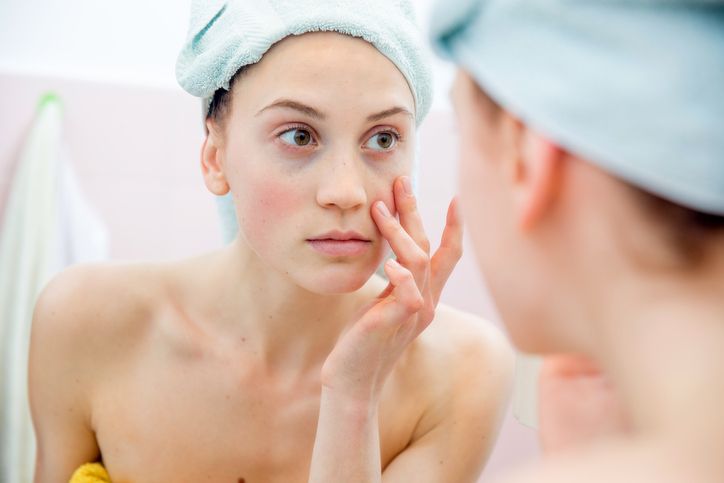
Also known as ptosis or upper eyelid ptosis, droopy eyelids occur when the skin and muscles around the upper eyelids lose their strength and elasticity. As a result, the eyelids begin to sag and may no longer fully lift. This can make your eyes appear tired and aged — and in some cases, even lead to issues like ingrown eyelashes or reduced vision if the sagging skin starts to block your line of sight.
If the condition is left untreated, your forehead muscles may start compensating by working overtime to lift your eyelids, which can eventually cause eye strain, deep forehead wrinkles, and frown lines.
What Causes Eyelid Drooping?
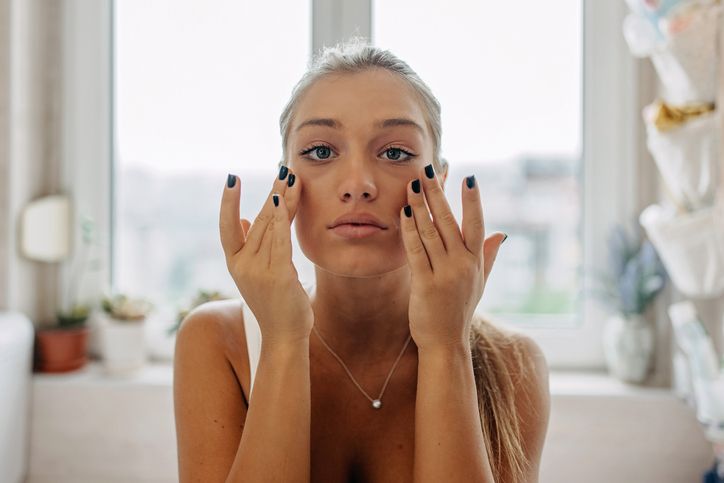
There are many possible causes of droopy eyelids, which are usually classified as congenital (present at birth) or acquired (developed later in life). Common acquired causes include aging, muscle weakness, tendon issues, nerve disorders, medication side effects, or even external mechanical factors.
Cause 1: Congenital Ptosis
This form of ptosis is inherited and usually caused by underdeveloped eyelid muscles. It may affect one or both eyes. In mild cases, it causes uneven-looking eyes; in more serious cases, it can affect vision and lead to amblyopia (lazy eye).
Cause 2: Aging
As we age, collagen breaks down and the delicate skin around the eyes loses elasticity. The upper eyelids gradually begin to droop. The skin in this area is also thinner and more fragile, making it more vulnerable to daily pulling, rubbing, or exposure to pollution — all of which accelerate aging.
At the same time, facial muscles — including those that support the eyelids — naturally weaken, further contributing to the sagging.
Cause 3: Myasthenia Gravis
Myasthenia Gravis (MG) is an autoimmune disorder that disrupts the communication between nerves and muscles, causing muscle weakness and fatigue. One of the early signs is often drooping eyelids, especially in the evening when the muscles are more tired.
Cause 4: Tendon Weakness
The levator aponeurosis is a key tendon that helps lift the eyelid. As we age, this tendon can stretch or loosen. Even if your eyelid muscles still work normally, a weak tendon may no longer transmit that force effectively — leading to sagging.
Cause 5: Medications
Some medications — including muscle relaxants, anticholinergics, or certain autoimmune drugs — can lead to temporary or long-term muscle weakness, including around the eyes. Even cosmetic procedures like Botox, which relax facial muscles, can sometimes contribute to eyelid drooping if not properly administered.
免費體驗
R6 Miracle Eye Rescue Treatment
1 Minute Self-Registration
Date should not be before minimal date
How to Tell If You Have Droopy Eyelids
This condition isn’t limited to older adults — it can affect younger people too. Here are a few signs to watch out for:
i. Obstructed Vision
One of the most obvious signs is when sagging eyelid skin begins to block your field of vision.
ii. "Triangle Eyes"
Weakened eyelid muscles can’t lift the eyelids properly, leading to a triangular eye shape where the outer corners droop.
iii. Forehead Wrinkles
If you notice deep forehead lines at a young age, your facial muscles may be overcompensating to lift your brows and eyelids. This repetitive strain can lead to early wrinkles.
iv. Tendency to Tilt Your Head
People with droopy eyelids may unconsciously tilt their heads back to improve their field of vision.
How to Prevent and Improve Droopy Eyelids — No Surgery Needed!
i. Eye Massage
Gentle massage can help boost blood circulation around the eyes, reduce puffiness, and improve skin elasticity.
Try this 3-step routine:
• Step 1: Make a "peace sign" with your fingers and press lightly at your brow and outer eye corner. Rest your thumbs under your jaw for support. Close your eyes and wait until the muscles between your fingers start to twitch slightly — hold for 5 seconds. Repeat 5–10 times.
• Step 2: Slowly open your eyes as wide as you can for 10 seconds, then close them for 10 seconds. Finish by squeezing them shut tightly. Do 3 sets daily to strengthen the surrounding muscles.
• Step 3: Rub your hands together quickly until they’re warm. Then gently cup them over your eyes to relax the muscles and relieve fatigue.
ii. Muscle Exercises
Targeted eye exercises can help firm up the muscles around the eyes and improve circulation.
Try these simple moves:
• Up and Down Eye Rolls: Keep your head still. Look up and hold for 5 seconds, then look down for 5 seconds. Repeat 8–10 times.
• Side-to-Side Eye Rolls: Look left for 5 seconds, then right for 5 seconds. Repeat 8–10 times.
• Circular Eye Rolls: Rotate your eyes clockwise 5 times, then counterclockwise 5 times.
• Upper Eyelid Lifts: While breathing deeply, close your eyes and try to raise your upper eyelids as if opening your eyes — hold for 8 seconds, then relax. Repeat 5 times.
• Lower Eyelid Squeeze: Close your eyes and focus on pulling your lower eyelids inward and upward. Hold for 8 seconds, then relax. Repeat 5 times.
iii. Use a Quality Eye Cream
Look for eye creams with anti-aging ingredients like retinol, carnosine, hyaluronic acid, vitamin C, vitamin E, or botanical extracts. These can help stimulate collagen production and firm up the skin.
Choose gentle, non-irritating formulas — free of alcohol, fragrances, and dyes — to avoid damaging the delicate eye area. Always start with clean skin, then use your ring finger to pat the cream around the eye. Apply in a circular motion from the inner corner to the outer edge and back over the upper lid. Follow with a light massage to enhance absorption.
iv. Give Your Eyes Enough Rest
Staring at screens for hours is a modern-day habit that leads to eye fatigue, dryness, and faster aging. Over time, this strain can contribute to eyelid sagging.
To avoid overusing your eyes, follow the 20-20-20 rule: every 20 minutes, rest your eyes for 20 seconds by looking at something 20 feet away. Or simply close your eyes for a quick break. Regular rest can reduce fatigue and slow the aging process around the eyes.
Can Cosmetic Procedures Help Correct Droopy Eyelids?
i. Double Eyelid Surgery
One of the most direct and traditional solutions for droopy eyelids is double eyelid surgery. This procedure involves making an incision along the crease of the upper or lower eyelid to remove excess skin, fat, and muscle. The area is then stitched to create a more lifted and defined eyelid contour.
Recovery from double eyelid surgery can take time. During this period, patients may experience swelling, bruising, and discomfort around the eyes. In rare cases, more serious complications like nerve damage, blurred vision, or double vision can occur.
ii. Thread Lifting
Thread lifting is another aesthetic procedure used to improve sagging or droopy eyelids. It involves inserting absorbable protein threads under the skin around the eyes. These threads have tiny barbs that hook onto the tissue and gently lift the skin, creating an instant tightening effect.
Over time, the threads dissolve naturally and stimulate collagen production, making the eyes appear more youthful and refreshed. Since thread lifting is performed under local anesthesia, it’s considered safer and has a shorter recovery time compared to traditional surgery. However, because it's still a minimally invasive procedure, there's a risk of infection. In some cases, the threads may shift, leading to asymmetrical eyes.
iii. Botox Injections
Botox, a neurotoxin, temporarily blocks nerve signals to targeted muscles, which helps prevent them from contracting. When used around the eyes, it can create a subtle lifting and smoothing effect.
However, Botox can sometimes cause temporary muscle weakness in the treated area, resulting in a stiff or unnatural appearance. If the dosage or injection points are off, it may also lead to uneven eyelid height or eye shape.
iv. Brow Lift Surgery
In some cases, droopy eyelids are actually caused by sagging eyebrows pressing down on the eyelids. A brow lift surgery addresses this by removing a section of skin above the brows, effectively lifting the eyebrows and eyelid skin.
This procedure not only improves the appearance of droopy eyelids and sagging skin, but can also make the eyes look brighter and more alert by reshaping and elevating the brows.
免費體驗
R6 Miracle Eye Rescue Treatment
1 Minute Self-Registration
Date should not be before minimal date
Worried About the Risks of Surgery? Try Perfect Medical’s R6 Miracle Eye Rescue Treatment
While surgeries like double eyelid procedures, thread lifting, and Botox injections can improve droopy eyelids, they do carry risks. Even minor complications could result in serious consequences. If you’d prefer a non-surgical solution, consider Perfect Medical’s R6 Miracle Eye Rescue Treatment.
The R6 treatment is completely non-invasive—no cutting, no injections. It targets multiple eye concerns in one go: droopy eyelids, eye bags, fine lines, and dark circles. Using three types of radiofrequency (RF) energy, the treatment penetrates different layers of the skin to help dissolve excess fat around the eyes.
At the same time, it stimulates collagen production, restoring elasticity and firmness to the delicate eye area. This not only lifts sagging skin but also helps reduce the appearance of wrinkles and fine lines. Additionally, the treatment improves blood circulation around the eyes, helping to flush out excess fluids and toxins that cause puffiness and dark circles.
Even better, Perfect Medical is currently offering a free trial session! Just click the link below to book your appointment—why wait?
免費體驗
R6 Miracle Eye Rescue Treatment
1 Minute Self-Registration
Date should not be before minimal date
FAQ

What is droopy eyelid (ptosis)?
Droopy eyelid refers to the sagging of the upper eyelid due to relaxed skin and weakened eye muscles. This condition can make the eyes appear tired or aged and may even cause the eyelashes to turn inward. In more severe cases, the drooping eyelid can partially cover the pupil and obstruct vision. If left untreated, it can increase eye pressure over time and lead to forehead wrinkles and frown lines from constantly raising the brows.
What causes droopy eyelids?
Eyelid drooping can be caused by both congenital and acquired factors. Congenital ptosis is usually due to underdeveloped eyelid muscles, while acquired ptosis can result from aging, weakened tendons, or side effects from certain medications.
How can I prevent or improve sagging eyelids?
Regular eye massages and facial exercises can help strengthen the muscles around the eyes and improve skin elasticity. Using eye creams with anti-aging properties may also help slow down skin aging. Lastly, make sure to give your eyes enough rest to avoid strain and fatigue.
What skincare ingredients help with droopy eyelids?
Look for products containing vitamin A, retinol, tretinoin, carnosine, and pseudouridine—these ingredients support collagen production and improve skin firmness. Natural plant extracts like green tea, grape, and aloe vera also contain antioxidants that help slow down aging around the eyes.
What procedures can correct droopy eyelids?
Double eyelid surgery, brow lift surgery, and thread lifting can all effectively lift sagging eyelids. However, these procedures usually involve higher risks and longer recovery times.