- Home
- Trend
- Weight Loss Strategies
- Acne Tips
- Hair Health Information
- Blemish Removal Tips
- Acne Scar Removal Tips
- Muscle Building Techniques
- Intimate Care Tips
- Postpartum Intimate Care
- Eye Bags Wiki
- Tips for Face Slimming
- Secret of Permanent Hair Removal
- Breast Enlargement Tips
- Cure to Snoring
- Marionette Lines
- Skin-Tightening Secrets

Having firm, bright eyes can significantly enhance your appearance. However, as we age, problems like sagging eyelids and deepening fine lines around the eyes often start to show.

Causes of Droopy Eyelids: Could It Be a Nerve Disorder?
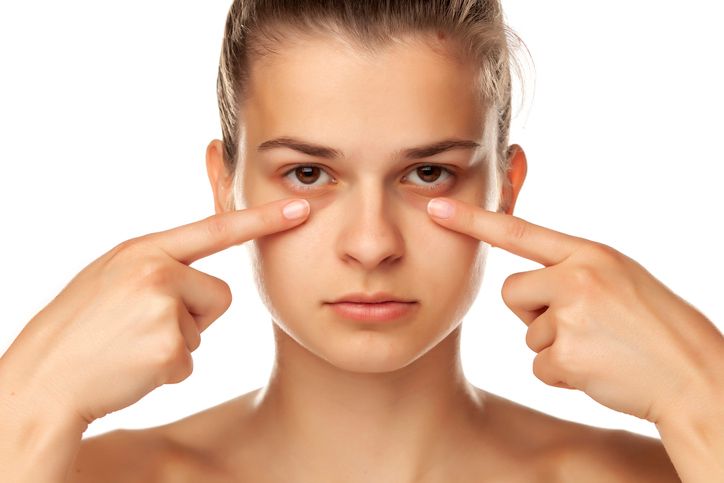
The older we get, the more likely our eyelids start to droop — this happens when the skin on the upper eyelid becomes lax and may even begin to cover the top edge of the pupil. While eyelid drooping is more common among older adults, it can also occur in younger individuals due to acquired causes such as aponeurotic, neurogenic, or mechanical factors. These can all contribute to ptosis in young women as well.
1. Skin Aging
The skin around the eyes is the thinnest and most delicate on the face, making it especially vulnerable to environmental damage, stretching, and bacteria. As we age, collagen loss accelerates, and the eye area is often the first to show signs — including sagging, drooping, and wrinkles. When the collagen in the upper eyelid can no longer support the skin’s elasticity, age-related ptosis may occur.
2. Genetics
Genetic traits can also play a role. Some people are prone to water retention, which causes their eyelids to appear puffy and can lead to sagging over time. Additionally, people with double eyelids may experience more eyelid folds, which increases the likelihood of drooping compared to those with single eyelids.
3. Muscle or Nerve Disorders
Beyond aging and genetics, certain medical conditions can cause eyelid drooping and may even impair vision. For example, patients with myasthenia gravis may lose muscle strength needed to support the eyelids, resulting in neurogenic ptosis. Other possible causes include eyelid tumors, inflammation, trauma, or issues with the sympathetic nervous system.
Bad Habits That Cause Eyelid Sagging — Are You Guilty of These?

In over 90% of cases, droopy eyelids are caused by collagen loss due to aging, which weakens the skin’s structure. If you’ve been diligently applying eye cream every day but still notice sagging or fine lines, your long-term habits might be to blame!
1. Regular Use of Eyelid Tape
Many women believe that double eyelids look more defined and attractive, so they use eyelid tape or glue daily to create the effect. These products lift and fold the eyelid skin using external force. However, prolonged use can overstretch the delicate eyelid skin, reducing its elasticity — especially on the upper lids — and lead to sagging over time.
2. Wearing Eye Makeup Daily
To maintain a polished look, many women apply eyeliner, eyeshadow, and mascara every day. But the daily routine of applying and removing eye makeup can stretch the surrounding skin, weakening the levator and orbicularis oculi muscles and contributing to sagging.
3. Habitually Rubbing or Touching Your Eyes
Some people unconsciously rub their eyes, which not only transfers bacteria but also repeatedly pulls on the eyelid skin. Over time, this friction can cause the eyelids to droop and become loose.
4. Wearing Contact Lenses for Long Periods
Many overlook that wearing contact lenses can also accelerate eyelid sagging. Inserting and removing lenses requires stretching the upper and lower lids, which — when done repeatedly — causes the skin to loosen and increases the risk of ptosis and fine lines.
免費體驗
R6 Miracle Eye Rescue Treatment
1 Minute Self-Registration
Date should not be before minimal date
How to Spot Sagging Eyelids? Watch for These 4 Signs
Most of us glance in the mirror several times a day, but we may still miss the subtle signs of eyelid sagging. Detecting ptosis early allows for quicker intervention and may prevent it from worsening. Here are four common signs to look out for — if you notice any of these, take a closer look to see if you’re developing droopy eyelids:
1. Eyelid Droop
When the levator muscle loses elasticity, it can’t support the upper eyelid, leading to visible drooping in one or both eyes — sometimes creating a “triangle eye” appearance.
2. Blocked Vision
In more severe cases, the drooping eyelid can cover the top part of the pupil and interfere with your field of vision.
3. Deepening Forehead Lines
To compensate for blocked vision, people often unconsciously raise their eyebrows to lift the eyelids — eventually deepening forehead wrinkles.
4. Frequent Head Tilting
When eyelids obstruct vision, you may develop a habit of tilting your head backward just to see clearly.
Is It Real Ptosis? Some Cases Are “Fake”!
Many people think sagging eyelids automatically mean ptosis — but there’s a subtle difference. The eyelid refers to the skin layer over the levator muscle. Between these layers lies a small amount of fat. When there's excess fat or skin laxity, the eyelid may appear droopy. Sometimes, this is mistaken for true ptosis. If you lift the drooping eyelid and find that the upper eyelid muscle is still functioning normally, it may be a case of “pseudo-ptosis.” In such cases, the levator muscle still maintains a normal height — so tightening the skin through beauty treatments or aesthetic procedures may effectively resolve the issue.
Fight Eyelid Sagging with This 5-Step Eye Massage — Learn It in 1 Minute!
The best way to improve droopy eyelids is by preventing the surrounding skin from becoming loose. With simple at-home massage techniques, you can relieve eye strain, lift the eyelid muscles, and even improve acquired ptosis. This easy 5-step eyelid massage routine takes just 1 minute to learn — start practicing it today!
Step 1: Lift the Eye Area
How to: Make a "U" shape with your hands and place them around your eyes. Gently lift the skin upward and hold for 5 seconds. Repeat 5 times daily.
Effect: Apply pressure around the eyes while gently massaging the Yuyao acupoint above the eye. This helps relieve eye pressure and reduces puffiness and sagging.
Step 2: Stimulate Eye Acupoints
How to: Form a "V" shape using your index and middle fingers, then press on the inner and outer corners of your eyes to target points like Zan Zhu, Si Zhu Kong, Qing Ming, and Tong Zi Liao. At the same time, look upward to engage your eye muscles.
Effect: Massaging these points can relieve headaches, improve vision, reduce eye pressure, eliminate puffiness, boost blood circulation, and firm up the skin around the eyes.
Step 3: Apply Warm Compress
How to: Use a warm towel or rub your hands together to generate heat, then gently place them over your eyes.
Effect: Applying warmth before eye care helps open pores, improve absorption of eye products, and promote blood circulation.
Step 4: Lift the Eye Corners
How to: Apply eye cream around the eye area. Using the second knuckle of your index finger, press from the inner corner to the outer corner just below the brow bone. Then use both index and middle fingers to gently massage around the eyes in a circular, clockwise motion twice.
Effect: This helps relax the muscles, reduce eye fatigue, smooth fine lines, and lift the eyelid muscles for firmer skin.
Step 5: Eye Rotation Exercise
How to: Slowly rotate your eyes in a clockwise circle twice.
Effect: This helps activate underused eye muscles, relax overused ones, reduce muscle laxity, and prevent eyelid aging.
免費體驗
R6 Miracle Eye Rescue Treatment
1 Minute Self-Registration
Date should not be before minimal date
4 Easy Steps to Prevent Droopy Eyelids and Keep Your Eyes Sharp
Keeping your eyelids firm is key to bright, alert-looking eyes! In addition to massages, you can also do simple exercises to activate underused muscles around the eyes and relax those that are overworked. These movements can help prevent eyelid sagging, tighten surrounding skin, and enhance the sharpness of your gaze—think of it as a natural eye lift!
Step 1: Warm Up Your Eyes
Use your middle fingers to press gently on the inner brow and your index fingers on the outer corners of your eyes. Close your eyes slowly, feeling a light muscle tremble around the area. Open your eyes again. Repeat 5 to 10 times.
Step 2: Strengthen Your Eye Support Muscles
Place your index fingers just beneath your brows and gently press upward. Then, squint as if you’re facing bright sunlight—this will engage the under-eye muscles that often get neglected. Repeat 10 times to help reduce under-eye bags and hollow tear troughs.
Step 3: Lift the Upper Eyelids
With your index fingers still under your brows, gently lift your upper eyelids just enough to feel a subtle tremble. Repeat 10 times. This targets the muscles responsible for lifting the lids and helps prevent future sagging.
Step 4: Train Your Gaze
Open your eyes as wide as possible and hold for 10 seconds, then slowly shut them tightly for another 10 seconds. Repeat this three times. This exercise helps train the muscles involved in eye movement and gives your eyes a brighter, more energized appearance.
Do You Really Need Surgery to Fix Sagging Eyelids? Here's What Else You Can Try
Sagging eyelids are often the result of aging and collagen loss in the skin around the eyes. When the upper eyelid droops, it can make your whole face look tired or older than it is. While eye creams can help to a certain extent, there are also non-invasive and minimally invasive options that work to lift the eye area by strengthening the surrounding muscles—no major surgery required!
1. Prioritize Eye Skincare
When sagging first appears, many women turn to every eye product they can find. Because the skin around your eyes is so delicate, using the right cream and applying it correctly is essential. Stick to the orbital bone when applying eye creams, and avoid tugging or rubbing. Instead, gently press or smooth the product on. Minimizing heavy eye makeup or being extra gentle during makeup removal can also reduce strain on the skin.
2. Try Botox for a Subtle Lift
Botox isn’t just for smoothing wrinkles—it can also relax tense facial muscles that may be causing uneven eyelid positions. For example, when the forehead muscles are overly tight, one eye may appear lifted while the other looks droopy. A small dose of Botox in the right spot can balance out these muscle tensions, improving both symmetry and the appearance of sagging lids.
3. Eyelid Thread Lifting
For those with more pronounced drooping due to skin laxity or muscle weakness, a thread lift might be the answer. This involves placing fine surgical threads under the skin of the upper eyelid to lift and support it. The threads are hidden inside the lid, leaving no visible scars. This technique has become popular in recent years for those seeking a subtler and less invasive alternative to eyelid surgery.
Keep in mind: While most people are good candidates for thread lifts, it’s important to consult with a licensed doctor. The procedure does involve minor incisions and local anesthesia. Some swelling and bruising may occur, and results typically take around two months to fully settle into a natural-looking lift.
Editor's Review: Can One Treatment Tighten Droopy Lids? My First R6 Miracle Eye Rescue Treatment at Perfect Medical
Now that I’m over 30, no matter how much eye cream I use, I can’t seem to fix my saggy lids. I constantly look tired, like I haven’t slept in days. So I finally decided to try a professional treatment—and booked my first session of the R6 Miracle Eye Rescue Treatment at Perfect Medical!
I’ve heard a lot about Perfect Medical, but this was my first time visiting. Thankfully, there was no hard selling or pressure. I simply registered on their website, filled out a quick form in under 5 minutes, and got a confirmation SMS for my trial.
The whole experience was super comfortable. The therapist explained the science behind the treatment clearly: Perfect Medical’s R6 Miracle Eye Rescue Treatment uses three layers of radiofrequency energy to tighten shallow, mid, and deep layers of skin around the eyes, stimulate microcirculation, and melt away excess fat—all to target puffiness, dark circles, and wrinkles.
She even gave me a detailed eye area analysis. Apparently, I have poor blood circulation and pretty advanced signs of aging around my eyes (gulp!).
During the treatment, the warmth felt like a soothing eye massage—it was so relaxing I nearly fell asleep! After it ended, I looked in the mirror and was genuinely surprised. My eyes looked brighter, the puffiness was gone, and my lids looked visibly lifted. For just one session, I was so impressed.
If you’ve been battling eye bags for years like I have, I highly recommend trying this treatment! Perfect Medical is still offering free trials—click the link below to sign up.
免費體驗
R6 Miracle Eye Rescue Treatment
1 Minute Self-Registration
Date should not be before minimal date
FAQ

What's the difference between sagging eyelids and ptosis?
Your eyelid skin is just the outermost layer of the eye area. Sometimes, when there’s excess fat or loosened skin, the lid may appear to droop—this can be mistaken for true ptosis. But if you lift the skin and your actual upper lid doesn’t sag, it’s considered pseudo-ptosis. In these cases, the levator muscle is working normally, and non-invasive lifting treatments can help.
What besides aging can cause eyelids to sag?
Some people are genetically prone to puffiness, which makes eyelids swell and stretch over time. Those with double eyelids (more skin folds) are also more likely to experience sagging than people with monolids. Additionally, certain medical conditions—like myasthenia gravis, eye tumors, inflammation, trauma, or autonomic nervous system issues—can result in true ptosis.
What daily habits worsen sagging eyelids?
Using double eyelid tape daily may lift your lids temporarily, but long-term use stretches the skin and weakens elasticity—especially the upper lid. Heavy makeup and rough makeup removal (especially eyeliner, shadow, and mascara) also stress the delicate eye area. Even putting in contact lenses frequently can tug at the lid, contributing to sagging and the formation of fine lines.
How does a thread lift work?
The procedure involves creating small, hidden incisions in the upper eyelid, then inserting surgical threads to lift the skin. The stitches are buried within the lid, so they’re not visible. Most people can safely undergo this procedure, but due to the required anesthesia and potential for swelling or bruising, you should always consult a licensed medical professional first.
How does the R6 Miracle Eye Rescue Treatment tighten skin?
Perfect Medical’s R6 Miracle Eye Rescue Treatment uses triple-depth radiofrequency energy to target shallow, mid, and deep layers of the orbital skin. It boosts microcirculation and breaks down stubborn under-eye fat. The RF energy stimulates collagen production and restores the skin’s internal structure, making the entire eye area firmer and more elastic—no needles or scalpels required, and absolutely zero downtime!