- Home
- Trend
- Weight Loss Strategies
- Acne Tips
- Hair Health Information
- Blemish Removal Tips
- Acne Scar Removal Tips
- Muscle Building Techniques
- Intimate Care Tips
- Postpartum Intimate Care
- Eye Bags Wiki
- Tips for Face Slimming
- Secret of Permanent Hair Removal
- Breast Enlargement Tips
- Cure to Snoring
- Marionette Lines
- Skin-Tightening Secrets

Here's a complete guide to the causes, symptoms, and treatment options for a deviated septum.

Constant Nasal Congestion, Snoring, or Difficulty Breathing? You May Have a Deviated Septum (Septal Deviation and Sleep Disorders)
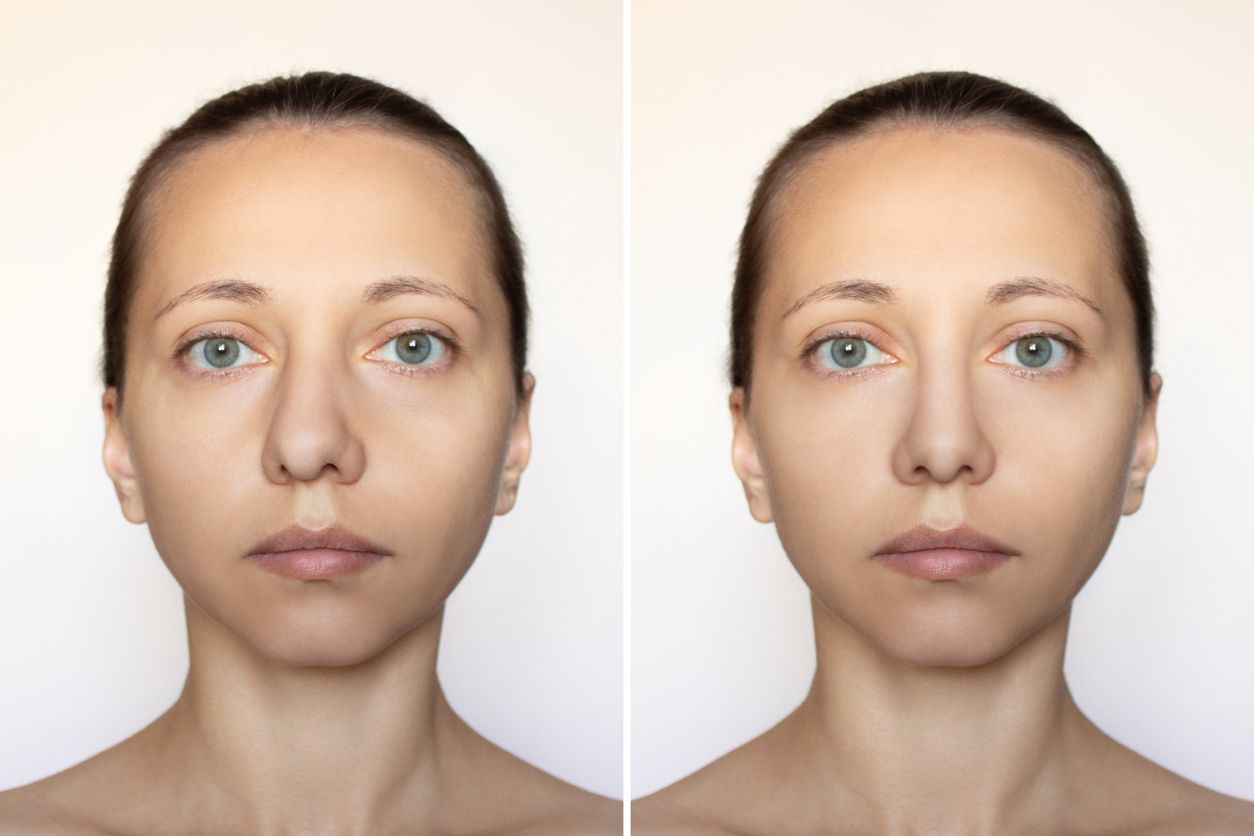
Is nasal congestion your constant companion? Your nose feels blocked even when you are not sick? Be careful—this may not be a minor issue. You could be dealing with a structural nasal problem such as a deviated septum.
Many people suffer long-term nasal blockage and breathing discomfort without realizing the underlying cause lies in the nasal airway’s anatomy. A deviated septum not only reduces daily comfort but may also have lasting effects on sleep quality and overall health.
What Exactly Is the Nasal Septum—and What Happens When It’s Deviated? Structure and Function of the Nasal Septum
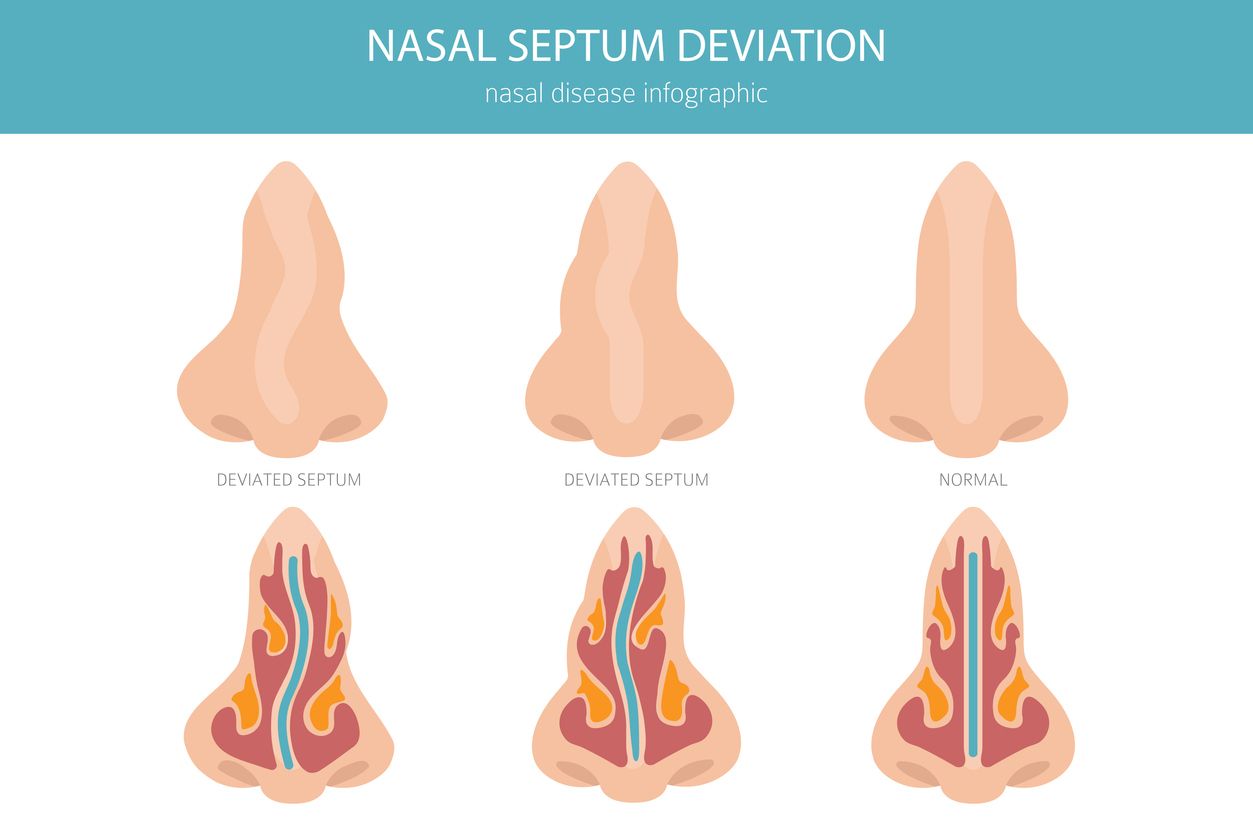
Imagine a partition inside your nose that divides the nasal cavity into left and right passages. This partition is called the nasal septum. Made up of cartilage and bone, it not only separates airflow but also provides structural support to the nose and helps maintain its shape.
When the septum becomes deviated, one or both nasal passages may narrow, restricting airflow. This can lead to nasal congestion, breathing difficulty, disrupted sleep, reduced quality of life, and in some cases, even changes to nasal appearance.
免費體驗
Fotona 4D NightLase Snoring Treatment
1 Minute Self-Registration
Date should not be before minimal date
Why Does the Nasal Septum Become Deviated? A Complete Breakdown of Causes
The causes of a deviated septum generally fall into two categories:
Congenital causes:
• Genetic factors resulting in a naturally crooked septum
• Uneven development of cartilage and bone during growth
Acquired causes:
• Nasal trauma from sports injuries or traffic accidents
• Age-related structural degeneration leading to deformation
What Problems Can a Deviated Septum Cause? Common Symptoms and Possible Complications
Common symptoms include:
• Persistent nasal congestion or mouth breathing
• Frequent nosebleeds
• Dizziness or headaches
• Snoring and sleep disturbances
• Sinusitis or middle ear infections
• Chronic throat or tracheal inflammation
What Type of Deviation Do You Have? Common Septal Deviation Types and Their Effects
| Type of deviation | Description |
|---|---|
| C-shaped deviation | Septum bends to one side, causing one-sided nasal blockage |
| S-shaped deviation | Both sides are affected, restricting airflow bilaterally |
| Caudal dislocation | Displacement at the lower end of the septum, affecting breathing and appearance |
| Bone spurs or thickening | Localized protrusions that worsen nasal obstruction |
免費體驗
Fotona 4D NightLase Snoring Treatment
1 Minute Self-Registration
Date should not be before minimal date
Does a Deviated Septum Always Require Surgery? Comparing Non-Surgical and Surgical Treatment Options
Non-surgical treatments (for mild cases)
• Antihistamine medications
• Steroid nasal sprays to reduce inflammation
Surgical options (for moderate to severe cases)
1. Traditional Septoplasty
○ Removal or correction of the deviated portion
○ Does not alter external appearance
2. Minimally Invasive Endoscopic Surgery
○ Smaller incisions with minimal bleeding
○ Faster recovery time
3. Functional Rhinoplasty
○ Improves breathing while reshaping nasal structure
Traditional Surgery vs Endoscopic Surgery vs Functional Rhinoplasty
A Comparison of Three Septal Deviation Procedures
| Procedure | Duration | Incision | Recovery | Suitable for |
|---|---|---|---|---|
| Traditional septoplasty | 30–60 mins | Internal | ~1 week | Pure nasal obstruction |
| Endoscopic surgery | 30–60 mins | Minimally invasive | Faster | Those seeking comfort and quick recovery |
| Functional rhinoplasty | 2–4 hours | Open incision | 2–4 weeks | Breathing issues plus cosmetic concerns |
Common Myths About Deviated Septum Treatment
Q1: Is septal deviation surgery risky?
The risk is relatively low. Common concerns include bleeding or postoperative discomfort, which are generally manageable under experienced medical care.
Q2: Can the deviation recur after surgery?
With proper postoperative care, recurrence is uncommon.
Q3: Will surgery change the appearance of my nose?
Traditional septoplasty does not. Functional rhinoplasty may involve aesthetic adjustments.
Q4: Is septal surgery expensive?
Costs vary depending on the clinic and surgical method. Consultation with an ENT specialist is recommended.
Q5: Is everyone suitable for septal surgery?
It is not recommended for individuals whose facial growth is incomplete or those with bleeding disorders.
免費體驗
Fotona 4D NightLase Snoring Treatment
1 Minute Self-Registration
Date should not be before minimal date
Real Hong Kong Case Studies: Three Patients’ Journeys to Better Breathing
• Mr. Wong (40): Surgery resolved long-term nasal blockage and significantly improved sleep quality.
• Mr. Koo (55): Breathing became smoother post-operation, with notable relief from nasal sensitivity.
• Mr. Tai (28): Functional rhinoplasty improved both nasal airflow and facial profile.
Snoring Isn’t Always Caused by Nasal Congestion or a Deviated Septum
Do you still snore even when your nose feels clear? Despite the word “nasal” in snoring, the problem may not originate in the nose at all. In many cases, excess or lax oral and throat tissue is the real culprit.
The Fotona 4D NightLase Snoring Treatment targets the root cause of snoring using advanced, non-invasive laser technology. It tightens relaxed soft tissue in the airway, improving airflow and reducing vibration—without surgery.
Why choose Fotona 4D?
• Non-invasive laser technology to tighten obstructive soft tissue
• Improves airflow and may help mild sleep apnea
• Treatment takes just 15 minutes
• Effects can last up to one year with no downtime
• Does not permanently alter tissue, ensuring high safety
Over 80% of patients notice significant improvement after just two sessions and can immediately return to daily activities. For your own comfort—and your partner’s peace of mind—why wait?
Book a consultation at Perfect Medical for a professional assessment and uncover the true cause of your snoring.
免費體驗
Fotona 4D NightLase Snoring Treatment
1 Minute Self-Registration
Date should not be before minimal date
FAQ

Will a deviated septum correct itself naturally?
No. A deviated septum is a structural condition that requires medical or surgical intervention.
Can a deviated septum affect cognitive function?
Chronic nasal obstruction and long-term oxygen deprivation may impair concentration and memory.
Can septal deviation be prevented?
Congenital deviation cannot be prevented. Acquired cases may be reduced by avoiding nasal trauma.
Which specialist should I see for a deviated septum?
An otolaryngologist (ENT specialist) is recommended.
Who is suitable for Fotona 4D NightLase Snoring Treatment?
It is ideal for individuals seeking to improve snoring or mild sleep apnea and who prefer a non-surgical solution.