- Home
- Trend
- Weight Loss Strategies
- Acne Tips
- Hair Health Information
- Blemish Removal Tips
- Acne Scar Removal Tips
- Muscle Building Techniques
- Intimate Care Tips
- Postpartum Intimate Care
- Eye Bags Wiki
- Tips for Face Slimming
- Secret of Permanent Hair Removal
- Breast Enlargement Tips
- Cure to Snoring
- Marionette Lines
- Skin-Tightening Secrets

Do you feel like your calves are too thick, and people describe them as "carrot legs"? Have you tried various methods online to slim down your calves but still seen no results? You might be using the wrong techniques! The size of your calves doesn't have just one cause. In the following article, we will teach you how to better understand your calf muscles, so you can target the right solution.

Understanding Calf Muscle Structure
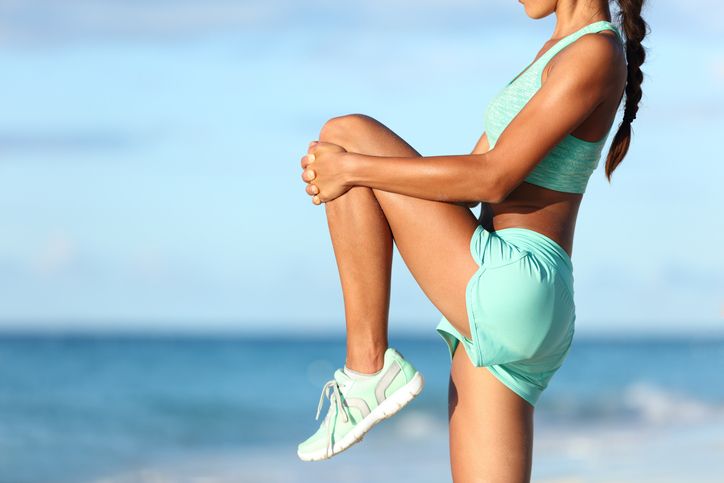
The muscles in your calves, also known as the "triceps surae," include the gastrocnemius and soleus muscles. The gastrocnemius has both an inner and outer part. The calf muscles connect to the knee joint at the top and the ankle joint at the bottom, meaning that healthy and strong calf muscles help protect the lower limb joints during flexion.
Among calf muscles, the soleus is made up of slow-twitch fibers, which have less potential for hypertrophy (muscle growth), while the gastrocnemius is made up of fast-twitch fibers. In other words, with the right training, the gastrocnemius will become more prominent and stronger, which is exactly the area many women want to avoid, yet it's often the most noticeable part of the calf.
The Benefits of Training Calf Muscles
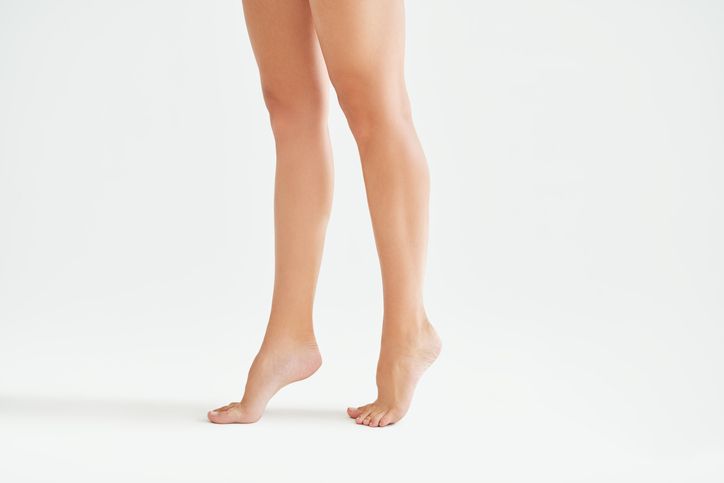
Some women may avoid training their calves because they feel that large calf muscles are unattractive. However, calf muscles are more important than many think.
The lower body muscles are actually the second largest muscle group in the human body. While the heart is responsible for pumping blood, the calf muscles act like a "pump," assisting blood flow back to the heart. That's why calf muscles are often referred to as the "second heart." So, when your calf muscles are in good condition, your overall blood circulation improves, which can help prevent and improve conditions like high blood pressure and arteriosclerosis.
Additionally, as more and more women strive for a toned, muscular aesthetic, it's time to stop aiming for "pencil legs." Instead, focus on training your calf muscles to look both beautiful and healthy!
Having toned legs doesn’t mean you have to have "big calves," though. So, what should you do to achieve a slim and sculpted calf? Below, we’ll analyze the types of calf muscles and the best training methods to help you say goodbye to "carrot legs" and sculpt your calves.
免費體驗
S6 Body Sculpting Treatment
1 Minute Self-Registration
Date should not be before minimal date
Three Major Types of Calf Size—Which One Are You?
1. Muscle-Type Calf
How do you know if you have muscle-type calves? It’s simple—when you point your toes downward, does the gastrocnemius bulge? Is it firm when you press it? If so, congratulations, you have healthy and strong calf muscles. However, you might complain that your calves look too bulky. If you haven’t specifically trained your calves but still have muscle-type calves, it may be due to improper posture while walking or running, or from frequently wearing high heels.
When you walk or run, if your toes touch the ground first and your calves help propel you forward (instead of your heels making contact), you are unknowingly training your calves. Over time, this causes the muscles to grow stronger. The same principle applies to wearing high heels—you’re essentially lifting your body on your toes, which forces your gastrocnemius to work, much like lifting weights for your biceps. If you don’t regularly stretch and do flexibility exercises, your calves will naturally grow stronger.
2. Fat-Type Calf
Fat-type calves are easy to identify: when you press your calves, they feel soft and saggy. When you walk, you may notice a "jiggling" effect. This is typical in people with insufficient physical activity and underdeveloped calf muscles.
3. Edema-Type Calf
Edema-type calves may look similar to fat-type calves, but the difference is that when you press them, the indentations from your fingers stay for a while, indicating fluid retention. These two types can also coexist, meaning you could have both fat and edema in your calves.
The main cause of edema in the calves (aside from medical issues) is poor blood circulation due to prolonged standing or sitting, high-sodium diets, or inadequate water intake. Why does prolonged standing or sitting affect blood flow? Because the plasma in your blood is 90% water, and when circulation is poor, the body can’t pump fluids effectively, leading to water retention. High-salt diets and insufficient water intake contribute to fluid accumulation by drawing water out of the cells, similar to the way brined foods release liquid.
How to Slim Down Different Types of Calves?
1. Muscle-Type Calf—Change Your Habits and Add These Exercises
First, change your walking habits. As mentioned earlier, the muscles activated by walking with your toes versus your heels are different. Walking with your heels touching the ground engages your thigh and glute muscles, while walking on your toes primarily works your calf muscles. So, remember to land on your heels!
Second, if you frequently wear high heels, consider switching to flat shoes unless necessary for work. Avoiding constant toe-lifting will reduce the likelihood of increasing calf muscle mass.
Finally, make sure to stretch your calves regularly to relax the muscles. A simple calf stretch you can do anywhere is as follows:
• Stand with one leg in front of the other, bend your front knee, and keep the back leg straight with the heel on the ground.
• Lean your upper body slightly forward to feel the stretch in your calf.
• Hold for 10–15 seconds, then switch legs. Repeat 2–3 sets per leg.
You can also use a foam roller to relax your calves after a long day:
• Place your hands on the floor for support and place your left calf on the roller, with your right foot resting on top.
• Shift your body weight back and forth so the roller massages your calf.
• Switch legs and repeat for 2–3 sets per leg.
2. Fat-Type and Edema-Type Calf—Change Your Diet and Increase Exercise
Fat-type and edema-type calves are not mutually exclusive and are often linked. By following these methods, you can tackle both issues at once!
If you enjoy salty or heavily flavored foods, these can lead to water retention and fat accumulation. The simplest approach is to maintain a healthy diet with minimal salt and oil.
Next, increase your physical activity to build muscle. Increased muscle mass raises your metabolic rate, which means you burn more calories at rest, naturally speeding up the fat loss process.
In fact, leg muscles work as a whole, so exercises like squats and lunges will target the entire lower body. But to specifically target your calves, the most common exercise is standing calf raises:
• Place a weight plate under your feet for elevation and hold a dumbbell in your hands for added resistance.
• Push up with your toes, focusing on contracting the gastrocnemius muscle.
• Slowly lower back to the starting position and repeat for 12 reps per set, completing 3 sets.
You can also find many calf exercises online from fitness influencers or YouTubers, including leg-lifting movements and at-home exercises to incorporate into your routine!
Worried About Making Your Calves Bigger? You Need to Burn Fat First, Then Build Muscle!
Who wants big calves? They’re not the most flattering when you wear skirts or pants. So, how can you achieve those toned, slender calves seen on models? While exercise is the best way to train muscles, many women in Hong Kong are busy with work and find it hard to fit in beauty or fitness routines, often without enough time to rest! If paying for a gym membership sounds like too much, why not try a fat-reduction treatment that allows you to lose weight while resting?
Right now, by clicking the link below, you can get a free trial of the S6 Fat Reduction Treatment! Don’t wait to experience the transformation!
免費體驗
S6 Body Sculpting Treatment
1 Minute Self-Registration
Date should not be before minimal date
FAQ

How can I train my calves without making them too bulky?
Simply stretch and release tight muscles after exercise or during rest periods to relax your muscles. But the main thing is to adjust your daily habits, like changing your walking posture and wearing less high heels.
Why do I see no results after trying online calf slimming exercises?
There are different causes for thick calves. If your calves are fat or swollen, no matter how much muscle you build, the fat and fluid retention will cover up the muscle definition. In this case, focus on improving your diet to achieve tighter calves.
Can I cheat a little with my diet if I don’t have edema?
Even without edema, poor dietary choices can still lead to excess calorie intake and fat accumulation, which might cause carrot legs and even contribute to overall weight gain. So, maintaining good eating habits is still important.
Do I need to go to the gym for effective calf training?
While gyms provide a variety of equipment that can make training more efficient, bodyweight exercises can also be effective. Your own body weight is a form of resistance, and with proper form, you can still target the muscles effectively. Consistency is key.
Should I lose fat first or build muscle?
You can start by focusing on fat loss, which will make the muscle-building process more efficient. Perfect Medical's S6 Fat Reduction Treatment uses high-performance biolaser technology to break down and liquefy fat, which is ideal for women who want to lose weight but don’t have time for regular workouts.