- Home
- Trend
- Weight Loss Strategies
- Acne Tips
- Hair Health Information
- Blemish Removal Tips
- Acne Scar Removal Tips
- Muscle Building Techniques
- Intimate Care Tips
- Postpartum Intimate Care
- Eye Bags Wiki
- Tips for Face Slimming
- Secret of Permanent Hair Removal
- Breast Enlargement Tips
- Cure to Snoring
- Marionette Lines
- Skin-Tightening Secrets

Will eating oats at night make you gain weight? When hunger strikes late at night, oats — often hailed as a “health food” — seem like a safe option to satisfy cravings without guilt. In fact, if chosen and prepared correctly, a warm bowl of oats can actually promote better sleep and stabilize blood sugar levels. But eat them the wrong way, and you might fall into several fat-trap mistakes! In this article, a nutritionist breaks down the myths about eating oats at night, reveals the 3 biggest fat traps and 4 major health benefits, and shares 3 simple and delicious oat-based late-night recipes to help you enjoy guilt-free snacking and stay healthier with every bite.

1. 4 Major Benefits of Eating Oats at Night: More Than Just Better Sleep — They Help Stabilize Blood Sugar Too
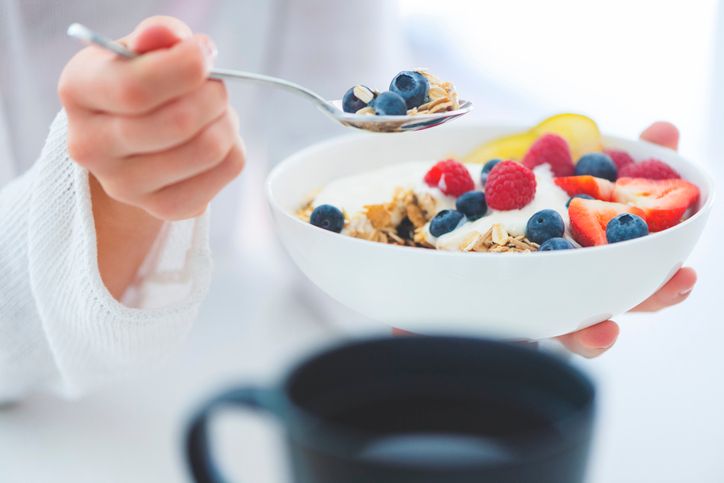
Eating oats at night isn’t just a comforting indulgence — it’s actually a smart, body-benefiting choice. Many people hesitate to eat carbohydrates late at night, but oats are packed with nutrients like unsaturated fatty acids and dietary fiber that offer lasting satiety, improve sleep quality, and promote gut health. Here are four science-backed benefits of having oats as a late-night snack.
Benefit 1: Keeps You Full Longer and Stabilizes Blood Sugar
Late-night hunger can be hard to resist, and the biggest question is: will eating oats at night cause weight gain? The answer lies in a special soluble fiber called beta-glucan, found abundantly in oats. This fiber absorbs water in the digestive tract and forms a gel-like consistency, which slows down stomach emptying and helps you feel full longer. It also delays the absorption of carbohydrates, resulting in steadier blood sugar levels and preventing the spikes and crashes that trigger hunger and fat storage.
Benefit 2: Packed with Sleep-Boosting Nutrients for Better Rest
A warm bowl of oats before bed not only soothes the stomach — it calms the mind. Oats are an excellent source of complex carbohydrates that help the brain produce serotonin, a neurotransmitter that promotes relaxation and a good mood. At night, serotonin is converted into melatonin, the sleep hormone that regulates your internal clock and signals your body to rest. Oats are also rich in magnesium, which relaxes the muscles and nervous system, preparing you for a deep and restful night’s sleep.
Benefit 3: Supports Gut Health and Digestion
Gut health is the foundation of overall well-being. As mentioned earlier, beta-glucan also functions as a powerful prebiotic — the “food” that nourishes the good bacteria in your intestines. By feeding probiotics, it helps maintain a balanced gut microbiome, which supports better digestion, reduces bloating, and strengthens the immune system over time.
Benefit 4: Provides Quality Protein to Support Post-Workout Recovery
If you tend to work out at night, oats make the perfect post-exercise snack. Oats contain plant-based protein — essential for rebuilding and repairing muscle tissue. After exercise, your body needs both protein and energy to restore and repair. A bowl of oats provides both, and when paired with milk, soy milk, or Greek yogurt, it greatly boosts your protein intake and helps speed up muscle recovery — giving your fitness results an extra push.
2. Will Eating Oats at Night Make You Gain Weight? Avoid These 3 Hidden Fat Traps
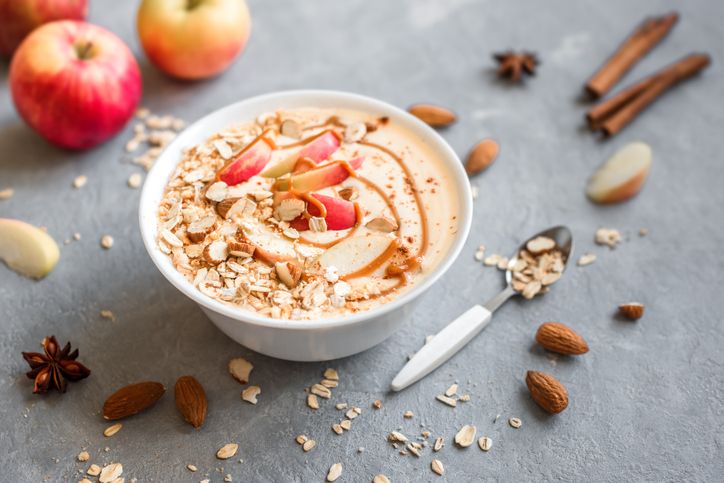
Whether oats make you gain weight at night depends entirely on how you eat them. Oats are an excellent late-night snack choice, but poor preparation can easily ruin their benefits. To enjoy oats without unwanted weight gain, avoid these three common fat traps.
Trap 1: The Calorie Myth — “Oats Have More Calories Than Rice?”
Some people are surprised to see that 100 grams of dry oats have more calories than 100 grams of uncooked rice. But that comparison is misleading — nobody eats dry oats by the spoonful! When cooked, oats absorb water or milk and expand significantly in volume. Usually, only 30–40 grams of dry oats are needed for a full, satisfying bowl. Once cooked, the calorie and carbohydrate content per serving is actually lower than rice — but with a greater sense of fullness.
Trap 2: The Toppings Trap — “Healthy Oats Ruined by Unhealthy Additions”
Oats themselves are mild in flavor, which tempts many people to load them up with sweeteners and toppings. Unfortunately, that’s where things go wrong. Add-ins like honey, maple syrup, chocolate spread, sugary dried fruit, or sweetened peanut butter can instantly turn your healthy oats into a calorie bomb. Instead, stick to wholesome, natural ingredients — fresh fruit, a small handful of nuts, a sprinkle of cinnamon, or unsweetened cocoa powder — for a nutritious yet satisfying bowl.
Trap 3: The Portion Trap — Overeating Can Backfire
Even the healthiest foods can cause problems when eaten in excess. Overeating oats as an “extra” snack adds unnecessary calories and may lead to gradual weight gain. Additionally, oats are high in fiber, which is beneficial in moderation — but too much can hinder the absorption of minerals like calcium, iron, and zinc, or cause bloating in those with sensitive digestion. The key is portion control — balance and moderation are essential to reap the benefits of oats.
免費體驗
S6 Body Sculpting Treatment
1 Minute Self-Registration
Date should not be before minimal date
3. 3 Golden Rules for Eating Oats at Night Without Gaining Weight
Craving a late-night snack but worried about calories? Follow these three golden rules, and your nighttime oats will be both satisfying and waistline-friendly.
Rule 1: Control Your Portion Size Precisely
Portion control is the single most important factor. Dry oats are nutrient-dense, so a little goes a long way. For a late-night serving, stick to about 30–40 grams (roughly 3 to 4 tablespoons). This amount offers enough energy and carbohydrates to keep you full and stabilize blood sugar without overloading your body with extra calories.
Rule 2: Choose the Right Liquid Base
The liquid you use to prepare oats can make a big difference. Many flavored milks or sweetened soy and nut milks contain hidden sugars and calories. Keep it simple: use water for zero calories and pure grain flavor, or opt for unsweetened almond milk, soy milk, or skim milk for extra protein and calcium with minimal calories.
Rule 3: Eat at the Right Time
Timing matters just as much as ingredients. Enjoy your oats about 1.5 to 2 hours before bedtime — this allows enough time for digestion and prevents discomfort while sleeping. The complex carbs in oats also help your body release serotonin, which encourages relaxation and helps you fall asleep naturally. Planning your snack timing smartly ensures your oats work with your body, not against it.
4. Nutritionist-Approved: 3 Functional Oat Recipes for a Healthy Late-Night Snack
Theory is great, but practice makes perfect! If you’re wondering how to prepare your oats for a nutritious midnight snack, try these three functional recipes designed by nutritionists — each with a unique purpose, whether it’s for better sleep, post-workout recovery, or savory cravings.
Sleep-Enhancing Recipe: Banana Almond Oat Bowl
Tossing and turning at night? This soothing recipe is for you. Bananas are rich in magnesium and potassium, which relax muscles and nerves, and also contain tryptophan, the amino acid that helps the brain produce melatonin. Almonds add more magnesium, and oats provide the complex carbs that help tryptophan enter the brain more efficiently, promoting natural drowsiness. How to make it:
1. Prepare half a bowl of rolled oats.
2. Add warm milk or unsweetened almond milk to cover the oats and stir well.
3. Top with half a sliced banana and a small handful of crushed almonds.
Post-Workout Recipe: Greek Yogurt Berry Oat Bowl
For those who work out at night, this recipe helps muscles recover while keeping you full. Greek yogurt is high in protein to repair muscle fibers, while berries like blueberries or strawberries are rich in antioxidants that reduce post-exercise soreness. Oats replenish glycogen stores for renewed energy. How to make it:
1. Add 3–4 tablespoons of plain Greek yogurt to a bowl.
2. Mix in 3 tablespoons of rolled oats.
3. Top with a handful of fresh or frozen mixed berries and gently stir.
Low-Calorie Savory Recipe: Japanese-Style Egg Oat Porridge
Who says oats have to be sweet? This savory oat porridge is light, flavorful, and perfect for those who prefer a warm, umami-rich dish. Using dashi or chicken broth as a base adds depth without excess salt or fat, while egg provides high-quality protein and fullness. How to make it:
1. Bring about 200 ml of dashi or unsalted chicken broth to a boil.
2. Add 4–5 tablespoons of instant oats and simmer for 2 minutes, stirring constantly.
3. Crack in one egg and stir quickly to create egg ribbons, then turn off the heat.
4. Season with a little soy sauce and pepper, and top with chopped spring onions.
5. Who Should Consult a Professional Before Eating Oats at Night
While oats offer many health benefits, they’re not suitable for everyone. People with certain health conditions should check with their doctor or dietitian before adding oats to their nighttime routine.
Pure oats are naturally gluten-free, but during harvesting and processing, they can become contaminated with wheat or barley. People with celiac disease or gluten sensitivity should only consume certified gluten-free oats to avoid digestive discomfort or bloating.
Those with Gluten Sensitivity or Intolerance
Those with Kidney Issues
Those with Weak Digestion or Bloating
Oats are relatively high in phosphorus, which healthy kidneys can easily filter. However, those with kidney problems may struggle to eliminate excess phosphorus, potentially worsening their condition. If you have any kidney-related concerns, consult your doctor before adding oats to your diet.
Because oats are high in fiber, they may cause gas or discomfort in people with sensitive digestion — especially at night when the digestive system slows down. Start with smaller portions and observe your body’s reaction to ensure comfort and good sleep.
免費體驗
S6 Body Sculpting Treatment
1 Minute Self-Registration
Date should not be before minimal date
6. The Lazy Girl’s Slimming Secret: Perfect Medical S6 Body Sculpting Treatment for Fat Reduction and Body Contouring
Even with careful diet management, some stubborn fat — especially around the waist, hips, and thighs — can be incredibly resistant. For many busy, sedentary city women, slow metabolism and long hours of sitting make fat accumulation even harder to tackle. Alongside dietary changes, a professional aesthetic treatment can help reshape your body more efficiently.
The Perfect Medical S6 Body Sculpting Treatment is designed to target and eliminate these hard-to-burn fat deposits. It combines advanced non-invasive technology using high-performance bio-laser and vacuum suction to break down and release fatty acids from fat cells. The treatment mimics the body’s natural metabolic process, stimulating the lymphatic system to flush out fat effectively and naturally. This method disrupts fat cells at the source, resulting in lasting, rebound-resistant slimming results.
The S6 Body Sculpting Treatment stands out for its precision, pain-free process, and safety. It targets seven stubborn body areas — including the abdomen, hips, and thighs — without injections, medication, or downtime. For anyone who wants to achieve a toned, sculpted figure quickly and comfortably, this is an ideal solution.
Want to learn how the S6 Body Sculpting Treatment can help you eliminate fat and regain confidence? Click the link below to enjoy a free trial session and take your first step toward your ideal body today!
Click Here: Perfect Medical's S6 Body Sculpting Treatment免費體驗
S6 Body Sculpting Treatment
1 Minute Self-Registration
Date should not be before minimal date
FAQ

Should I drink more water when eating oats at night?
Yes. Because oats are rich in soluble fiber (beta-glucan), they absorb water and expand in the gut, promoting fullness. Without adequate hydration, the fiber can slow digestion or even cause bloating or constipation. Always accompany your oats with a glass of warm water and maintain good hydration throughout the day for best digestive results.
Are instant flavored oat packets suitable for a late-night snack?
Not really. While convenient, instant flavored oats often contain added sugar, creamer, and artificial flavorings, which drastically increase calories and defeat the purpose of a healthy snack. Choose plain rolled oats or unflavored instant oats instead, and add your own natural toppings like fresh fruit, cinnamon, or unsweetened cocoa.
Can I use oat milk instead of cow’s milk to make oats?
Yes — especially for vegetarians or those with lactose intolerance. However, note that oat milk plus oats means “carbs on carbs,” offering less protein than if you used milk or soy milk. For muscle repair or higher satiety, dairy milk or unsweetened soy milk is the better choice, but oat milk works fine if you just want a light, plant-based snack.
Is it better to eat oats for dinner or as a late-night snack when trying to lose weight?
Oats at dinner can serve as a complete, balanced meal when paired with protein and vegetables, helping reduce post-dinner hunger and late-night snacking. Having oats at night is better for light hunger control — it prevents unhealthy cravings and improves sleep through its serotonin and B-vitamin content.
Which type of oats is best for a late-night snack?
Go for the least processed type — rolled oats. They retain the bran and germ, are digested slowly, and have a lower glycemic index, keeping you full longer and helping stabilize blood sugar. Instant oats, though convenient, are more processed, digest faster, and often come with added sugars — making them less ideal for weight management.