- Home
- Trend
- Weight Loss Strategies
- Acne Tips
- Hair Health Information
- Blemish Removal Tips
- Acne Scar Removal Tips
- Muscle Building Techniques
- Intimate Care Tips
- Postpartum Intimate Care
- Eye Bags Wiki
- Tips for Face Slimming
- Secret of Permanent Hair Removal
- Breast Enlargement Tips
- Cure to Snoring
- Marionette Lines
- Skin-Tightening Secrets

New to the gym? Read this first before you dive in! This beginner-friendly guide clears up 6 of the most common workout myths, explains 6 essential full-body strength exercises, and shows how sticking to just these moves can already lead to fat loss and muscle gains in just a few months. We’re also sharing basic nutrition tips for anyone starting their fitness journey!

For Fitness Beginners – Busting Common Workout Myths
Q1: Do overweight people build muscle faster?
A common myth is that people who are overweight can burn fat and gain muscle more quickly, and that their extra fat somehow “turns into” muscle. But fat and muscle are two completely different things. Muscle lies underneath subcutaneous fat—and everyone has muscle. It’s just a matter of lowering body fat enough (around 20% or lower) to make those muscles visible.
Whether you're lean or overweight, the goal is the same: lose fat and increase muscle mass. Fat and muscle can’t be converted into each other, so “bulking up” through overeating before starting your workout program will only make fat loss harder and harm your health in the process.
Q2: Do I need to restrict food before I even start working out?
Many people begin dieting the moment they commit to exercising—but cutting back too early isn’t always necessary. If your primary goal is fat loss or if you’re significantly overweight, then yes, a calorie-controlled diet is important. But if you're at a healthy weight, starting strength training and HIIT might actually increase your appetite because your metabolism speeds up.
Remember: being hungry is your body’s way of telling you it needs energy. You don’t need to starve yourself to slim down. Eating regular, well-balanced meals helps maintain energy levels and prevents binge eating or yo-yo dieting. The goal of training is to build strength and reduce fat while fueling your body—not depriving it. A sensible approach to food is key to sustainable results.
Q3: Is working out in summer better than in winter?
Some people take winter off, thinking cooler temperatures slow down metabolism and reduce the effectiveness of workouts. But studies have shown that our bodies actually burn more calories in cold weather to stay warm, even activating brown fat cells in the process.
Whether you’re working out indoors or at a gym, there’s really no weather limitation—especially in Hong Kong where winters are mild and short. If you want to stay consistent and see results, don't use the season as an excuse.
Q4: The more I sweat, the better my workout?
Nope—sweat is not fat leaving your body. While you might weigh less after a sauna or intense cardio session, it’s water weight, not fat loss.
Fat doesn't get expelled through sweat; sweat simply helps regulate body temperature. The amount you sweat doesn’t reflect how much fat you’re burning. Don’t judge your progress by your sweat levels—focus on consistent training and good form instead.
Q5: What exactly is the yo-yo effect?
The yo-yo effect refers to a cycle of rapid weight loss followed by quick regain. Over time, this back-and-forth can damage your metabolism and increase the risk of health problems like high blood pressure and high blood sugar.
It’s often triggered by extreme dieting, which slows your metabolism as your body tries to conserve energy. This can lead to fatigue, hormonal imbalances, weakened immunity, and even slower hair and nail growth. Then, when you go back to normal eating, your body stores more fat—making it even harder to lose weight the next time. Sustainable fat loss is always better than fast fixes.
Q6: Is eating small, frequent meals the best way to lose fat?
“Eat small meals frequently” is a phrase often thrown around in fitness circles. While this might help manage hunger and blood sugar levels for some, it's not a magic solution for everyone.
The truth is, eating too frequently can lead to overeating unless you're tracking portions carefully. Frequent eating also causes insulin to spike repeatedly, which may reduce insulin sensitivity over time.
Rather than focusing on how often you eat, it’s better to prioritize the quality and quantity of what you eat.
6 Must-Learn Compound Movements to Burn Fat and Build Muscle
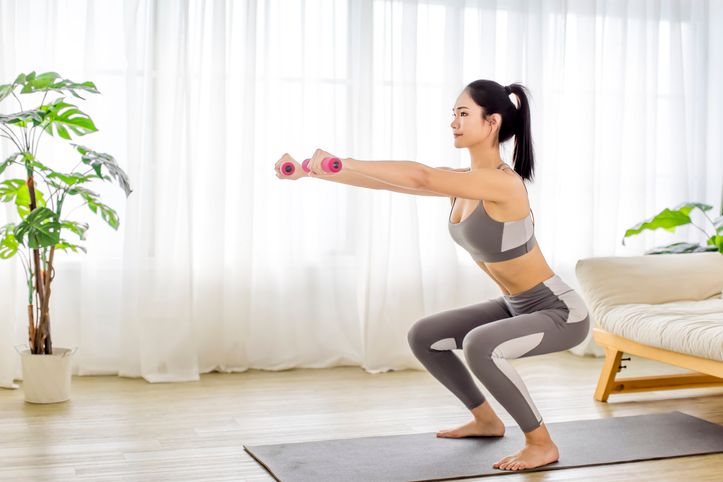
So you’ve committed to starting your fitness journey—but what exercises should beginners focus on first?
Forget about chasing advanced moves or trendy workout routines. The most effective way to build a solid foundation is to master compound movements—exercises that work multiple muscle groups at once. These not only improve strength and coordination but also help you burn more calories in less time.
Here are 6 beginner-friendly compound movements you should learn and practice:
1. Bodyweight Squat
Muscles targeted: Thighs, glutes, calves, core
Squats are a full lower-body workout that also activate your core. Done correctly, they improve your balance and posture, and build strength in your legs and hips—essential for daily movement.
Tips:
• Keep your feet shoulder-width apart
• Lower your hips until your thighs are parallel to the ground
• Keep your back straight and chest lifted
• Avoid letting your knees go past your toes
2. Push-Up
Muscles targeted: Chest, shoulders, triceps, core
Push-ups are great for building upper body and core strength. You don’t need any equipment, and there are many variations to suit your level.
Tips:
• Keep your body in a straight line from head to toe
• Engage your core
• Lower yourself until your elbows are at a 90° angle
• If regular push-ups are too difficult, start with knee push-ups
3. Bent-Over Row (Using Dumbbells or Water Bottles)
Muscles targeted: Upper back, biceps, rear shoulders
This movement strengthens your back and helps improve posture, especially if you sit for long hours.
Tips:
• Bend your knees slightly and lean your upper body forward
• Keep your back flat
• Pull the weights toward your hips while squeezing your shoulder blades together
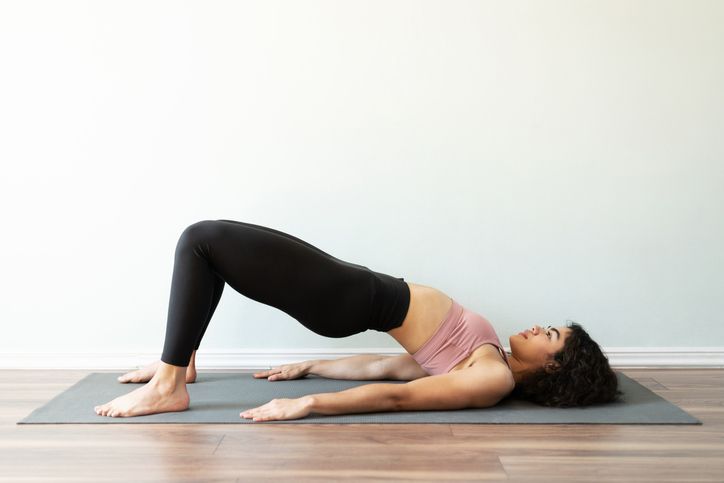
4. Glute Bridge
Muscles targeted: Glutes, hamstrings, lower back
An easy but powerful move that targets the often-neglected glute muscles and helps relieve lower back tension.
Tips:
• Lie on your back, knees bent, feet flat on the floor
• Push through your heels to lift your hips until your body forms a straight line from shoulders to knees
• Squeeze your glutes at the top
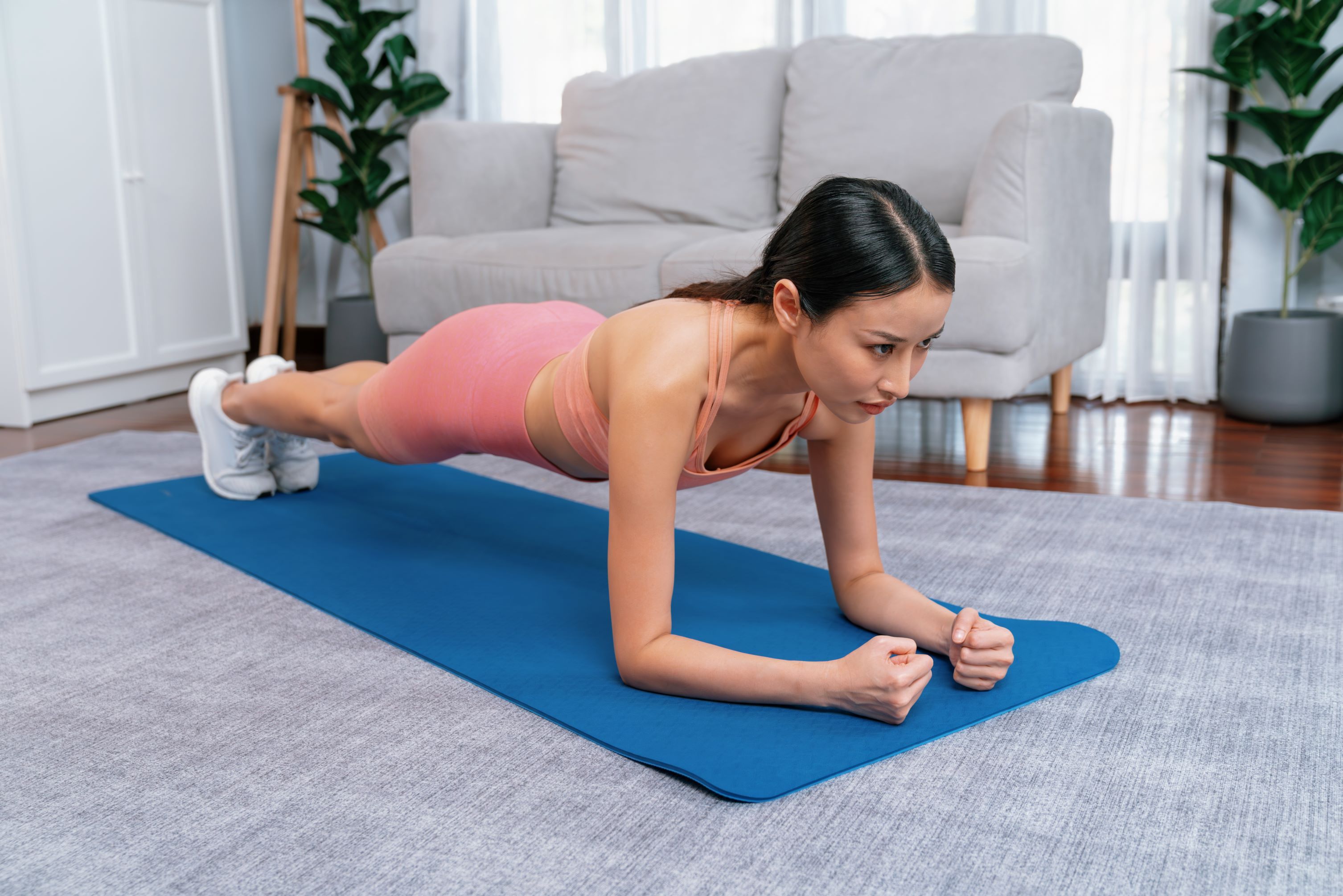
5. Plank
Muscles targeted: Core, shoulders, back
Planks are one of the most efficient exercises for core strength and stability.
Tips:
• Keep your body in a straight line
• Engage your core, glutes, and thighs
• Don’t let your hips sag
• Start with 20–30 seconds, gradually increasing duration
6. Standing Overhead Press (Using Dumbbells or Resistance Bands)
Muscles targeted: Shoulders, upper chest, triceps
This move builds shoulder strength and stability and improves posture.
Tips:
• Keep your core tight and back straight
• Press weights upward while avoiding shrugging your shoulders
• Lower weights slowly with control
Complete your sets with consistency
You can perform the above 6 moves for 3–4 sets, doing 12–16 reps per set. Keep the rest time between sets short. If you start to feel the movements are too easy, try increasing the weights while reducing the reps to gradually raise the intensity of your workout.
Pay attention to weak or painful areas like the shoulders or lower back
If you often feel discomfort or notice muscle imbalances—such as tight shoulders or lower back pain—it’s important to strengthen the surrounding support muscles rather than directly overworking the problem area, which can lead to injury.
For example, if your right shoulder is sore from too much time on the mouse or phone, train the surrounding back and shoulder muscles to improve joint stability. Or if you suffer from lower back pain, like I do, focus on safe core exercises instead of sit-ups that can worsen the condition. A good coach will help select movements that strengthen the right areas without straining the wrong ones.
If you have rounded shoulders, anterior pelvic tilt, or hunchback posture, consider consulting a trainer and targeting both the muscles that need strengthening and the ones that need releasing. Fitness isn't just about burning fat and building muscle—it’s also about correcting imbalances, relieving pain, and restoring healthy posture.
If you have time, don’t skip core training
Many of us in Hong Kong suffer from long working hours and a sedentary lifestyle, which leads to belly fat, visceral fat around the organs, and weakened core muscles. Strengthening your abs and back isn’t just for looks—it improves overall stability and posture, and supports more efficient full-body training. Training large muscle groups also boosts your metabolism and helps burn off deep fat more effectively. So whether you’re working arms, shoulders, or legs, if you’ve got a little extra time, always add a round of core training to finish!
免費體驗
S6 Body Sculpting Treatment
1 Minute Self-Registration
Date should not be before minimal date
If Your Fitness Goal Is Reduce Fat, Here’s What To Do
Pair proper nutrition with consistent training. Try doing strength training three days a week and cardio one day, or add light cardio after strength sessions. With consistency, you can expect to start seeing results in about three months.
Be wary of trying to slim down too fast—it can lead to the rebound yo-yo effect. A healthier and more sustainable weight-loss pace is around 0.5kg per week. That way, your body has time to adjust, and you won’t end up with loose skin. To do that, aim to cut 2,000 calories per week.
If Your Fitness Goal Is Muscle Gain, Here’s What To Do
If you have excess visceral and subcutaneous fat, start by improving your fitness level with high-intensity interval cardio combined with clean eating (not starvation). This will help reduce overall fat. Once your fitness improves, shift to more strength training with reduced cardio to build lean muscle. Burning visceral fat improves health, while reducing subcutaneous fat reveals the toned shape beneath.
To build muscle mass, aim to train 3–5 times a week. Choose 4–6 exercises per session, with 6–12 reps per set and 3–5 sets total. Rest less than a minute between sets, and use about 75–85% of your maximum strength.
If your goal is to build strength and stamina, train 2–4 times a week, with 3–5 exercises, doing 1–5 reps per set and 4–6 sets in total. Use 85–100% of your max strength for optimal results. Also, don’t forget to support your gains with extra protein. Aim for 1.5–1.8 grams of protein per kg of your body weight per day.
Don’t Have Time To Hit The Gym Or Don’t Know Where To Start? Let The S6 Body Sculpting Treatment Help!
Everyone knows consistent gym training delivers the best results—but it’s not always realistic. Gym newbies may feel overwhelmed by all the machines and unsure of proper form. That’s where the Perfect Medical S6 Body Sculpting Treatment can be your secret weapon.
What is the S6 Body Sculpting Treatment?
It’s a non-invasive fat reduction and body contouring solution that uses advanced biolaser technology to break down fat cells, turning them into fatty acids that can be naturally eliminated by your lymphatic system. The treatment also includes vacuum massage technology to promote lymphatic drainage and enhance the fat-burning process, particularly in stubborn areas like the abdomen.
S6 helps reduce fat and shape your body contours—perfect for those who want to slim down while improving muscle tone. Whether you’re dealing with belly fat, flabby arms, or love handles, this treatment offers fast and visible results—even if you don’t have time for the gym.
免費體驗
S6 Body Sculpting Treatment
1 Minute Self-Registration
Date should not be before minimal date
FAQ

How often should you work out to see results?
To build muscle and lose fat effectively, experts recommend working out 3–4 times a week for at least 45 minutes each session. Focus on 4–6 exercises per workout, and adjust your plan every 3–5 weeks to keep your body progressing.
What foods should you avoid while training?
Skip fast food and instant meals, which are often high in fat and sugar. Avoid sugary energy drinks—they can raise blood pressure and heart rate. Even zero-calorie sodas aren’t ideal; the artificial sweeteners can still mess with your metabolism and insulin response.
What should you avoid eating right before a workout?
Protein bars—many contain lots of sugar with little nutritional value. High-fiber veggies—they’re hard to digest and may cause bloating. Fatty foods—hard to digest and can make you feel sluggish. Yogurt—some are high in sugar and fat, which can upset your stomach. Flaxseeds—too much fiber pre-workout can lead to discomfort.
What should you eat before working out?
Opt for a light mix of protein and carbs to fuel your body. Try a banana, a whole grain cracker with peanut butter, or a boiled egg. Just be sure to eat at least two hours before your workout to avoid digestive issues.
Can you still build muscle and burn fat without working out?
Yes—if time, energy, or motivation are lacking, the S6 Body Sculpting Treatment offers an alternative. By targeting subcutaneous fat and enhancing your body’s natural fat metabolism, it helps reduce inches and restore muscle definition—without lifting a finger. Ready to transform your body? Start your journey with Perfect Medical’s S6 Body Sculpting Treatment—just take a minute to fill in a quick form and book your trial today!