- Home
- Trend
- Weight Loss Strategies
- Acne Tips
- Hair Health Information
- Blemish Removal Tips
- Acne Scar Removal Tips
- Muscle Building Techniques
- Intimate Care Tips
- Postpartum Intimate Care
- Eye Bags Wiki
- Tips for Face Slimming
- Secret of Permanent Hair Removal
- Breast Enlargement Tips
- Cure to Snoring
- Marionette Lines
- Skin-Tightening Secrets

Physical sunscreen offers exceptionally strong UV protection. As an outstanding UV-blocking agent, it does not require absorption into the skin — once applied, its mineral filters and protective particles work immediately. Protection is long-lasting, and it is suitable even for sensitive or acne-prone skin.
Online discussions have been comparing physical vs. chemical sunscreen, and while both have strengths and weaknesses, they differ significantly in their UV protection mechanisms. Below is a full explanation of how physical sunscreen works, how it differs from chemical sunscreen, 5 recommended physical sunscreen products, the correct usage method, and — at the end — a powerful solution for repairing UV-induced skin damage.

Why Do We Need Physical Sunscreen? The 3 Types of UV Damage
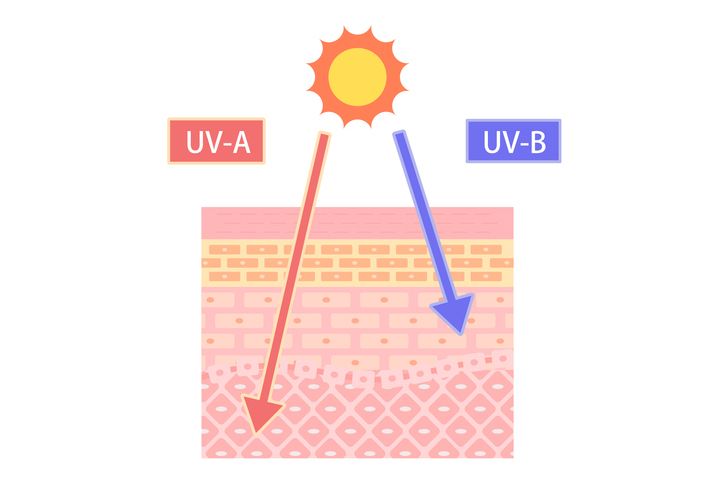
Before diving into the benefits of physical sunscreen, it is important to understand how harmful UV radiation truly is. Ultraviolet (UV) rays are invisible light present in sunlight and are divided by wavelength into three types: UVA, UVB, and UVC. These rays penetrate the atmosphere and reach our skin, causing various levels of damage.
1. UVA (Long-Wave): The Major Culprit of Aging
UVA accounts for roughly 95% of UV radiation. Its penetration power is extremely strong — it passes through clouds and glass and reaches deep into the dermis, breaking down collagen and elastin. This is why sun protection is necessary even indoors. Long-term exposure leads to:
• Photoaging
• Wrinkles
• Dull, uneven skin tone
2. UVB (Medium-Wave): The Main Cause of Sunburn
UVB cannot penetrate deeply, but it strongly affects the epidermis. It is the primary cause of redness, burns, and peeling. UVB is strongest in summer and around midday. Excessive exposure can lead to:
• Increased risk of skin cancer
• Hyperpigmentation
• Sensitivity and inflammation
3. UVC (Short-Wave): Mostly Blocked by the Atmosphere
UVC has the shortest wavelength and highest energy, but it is almost entirely absorbed by the ozone layer, preventing it from reaching the Earth’s surface. For this reason, UVC is not a concern in daily life.
Physical Sunscreen vs. Chemical Sunscreen: Understanding the 5 Key Differences
What Is Physical Sunscreen?
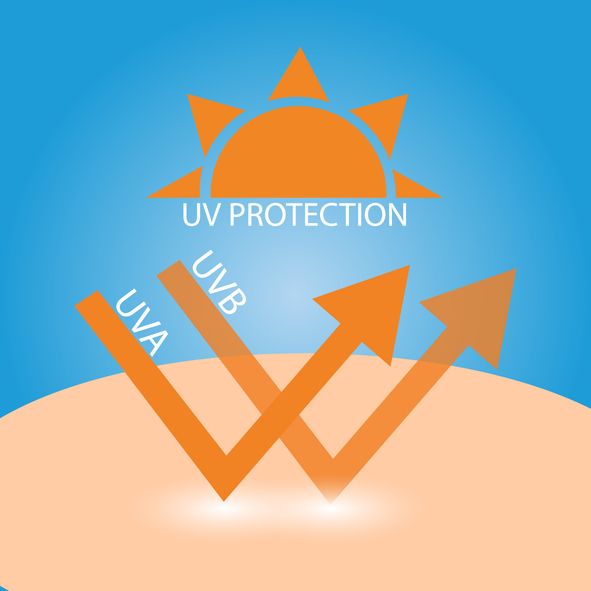
Physical sunscreen — also known as mineral sunscreen — works by forming a protective barrier on the skin’s surface that reflects UVA and UVB rays, similar to a mirror. Its main active ingredients are naturally derived minerals:
• Zinc Oxide
• Titanium Dioxide
These particles are highly stable, do not easily break down, and do not penetrate the skin. This makes physical sunscreen low-irritation and generally safe, especially for sensitive skin, pregnant women, and children.
What Is Chemical Sunscreen?
Instead of reflecting UV rays, chemical sunscreen works by absorbing UV radiation and converting it into heat. This category uses multiple chemical UV filters such as:
• Avobenzone
• Octocrylene
• Octisalate
Chemical sunscreens tend to have lightweight textures and no white cast, making them suitable for natural makeup looks or as a pre-makeup base. However, some filters lack stability and may irritate certain skin types — not always ideal for sensitive skin.
The 5 Major Differences Between Pure Physical and Chemical Sunscreens
• Mechanism: Physical reflects; chemical absorbs and converts.
• Ingredients: Physical uses natural mineral particles; chemical relies on synthetic compounds.
• Irritation Level: Physical is mild and low-irritation; chemical may trigger sensitivity.
• Texture: Physical can feel thicker and may leave a white cast; chemical is lightweight with a natural finish.
• Environmental Impact: Physical sunscreens are generally more eco-friendly; some chemical filters may harm coral reefs.
免費體驗
PicoCure Pigmentation Removal Treatment
1 Minute Self-Registration
Date should not be before minimal date
5 Popular Mineral Sunscreens in Hong Kong: Suitable for Most Sensitive Skin
1. Hada Labo Hydrating Physical Sunscreen UV Cream SPF50+ PA++++
• Brand: Hada Labo
• Protection: SPF50+ PA++++
• Texture: Lightweight, hydrating, non-sticky
• Key Ingredients: Pure mineral UV filters, hyaluronic acid, ceramides, niacinamide
• Benefits: Strong protection with moisturizing care, suitable for sensitive skin
• Areas: Face and body
• Highlight: Pure physical formula, gentle and irritation-free
2. Salt & Stone SPF 50 Natural Mineral Sunscreen Lotion
• Brand: Salt & Stone
• Protection: SPF50
• Texture: Lotion, easily absorbed, no white residue
• Key Ingredients: Non-nano zinc oxide, hyaluronic acid
• Benefits: Broad-spectrum protection with hydration
• Areas: Face and body
• Highlight: Fragrance-free, suitable for sensitive skin, water-resistant and sweat-resistant
3. ANESSA Perfect UV Sunscreen Skincare Milk NA 5X Edition
• Brand: ANESSA (Shiseido Japan)
• Protection: SPF50+ PA++++
• Texture: Lightweight lotion
• Key Ingredients: Combination of physical and chemical filters with hydrating agents
• Benefits: Strong outdoor protection
• Areas: Face and body
• Highlight: Highly water- and sweat-resistant; ideal for hot climates
4. La Roche-Posay Thermal Water Physical Sunscreen SPF50+ PA++++
• Brand: La Roche-Posay
• Protection: SPF50+ PA++++
• Texture: Smooth lotion, non-greasy
• Key Ingredients: Zinc oxide, titanium dioxide, thermal spring water, hyaluronic acid
• Benefits: Broad-spectrum protection, soothes sensitivity, reduces irritation
• Areas: Face; suitable for sensitive skin and pregnancy
• Highlight: Fragrance-free, alcohol-free, dermatologically tested for ultra-sensitive skin
5. Allie Extra UV Facial Gel (Upgraded Pure Physical Formula) SPF30 PA++++
• Brand: Allie (Kanebo)
• Protection: SPF30 PA++++
• Texture: Light, water-gel consistency
• Key Ingredients: Smooth Protect technology, zinc oxide, botanical moisturizers
• Benefits: Physical UV protection with hydrating care
• Areas: Face and body
• Highlight: Improved friction-resistant formula, can also be used as a makeup primer
Correct Application of Physical Sunscreen for Double the Protection
When to Apply
• Apply 20–30 minutes before outdoor exposure to ensure proper adherence.
• Use sunscreen even indoors or on cloudy days — UV rays are always present.
Amount to Use
• For the face: approximately a coin-sized amount.
• For the body: apply generously to all exposed areas.
How to Apply
• Spread evenly over the face, neck, arms, legs, and any exposed skin.
• Gently pat or massage to enhance product adherence.
Reapplication
• Reapply every 2–3 hours, especially after sweating or swimming.
• Even water-resistant products require regular reapplication.
Removal Guide
• Physical sunscreens are often thicker and require thorough cleansing.
• Use cleansing oil or cleansing milk to dissolve the formula.
• Follow with a facial cleanser to prevent clogged pores and irritation.
Sun Damage Causing Dull Skin and Dark Spots? Perfect Medical PicoCure U.S. Picosecond Laser Can Be Your Solution
If you are using multiple physical sunscreen creams yet still develop dark spots, here is your answer. The Perfect Medical PicoCure Pigmentation Removal Treatment offers extremely high safety, zero pain, zero downtime, and is suitable for oily, dry, and sensitive skin. Just one session delivers visible results, helping erase stubborn UV damage.
The treatment uses four different picosecond and nanosecond laser wavelengths to address various skin concerns. Nanosecond lasers break down large pigment clusters, while picosecond lasers shatter pigment into ultra-fine particles that are naturally metabolized. This achieves brightened skin tone, even pigmentation, reduced pores, improved eye-area laxity, and significantly smoother texture.
Register now for a complimentary session:
• Professional Skin Analysis
• Perfect Medical PicoCure U.S. Picosecond Laser Treatment
免費體驗
PicoCure Pigmentation Removal Treatment
1 Minute Self-Registration
Date should not be before minimal date
FAQ

1. Can physical sunscreen clog pores?
Yes, if not cleansed thoroughly. Proper removal prevents congestion.
2. Does physical sunscreen require makeup remover?
Yes. Use cleansing oil or cleansing milk to remove residue effectively.
3. Can physical sunscreen and makeup primer be used together?
Yes. Apply sunscreen first, then primer.
4. Is higher SPF always better?
Not necessarily. Choose SPF appropriate for your environment; excessively high SPF may increase skin burden.
5. Does physical sunscreen help prevent dark spots?
Yes. Zinc oxide and titanium dioxide form a reflective barrier that prevents UV penetration, making physical sunscreen ideal for sensitive skin or those prone to pigmentation. For deeper pigment repair, the Perfect Medical PicoCure Picosecond Laser effectively breaks down underlying pigment to reduce future spot formation.