- Home
- Trend
- Weight Loss Strategies
- Acne Tips
- Hair Health Information
- Blemish Removal Tips
- Acne Scar Removal Tips
- Muscle Building Techniques
- Intimate Care Tips
- Postpartum Intimate Care
- Eye Bags Wiki
- Tips for Face Slimming
- Secret of Permanent Hair Removal
- Breast Enlargement Tips
- Cure to Snoring
- Marionette Lines
- Skin-Tightening Secrets

Solar lentigines (also known as sunspots) are often confused with freckles. While both are common types of pigmentation, both are influenced by UV exposure, and both tend to appear on the cheeks, they are fundamentally different. Regardless of which type appears on the skin, pigmentation is something few women welcome. To prevent or eliminate these stubborn marks, the first step is understanding exactly what type of pigmentation you have so you can address it correctly. This article explains how to distinguish between different pigmentation types, provides tips for preventing sunspots, and offers a comprehensive guide to treatment options.

What Are Solar Lentigines (Sunspots)? Characteristics of Solar Lentigines
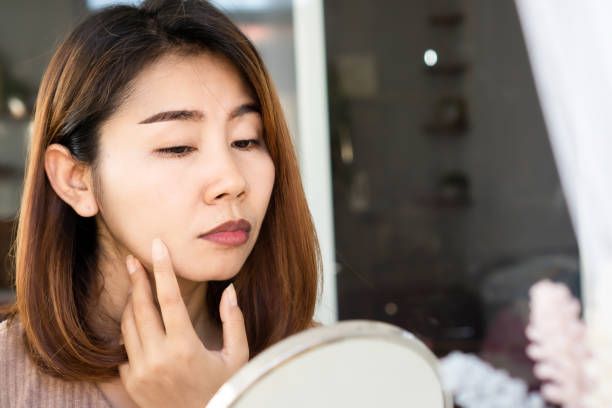
Solar lentigines (sunspots) are pigment spots caused by UV exposure. They are located in the epidermis, appear brown in color, and have a smooth surface. Their size varies significantly—from as small as a sesame seed to as large as a coin. They typically start out round or oval in shape and commonly appear on highly exposed and protruding facial areas such as the cheekbones, nose, cheeks, forehead, and outer eye area. They occur more frequently among fair-skinned individuals, middle-aged adults, and seniors.
Sunspot Cause: UV Radiation Is the Main Culprit
UV radiation from sunlight accelerates skin aging and is widely considered responsible for many dermatological issues—including sunspots.
When the skin is exposed to UV rays, the melanocytes produce melanin to protect skin cells from damage. The more UV exposure the skin receives, the more melanin it produces. Without adequate sun protection, prolonged exposure prompts excessive melanin release. Over time, the pigment accumulates in the deeper skin layers, gradually moves toward the surface, and becomes visible as sunspots.
Why Do People Get Sunspots Even Without Sun Exposure?
Many are puzzled: if UV exposure causes sunspots, why do people who rarely go outdoors still develop them? The reason is that ultraviolet radiation exists not only in sunlight but also in artificial light sources such as phones, tablets, and computer screens. Long-term exposure to blue light can stimulate melanin production and trigger pigmentation.
While UV rays are the primary driver, other factors also contribute, including genetics and individual skin predispositions. Some people develop pigmentation earlier—sometimes even during adolescence. Additionally, diet and sleep patterns play a significant role. Irregular eating habits, restrictive dieting, chronic lack of sleep, and frequent late nights all accelerate the development of sunspots.
The 5 Major Types of Common Pigmentation
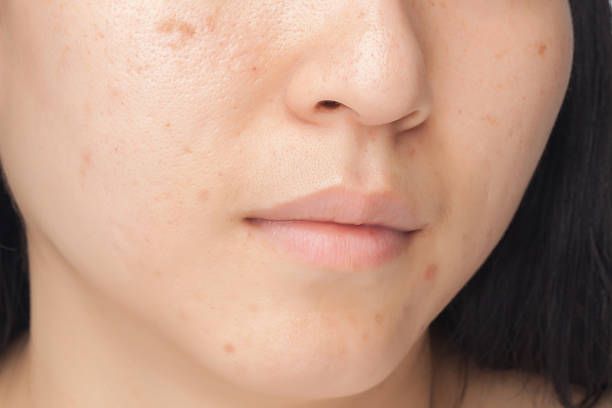
Sunspots and freckles are often confused, but they differ significantly in origin, appearance, and skin depth. Below are the five most common pigmentation types: sunspots, freckles, melasma, café-au-lait spots, and age spots.
Pigmentation Type 1: Sunspots (Solar Lentigines)
Characteristics: Brown in color, usually round or oval, with sizes ranging from tiny specks to coin-sized patches. They typically appear individually and develop on sun-exposed facial areas such as the forehead, cheeks, and cheekbones. They are located in the epidermis.
Cause: Long-term accumulated UV damage, often appearing from mid-adulthood onward.
Pigmentation Type 2: Freckles
Characteristics: Red or light brown small spots that darken after strong sun exposure. They are small, generally 1–2 mm, irregular in shape, and distributed on the cheeks, nose, neck, and hands. They are superficial pigmentation.
Cause: Partly UV-related but primarily hereditary. Many people develop freckles in childhood.
Pigmentation Type 3: Melasma
Characteristics: Light to dark brown patches that form large, symmetrical, net-like distributions on sun-exposed areas. Edges are often blurred. Melasma forms in deeper layers of the skin.
Cause: Hormonal fluctuations—particularly during pregnancy, menopause, or when taking birth-control pills. Genetics and UV exposure also play roles.
Pigmentation Type 4: Café-au-lait Spots
Characteristics: Light to dark milky-brown patches that may appear anywhere on the body. They range from a few millimeters to up to 20 cm. They have clear boundaries, smooth surfaces, and irregular shapes.
Cause: Not UV-related. They are genetic skin conditions—essentially a type of birthmark. They may appear at birth or develop in early childhood.
Pigmentation Type 5: Age Spots
Characteristics: Light to deep brown patches, often the size of a soybean or larger. They grow and become more raised with age. Commonly found on sun-exposed areas such as the face, hands, arms, and neck. They are deeper-layer pigmentation.
Cause: Skin aging, thickening of the keratin layer, and accumulated UV damage. They typically appear after ages 40–50.
免費體驗
PicoCure Pigmentation Removal Treatment
1 Minute Self-Registration
Date should not be before minimal date
How to Prevent Sunspot Formation? Remember: Sun Protection Is Non-Negotiable
Since sunspots are primarily caused by accumulated UV exposure, proper sun protection is the first and most essential prevention strategy. Sunscreen is therefore indispensable. But how do you choose the right one?
Sunscreen Buying Tips
The market is filled with sunscreens for different skin types and uses. To help narrow your choices, here are practical selection guidelines.
Choose SPF and PA Rating Based on Your Activity
SPF measures UVB protection, starting at SPF 15. PA measures UVA protection, categorized into four levels: PA+, PA++, PA+++, and PA++++.
Higher values provide better UV protection, but stronger sunscreens can place greater burden on the skin.
For daily indoor activities: SPF 15–30, PA+ to PA++. For long outdoor exposure or intense sunlight: Higher SPF products (e.g., SPF 50).
Chemical vs. Physical Sunscreen
Chemical Sunscreens: Absorb UV rays and convert them into heat. They offer strong protection with lightweight textures but may irritate sensitive skin. Ideal for oily or combination skin.
Physical Sunscreens: Sit on the skin’s surface and reflect UV rays. They are gentler and less likely to cause allergies but may feel heavier and leave a white cast. Suitable for dry or sensitive skin, including children.
Some modern formulations combine both for balanced protection with reduced irritation.
How to Use Sunscreen Correctly
1. Apply sunscreen after skincare and before makeup.
2. Makeup primers or bases cannot replace sunscreen.
3. Use adequate amounts: about 5 ml for the face; about 35 ml for the entire body.
4. Reapply every two hours, especially when sweating.
5. Thoroughly cleanse the skin after sunscreen use to avoid clogged pores.
Natural Remedies: Traditional Chinese Medicine (TCM) Dietary Approaches
From a TCM perspective, pigmentation is not only related to UV damage but also to internal imbalances. Addressing internal health through diet can support pigmentation improvement.
Remedy 1: White Fungus (Tremella)
Rich in natural plant collagen, white fungus supports hydration and may help reduce pigmentation.
Remedy 2: Tomatoes
High in vitamin C and lycopene, tomatoes inhibit melanin activity and brighten the skin.
Remedy 3: Kiwi
Packed with fiber and vitamin C, kiwi helps fight oxidative damage and may reduce sunspots over time.
Remedy 4: Strawberries
Strawberries contain high levels of vitamin C, anthocyanins, and lycopene—effective antioxidants that help mitigate melanin accumulation.
Remedy 5: Barley (Job’s Tears)
Demonstrated to support skin brightening and maintain skin clarity. Consistent intake may help reduce pigmentation.
Treatments for Sunspots
Although sunspots are harmless, their appearance can impact one’s confidence. Beyond diet, here are three common clinical treatment options.
Treatment 1: Prescription Topical Creams
Dermatologists often prescribe topical treatments containing hydroquinone or tretinoin. These suppress melanin production but require long-term, consistent use. Incorrect use may cause irritation.
Treatment 2: Intense Pulsed Light (IPL)
IPL uses multiple wavelengths to break down pigmentation and improve vascular issues and wrinkles simultaneously. However, the lack of wavelength specificity increases the risk of overheating or burns when performed by untrained personnel. It also tends to be slower and less targeted than laser treatments.
Treatment 3: Laser Pigmentation Removal
Lasers use specific wavelengths to target melanin at different depths. They are more precise, faster, and safer than IPL. Modern technologies such as picosecond lasers (e.g., PicoCure) shatter pigment particles into extremely fine dust-like fragments that the body can metabolize more easily. They also stimulate collagen production, improving wrinkles, pores, and overall skin tone. PicoCure is non-invasive, FDA-cleared, CE-certified, and designed for minimal thermal damage.
免費體驗
PicoCure Pigmentation Removal Treatment
1 Minute Self-Registration
Date should not be before minimal date
FAQ

What is the difference between sunspots, freckles, and melasma?
Sunspots are brown, round or oval, vary in size, and appear mainly in sun-exposed areas. They are primarily caused by cumulative UV exposure. Freckles are small, irregularly shaped, mostly 1–2 mm, and strongly influenced by genetics. Melasma forms larger, symmetrical patches with blurred edges, linked to hormonal changes and deeper skin layers.
Can white fungus remove sunspots?
White fungus is nutritious and supports healthy, hydrated skin, and some believe it may help lighten pigmentation. However, its ability to remove sunspots entirely remains uncertain. It may complement other treatments but is not a standalone cure.
Can applying lemon on the face remove sunspots?
Lemons do contain vitamin C, which can help prevent and lighten pigmentation by inhibiting melanin production. However, lemon cannot make existing sunspots disappear. More importantly, applying lemon directly to the skin is unsafe. Lemon contains psoralen, a photosensitizing compound. When applied to the face and then exposed to UV light, it can trigger increased melanin formation and actually raise the risk of developing more sunspots. In addition, the acidity of lemon juice can irritate the skin. It is not recommended to try lemon mask remedies on your own.
How can you prevent sunspots from forming?
To prevent sunspots, you must address their root cause: ultraviolet radiation. Because UV rays are present in sunlight and artificial light and cannot be completely avoided, the only effective approach is proper, consistent sun protection. Beyond hats, UV-protective clothing, and umbrellas, you should also apply sunscreen. Cream, lotion, or spray textures are all acceptable, as long as the product has appropriate SPF and PA levels and is used correctly. Without proper application and reapplication, sunscreen cannot deliver its intended protection. For detailed guidance, refer to the section above on how to prevent sunspots.
Is pico laser effective for removing sunspots?
Yes. The results are unquestionably significant. The Perfect Medical PicoCure picosecond pigmentation-removal treatment combines both picosecond and nanosecond laser technologies with four high-energy wavelengths (1064 nm, 650 nm, 585 nm, and 532 nm). This allows precise penetration down to 500 microns into the dermis, directly targeting sunspot melanin. Pigment is shattered in an extremely short time and then expelled naturally through the skin’s metabolic process, delivering far faster results than traditional lasers. At the same time, the high-energy laser stimulates collagen production and triggers the skin’s repair mechanisms, improving uneven tone, fine lines, laxity, and enlarged pores. Whether you have sunspots, freckles, melasma, or age spots, the PicoCure treatment is suitable. You may register online for a complimentary trial session if interested.