- Home
- Trend
- Weight Loss Strategies
- Acne Tips
- Hair Health Information
- Blemish Removal Tips
- Acne Scar Removal Tips
- Muscle Building Techniques
- Intimate Care Tips
- Postpartum Intimate Care
- Eye Bags Wiki
- Tips for Face Slimming
- Secret of Permanent Hair Removal
- Breast Enlargement Tips
- Cure to Snoring
- Marionette Lines
- Skin-Tightening Secrets

Pigmentation is every woman’s number one skin concern. Not only is it notoriously difficult to remove, it can instantly make the skin look ten years older. Fortunately, advancements in medical aesthetic technology have introduced a variety of professional treatments designed to target pigmentation. Among them, laser spot removal remains the most common and widely offered solution.
Today, many beauty centres provide laser pigmentation treatments, but not all options are equally safe or effective. Some pico laser treatments may even cause post-treatment darkening. That is why choosing a suitable and safe laser treatment is essential. In this article, we will explain the most commonly used laser technologies for pigmentation removal, their effects and potential side effects, as well as alternative pigmentation treatments — including their benefits and limitations.

Types of Laser Pigmentation Removal Technology
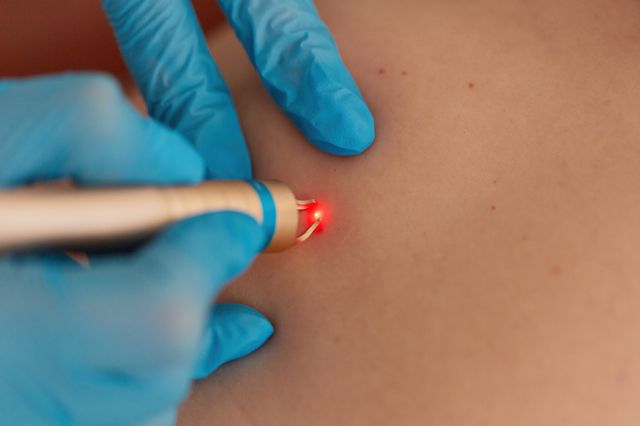
Although all laser pigmentation treatments aim to eliminate melanin cells within the deeper skin layers, there are several different laser technologies available on the market today. Each type works on a different principle and offers distinct benefits.
Nanosecond Laser
Nanosecond laser technology is considered the most traditional form of laser treatment. A “nanosecond” refers to a unit of time — approximately one billionth of a second — indicating how long laser energy is emitted.
Nanosecond lasers work primarily through a photothermal effect. Melanin cells absorb heat easily, so high-heat laser pulses are delivered into the skin to target and break down melanin. Once fragmented, the pigment is either naturally absorbed by the body or eliminated through the lymphatic system.
However, this mechanism requires the laser energy to remain in the skin for a longer duration to be effective. As a result, excess heat may easily damage surrounding tissue, increasing the likelihood of redness, dryness, and post-treatment hyperpigmentation.
Pico Laser
Pico laser is currently one of the most popular laser technologies and is highly favoured by pigmentation-prone individuals. Like nanosecond lasers, “picosecond” refers to pulse duration — approximately one trillionth of a second — allowing laser energy to penetrate the skin much faster.
Beyond pulse speed, pico laser technology works differently. It primarily uses a photoacoustic (photomechanical) effect. High-energy pulses rapidly shatter melanin into ultra-fine particles, making them easier for the body to absorb or metabolise.
Most importantly, the ultra-short pulse duration significantly reduces heat retention within the skin. This minimises thermal damage and lowers the risk of side effects such as redness and post-inflammatory darkening.
Fractional (Honeycomb) Pico Laser
Fractional pico laser technology has gained popularity in recent years and is considered an advanced evolution of standard pico lasers. Its key feature is the addition of a specialised honeycomb focusing lens.
This lens, also known as an MLA focusing lens, uses optical refraction to disperse laser energy into multiple micro-beams that target specific areas of the skin. This reduces heat concentration, minimises surface damage, and triggers a laser-induced optical breakdown (LIOB) effect within the dermis.
Through this micro-cavitation process, the skin’s self-repair mechanisms are activated, collagen regeneration is stimulated, and overall skin quality is improved alongside pigmentation reduction.
Why Are Laser Pigmentation Treatments So Popular?
Elimination of Melanin Cells
The primary function of laser treatments is to eliminate melanin cells. Melanin strongly absorbs laser energy, allowing the laser to automatically target and locate pigment clusters. Once locked onto the pigment, the laser fragments it so it can be absorbed or excreted by the body.
When melanin accumulation beneath the skin is removed, surface pigmentation such as hormonal spots, sunspots, and age spots gradually fades, achieving visible spot reduction.
Brightening Skin Tone
In some cases, melanin accumulation exists beneath the skin without being visible on the surface, causing dullness rather than visible spots. Over time, these pigments grow and may eventually surface.
Laser treatments can remove this hidden pigmentation in a single course, restoring brightness and clarity while also preventing future spot formation.
Improving Skin Texture
As we age, collagen production decreases, leading to sagging, fine lines, and loss of elasticity. Effective skin rejuvenation requires collagen regeneration.
When laser energy penetrates the skin, it also activates fibroblasts and stimulates collagen production. This restructures the skin matrix, fills tissue gaps, and improves overall texture, firmness, and youthfulness.
Fading Acne Marks
When acne occurs, the skin activates repair mechanisms, increasing blood flow and pigment production at the affected site. Once acne heals, pigmented acne marks often remain.
Laser treatments can simultaneously target pigment within acne marks while stimulating collagen production, helping fade discoloration and improve acne scars such as shallow depressions.
免費體驗
PicoCure Pigmentation Removal Treatment
1 Minute Self-Registration
Date should not be before minimal date
Laser Pigmentation Removal Is Not All-Powerful — These Side Effects You Must Know
Redness and Swelling
Although modern laser treatments are generally safe, they still involve high-energy light. Temporary redness and swelling are the most common side effects. With proper aftercare, these symptoms usually subside within one week.
Dryness and Peeling
After laser treatment, skin cell turnover accelerates, increasing the need for hydration and nutrients. Insufficient post-treatment care may result in dryness, tightness, itching, or peeling. Proper moisturising is essential after treatment.
Post-Inflammatory Hyperpigmentation
Laser heat can cause surface pigment to crust or scab after treatment. This is normal and should be allowed to fall off naturally. Premature removal may overstimulate melanocytes, leading to rebound pigmentation and darker spots.
Hypopigmentation (Light Spots)
Hypopigmentation is a rare but serious side effect, usually associated with older laser or IPL treatments. Excessive laser energy may permanently destroy melanocytes, causing areas of skin to appear lighter than surrounding skin. Once this occurs, recovery is extremely difficult.
Besides Laser Treatments, What Other Pigmentation Solutions Exist?
Spot-Correcting Creams
Spot creams often contain vitamin C, kojic acid, or antioxidants that may improve pigmentation. However, formulations vary, results are inconsistent, and surface application limits their effectiveness.
Whitening Serums
Many brightening serums claim to remove pigmentation using ingredients such as vitamin C, arbutin, and niacinamide. While they may improve overall tone over time, their ability to eliminate established pigmentation is limited compared to laser treatments.
IPL (Intense Pulsed Light)
IPL uses multiple wavelengths to target pigmentation via thermal effects. However, its energy disperses widely, remains in the skin longer, and carries a higher risk of burns, blistering, redness, and post-treatment darkening. Medical consultation is recommended before proceeding.
Want to Avoid Post-Treatment Darkening? Pay Attention to These Aftercare Tips
Apply Sunscreen Daily
UV exposure stimulates melanin production. Sunscreen is essential after treatment to prevent pigment recurrence and protect treatment results.
Use Intensive Hydration Products
Post-treatment skin requires ample moisture to support repair and regeneration. Proper hydration reduces dryness and enhances recovery and treatment effectiveness.
Avoid Skin Irritation
For at least one week post-treatment, avoid products containing acids, alcohol, or fragrance. Do not exfoliate, use hot water, or rub the skin aggressively to prevent irritation and side effects.
免費體驗
PicoCure Pigmentation Removal Treatment
1 Minute Self-Registration
Date should not be before minimal date
Perfect Medical PicoCure US Ultra Pico Pigmentation Treatment: Effective Spot Removal with Reduced Side Effects
With so many laser options available, selecting the right treatment can be challenging. Perfect Medical’s PicoCure Pigmentation Removal Treatment combines nanosecond and picosecond technologies with four laser wavelengths to penetrate deeply and eliminate pigment efficiently.
Nanosecond laser energy first breaks pigment into smaller fragments, followed by pico laser energy that pulverises it into dust-like particles for easier absorption and elimination. This dual approach enhances results while minimising thermal damage.
In addition to pigmentation removal, PicoCure stimulates collagen production, improving skin texture, fine lines, acne marks, and overall radiance.
Perfect Medical currently offers a complimentary first trial session with professional skin analysis. Interested individuals are encouraged to book early.
免費體驗
PicoCure Pigmentation Removal Treatment
1 Minute Self-Registration
Date should not be before minimal date
FAQ

What types of pigmentation are there?
Common types include freckles, hormonal pigmentation, and sunspots. Freckles are genetic and light brown, hormonal pigmentation is linked to hormonal imbalance, and sunspots result from prolonged UV exposure.
What laser technologies are used for pigmentation removal?
Common options include nanosecond laser, pico laser, and fractional pico laser.
How do traditional lasers work?
Traditional lasers rely on photothermal effects, using heat to break down melanin, often resulting in crusting after treatment.
What is post-treatment darkening?
It occurs when scabs are prematurely removed, overstimulating melanocytes and causing darker pigmentation.
Is laser treatment suitable for all pigmentation types?
Laser treatments address most common pigmentation types, but effectiveness depends on depth and cause. Professional assessment is required. PicoCure’s ultra-fast pulses allow precise pigment targeting with reduced heat damage for faster, more even results.