- Home
- Trend
- Weight Loss Strategies
- Acne Tips
- Hair Health Information
- Blemish Removal Tips
- Acne Scar Removal Tips
- Muscle Building Techniques
- Intimate Care Tips
- Postpartum Intimate Care
- Eye Bags Wiki
- Tips for Face Slimming
- Secret of Permanent Hair Removal
- Breast Enlargement Tips
- Cure to Snoring
- Marionette Lines
- Skin-Tightening Secrets

Many women regularly remove facial hair, using methods like threading or facial razors at home.
In today’s world, where appearances matter, no one wants visible peach fuzz or upper lip hair. Apart from giving an untidy impression, excess facial hair can make makeup go on unevenly and even prevent skincare products from absorbing properly. Annoying, right? Let’s dive into why facial hair can be a problem—and how to deal with it.

Do You Really Need to Remove Facial Hair? What’s the Impact of Having Too Much?
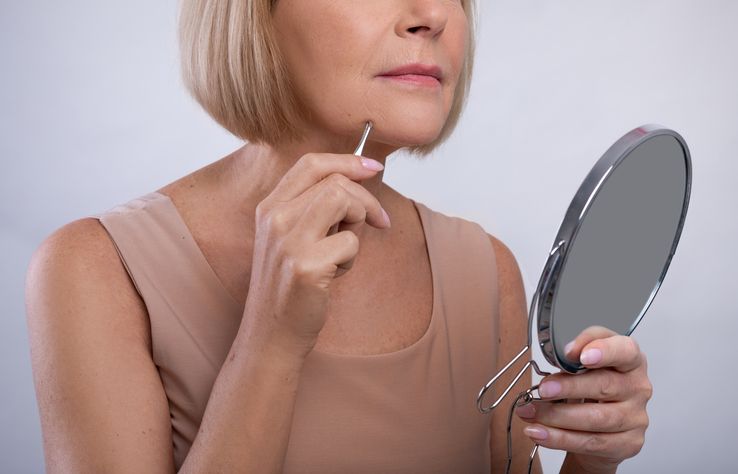
Fine facial hair covers the whole face, acting as the skin’s first protective barrier. It helps block dust, dirt, and airborne particles from directly touching the skin.
However, some women naturally have thicker, darker hair—especially on the face and upper lip—which can be noticeable up close, causing embarrassment. Here’s how excess facial hair can affect you:
1. Affects Appearance
We all want to look our best, but if facial hair is thick, coarse, and dark, the skin can look like it’s covered with a “grey veil,” making your complexion appear dull and lifeless. It can also make you feel self-conscious in close-up conversations.
Upper lip hair is especially tricky—those tiny, obvious hairs in such a visible area can be distracting no matter what you’re doing.
2. Makeup Doesn’t Sit Well
Many women remove facial hair so their makeup applies more smoothly. Even fine hairs, when grouped together, can make certain areas of the face look shadowed. When applying foundation, facial and lip hair can stop the product from blending seamlessly, leading to cakiness, patchiness, and faster makeup breakdown.
3. Poor Skincare Absorption
Too much facial hair can act as a barrier between your skin and your skincare products. Even if you apply high-quality serums and creams daily, the active ingredients may not fully penetrate the pores—meaning all that effort could go to waste.
4. Higher Risk of Breakouts
In Hong Kong’s hot, humid climate, dense facial and upper lip hair can trap bacteria on the skin. Combined with sweat, excess sebum, and air pollution, this can lead to clogged pores, blackheads, whiteheads, and acne.
Is Facial Hair Removal Worth It? The Benefits of Going Hair-Free
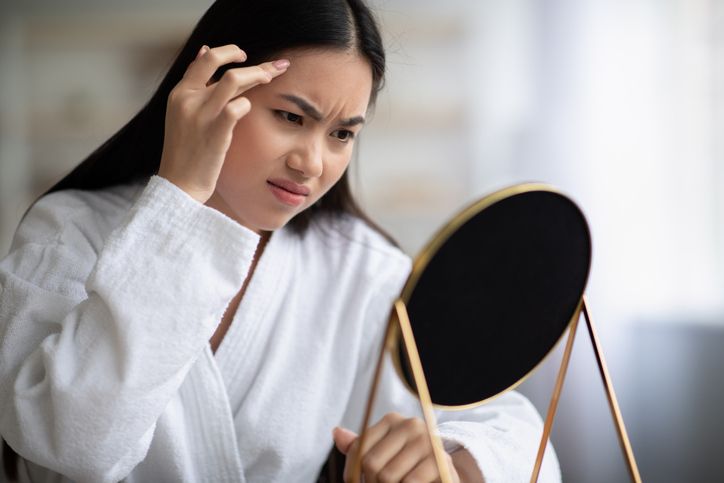
While facial hair does protect the skin, too much of it can make the complexion look dull and increase breakout risk. Removing it not only enhances appearance—it also brings extra benefits:
1. Refined, Smoother Pores
Facial hair removal often removes dead skin cells at the same time, helping to keep pores clear. This can make skin look more refined and even help minimise pore size. As a result, excess oil buildup is reduced, lowering the chances of blackheads, whiteheads, and pimples.
2. Better Skincare Absorption
Without the barrier of peach fuzz, pores stay clearer, and skincare products can be absorbed more effectively. Nutrients can penetrate deeper, making your routine more effective.
3. Brighter, More Radiant Skin
Women with thicker or denser peach fuzz often find their skin looks less luminous. After hair removal, skin appears more even-toned, glowing, and radiant.
免費體驗
A3 Laser Hair Removal Treatment
1 Minute Self-Registration
Date should not be before minimal date
Can Facial Hair Removal Cause Breakouts?
Some women notice small pimples after shaving their legs or arms—so can the same thing happen to the face?
It depends on hygiene. If your tools—whether razors, trimmers, or creams—aren’t clean, bacteria can easily cause breakouts or irritation. Always wash your hands and tools before and after use.
Also, avoid facial hair removal if you have open wounds, active acne, or folliculitis, as it can worsen irritation or spread bacteria.
Trending on RedNote: At-Home Facial Hair Removal Method
Can you safely remove facial hair at home? Since upper lip and peach fuzz are usually finer than body hair, many women choose DIY removal. Here’s a popular method from RedNote (Little Red Book):
Step 1: Prepare a Facial Razor and Cream
Use a facial razor that’s not overly sharp and has a shorter blade to reduce the risk of cuts. Apply a layer of face cream to act as a lubricant, reducing dryness or friction.
Step 2: Shave in the Direction of Hair Growth
Facial hair is finer than body hair, so shaving against the grain can cause breakage or micro-cuts. Always shave in the direction the hair grows:
• Cheeks & cheekbones: Usually grow outward
• Forehead & upper lip: Generally grow from the centre outward and slightly downward
Step 3: Soothe and Hydrate with a Cooling Mask
After shaving, rinse your face with clean water. Apply a calming, soothing mask to reduce redness or irritation, then finish with a rich moisturiser to lock in hydration and help tighten pores.
Facial-Hair Removal Methods Compared — Is Laser The Best?
Facial hair is only a small part of overall body hair, but because it grows on visible areas (like the upper lip), it can have a big impact on appearance. Many women remove facial hair at home. Below we summarize several common methods — razors, plucking, threading, depilatory creams — and outline how each works plus the pros and cons.
Method 1 — Razor
Shaving with a razor is the most popular option because it’s the most convenient and cheapest. There are many kinds of razors on the market; you simply shave the areas where hair is denser to remove excess hair. While shaving you’ll also remove surface oil and grime, so skin can look cleaner.
However, if the blade is too sharp you can easily nick the skin, causing wounds and ingrown hairs. Shaving results are not long-lasting; repeated shaving can make hairs appear coarser and more noticeable.
Method 2 — Plucking
If the facial hair is sparse, you can use tweezers to pluck it out. The advantage is that you don’t cut the skin like with a razor, and you remove hair from the root — so regrowth takes longer and new hairs are usually finer.
That said, facial hairs are generally finer and lighter than body hair, and plucking facial hair takes a lot of time and patience. Plucking upper-lip hair can be quite painful, and if done improperly it may cause folliculitis (inflamed follicles) or clogged pores and other problems.
Method 3 — Traditional threading
Threading is often the first technique people think of for facial hair removal. It’s a traditional Chinese beauty technique (also called “twisting” or “thread face”). The practitioner ties a knot in a cotton thread, holds it in their mouth and hands, then pulls the thread tight against the skin. The friction and pulling removes excess hair, dead skin and oil in one go. Threading can remove hair from the root and the effects last a long time.
However, results depend heavily on the technician’s skill. Poor technique can lead to quick regrowth, and threading is painful for some people. Skin often becomes red and swollen right after treatment.
Method 4 — Depilatory cream
Many women choose depilatory creams made specifically for facial use. You apply the cream, wait the instructed time, then wash it off — hair dissolves and removal is painless and simple.
But depilatory creams don’t pull hair from the root, so regrowth is quick. Facial skin is more sensitive than body skin, so use a product labeled for the face — otherwise you risk irritation, redness or itching.
Method 5 — Laser facial hair removal
Laser is currently the most popular facial hair removal treatment. A single-wavelength laser targets and penetrates the hair follicle, damaging the follicle so it shrinks and loses the ability to produce hair — achieving a permanent hair-reduction effect. Laser technology has matured and is generally safe and reliable; after about 4–6 sessions many people achieve long-term hair reduction. Laser can also improve skin texture and smoothness. Compared with the other methods listed, laser treatments are more expensive.
免費體驗
A3 Laser Hair Removal Treatment
1 Minute Self-Registration
Date should not be before minimal date
How To Care For Your Skin After Facial Hair Removal
Facial skin is more delicate than other areas, so after laser or other hair-removal treatments you should nourish and protect it to avoid redness or allergic reactions.
Aftercare 1 — Boost hydration
Shaving or hair removal can leave skin dry. After treatment, apply a light, refreshing moisturizer right away. Continue to use moisturizing creams morning and night and step up hydration to prevent dryness and flaking.
Aftercare 2 — Calm the skin
Within 24 hours after treatment the skin may be extra sensitive and pores more open. Use soothing products such as a hydrating lotion or aloe vera gel to calm the skin and help it cool down.
Aftercare 3 — Don’t pick or scratch
Temporary redness and itchiness are normal after laser removal. Avoid scratching — that can leave scars. Keep to gentle cleansing and regular gentle care; the redness and itch will usually fade quickly.
Aftercare 4 — Do sun protection
UV exposure can worsen pigmentation and irritation. After hair removal the skin is drier and more reactive; avoid prolonged sun exposure and apply a lightweight sunscreen (SPF 30+ recommended) whenever you go outside.
Aftercare 5 — Pause exfoliants and brightening acids
Many brightening or exfoliating products contain irritating or photosensitizing ingredients (AHA/BHA, acids, scrubs). These thin the stratum corneum and increase sensitivity, so stop using them for about a week before and after your hair-removal session.
Still Can’t Get A Clean Finish? Try Permanent Laser Facial Hair Removal
If depilatory creams never give you the smooth result you want and you’re tired of living with noticeable facial hair, consider a professional laser solution — for example, the Perfect Medical A3 laser treatment.
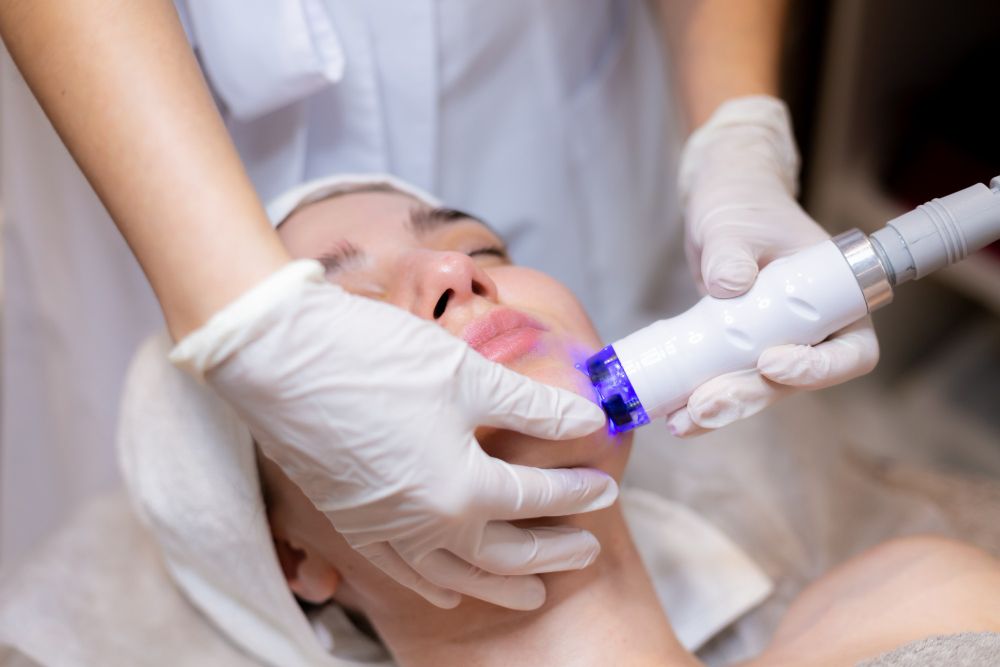
The A3 system uses a built-in intelligent dual cooling system to provide immediate soothing and near–painless hair removal. Its laser handpiece is 10 mm × 10 mm for wide coverage, able to remove up to 500 hairs per second. The laser energy penetrates deeply to the follicle, gently disabling the follicle’s growth capability for efficient hair clearance.
Perfect Medical’s A3 treatment is promoted as safe and suitable for all skin tones; the cooling tech reduces discomfort so you get effective results with minimal pain. They’re currently offering a promotional trial — you can register via the link to try their laser tech and say goodbye to makeup that won’t sit and dull-looking skin.
免費體驗
A3 Laser Hair Removal Treatment
1 Minute Self-Registration
Date should not be before minimal date
FAQ

Can shaving permanently remove facial hair?
Shaving is the most commonly chosen method for facial hair removal because it’s the most convenient and cost-effective. There are many types of razors available on the market—just purchase one and gently shave areas with more noticeable hair to remove the excess. During the shaving process, the razor blade can also scrape away excess oil and dirt from the skin’s surface, leaving it cleaner and smoother. However, if the blade is too sharp, it can easily cut the skin, causing wounds. In addition, shaving only offers short-term results—hair tends to grow back quickly, sometimes appearing thicker and coarser, making it even more noticeable.
What are the drawbacks of traditional threading?
When it comes to facial hair removal, many people immediately think of threading—a traditional Chinese beauty technique also known as twining, face threading, or facial hair plucking. Threading involves tying a knot with cotton thread, then using the mouth to hold one end while both hands pull the thread taut. The thread is pressed against the skin, and through a pulling and rubbing motion, excess facial hair, dead skin, and oil are removed at the root, leaving the skin cleaner. Threading can remove hair completely from the root, and its effects last longer than shaving. However, if the beautician lacks skill, the hair may grow back quickly. The process can also be painful and may cause redness and swelling afterward.
How should you care for your skin after facial hair removal?
First and foremost—boost hydration. Shaving or removing facial hair can make the skin drier, so never skip moisturizing afterward. Apply a light, refreshing lotion immediately after the treatment. Continue moisturizing twice a day—morning and night—after cleansing. For extra soothing, apply aloe vera gel or a hydrating lotion to calm the skin and reduce redness. Temporary redness or itching after hair removal is normal due to skin irritation, but it usually fades quickly with proper care. Also, don’t forget sun protection—UV rays can cause pigmentation, darkening, and sensitivity. Avoid prolonged sun exposure, and use a lightweight sunscreen with SPF 30 or above when going outdoors. Lastly, avoid exfoliating or using whitening products for a week. Many whitening products contain acidic or photosensitive ingredients that thin the skin barrier, making it more sensitive.
What are the benefits of facial hair removal?
Refined pores – Hair removal also removes dead skin cells, helping keep pores clear and making the skin look smoother. Improved oil control – With fewer blockages, blackheads, acne, and breakouts become less likely. Better absorption of skincare products – Without hair and clogged pores in the way, active ingredients can penetrate more effectively. Brighter complexion – Excess facial hair can make skin look dull. Removing it helps the skin appear more luminous and radiant.
Any recommended treatments for facial hair removal?
Yes—Perfect Medical A3 Laser Hair Removal Treatment. This treatment features a built-in dual cooling system that instantly soothes the skin for a painless experience. The laser handpiece has a 10mm x 10mm contact area, allowing up to 500 hairs to be removed per second. The laser energy penetrates deep into hair follicles, gently disabling their growth, delivering long-lasting smoothness. It’s safe, effective, and suitable for all skin tones. The treatment combines precision with cooling technology, ensuring comfort while leaving the skin clean, fair, and silky smooth.