- Home
- Trend
- Weight Loss Strategies
- Acne Tips
- Hair Health Information
- Blemish Removal Tips
- Acne Scar Removal Tips
- Muscle Building Techniques
- Intimate Care Tips
- Postpartum Intimate Care
- Eye Bags Wiki
- Tips for Face Slimming
- Secret of Permanent Hair Removal
- Breast Enlargement Tips
- Cure to Snoring
- Marionette Lines
- Skin-Tightening Secrets

Both men and women can suffer from hereditary hair loss. This condition doesn’t just affect one’s appearance—it can significantly impact confidence and influence how others perceive you at first glance. While hereditary hair loss is hard to avoid, there are still actions we can take to slow or improve the condition.
In this blog, we’ll take a deep dive into hereditary hair loss: what causes it, how symptoms differ between men and women, and what you can do to treat it. If you’re dealing with hair loss and unsure how to fix it, don’t miss the tips below!

Is It Normal Hair Shedding or Actual Hair Loss?

Hair grows in a cycle that includes three main phases: growth, transition, and resting. The growth phase typically lasts between two to four years, during which hair grows actively and consistently. After that, hair enters the transition phase, lasting about 2 to 3 weeks, where growth slows significantly. Finally, hair moves into the resting phase, which lasts 2 to 3 months. During this time, hair naturally detaches from the follicle and falls out—this is a normal part of the hair renewal process. After the resting phase, new hair begins to grow, repeating the cycle.
So how do you tell the difference between normal shedding and hair loss?
In a healthy cycle, about 90% of your hair is in the growth phase, while the other 10% is in transition or resting phases. This balance keeps your scalp healthy and prevents excessive shedding. On average, losing 50 to 100 hairs per day is normal. But if you're losing more than 100 strands daily, your overall hair density is noticeably thinning, and your strands are getting finer, you may be experiencing actual hair loss.
What Is Hereditary Hair Loss?
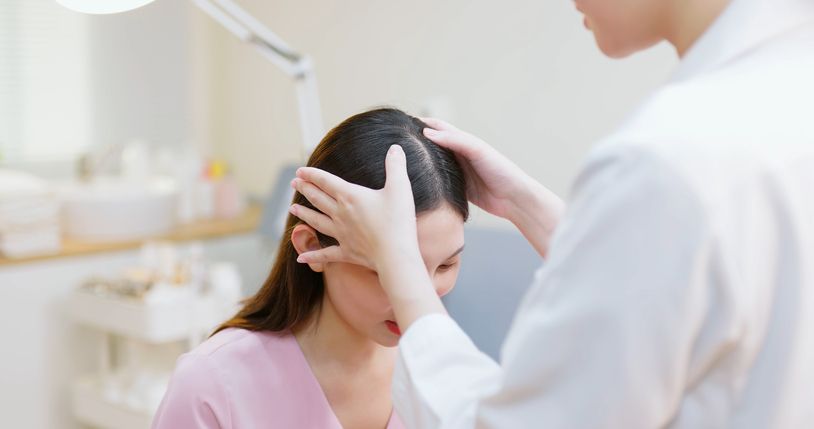
Our physical traits—including hair growth tendencies—are inherited from our parents. If hair loss runs in your family, there's a higher chance you’ll inherit the same issue.
Hereditary hair loss, also known as androgenetic alopecia, is the most common form of hair loss. In men, it's often called male pattern baldness or male androgenetic alopecia; in women, it’s referred to as female pattern hair loss. This condition is influenced by genetics and hormones, particularly the body's sensitivity to DHT (dihydrotestosterone)—a derivative of testosterone. Increased DHT sensitivity causes hair follicles to shrink, weaken, and stop producing healthy hair, leading to progressive hair loss.
免費體驗
F8 Hair Regrowth Treatment
1 Minute Self-Registration
Date should not be before minimal date
Hereditary Hair Loss: How Symptoms Differ Between Men and Women
Though more common in men, hereditary hair loss affects women too—and their symptoms can differ significantly. Here's how:
i. Symptom 1: Hair Loss Pattern
In men, hair loss is typically driven by DHT, leading to very noticeable changes. It usually starts at the temples, causing the hairline to recede and form an “M” shape. Over time, the crown (top of the head) also begins to thin, eventually creating the signature “horseshoe” or "monk's ring" look.
Women, on the other hand, experience more diffuse thinning. Hair becomes thinner across the entire scalp rather than in one concentrated spot. Some women may develop a wider parting or thinning near the crown, but they typically don’t go completely bald like men.
ii. Symptom 2: Speed of Hair Loss
Men tend to experience gradual hair loss that can take years to fully progress. Women’s hair loss, however, can appear more suddenly and rapidly. This is often due to hormonal events such as pregnancy, menopause, or underlying health issues that exacerbate the problem.
Genetics Isn’t the Only Cause of Hair Loss! 6 Other Common Triggers
i. Excessive Stress
Chronic stress triggers the body to release cortisol—a hormone that can damage hair follicles and push hair into the resting phase prematurely. Over time, this may lead to weakened follicles and permanent shedding.
ii. Nutrient Deficiencies
Hair health is closely tied to nutrition. Protein is vital for hair structure, while iron helps deliver oxygen to follicles. Vitamins A, B, C, zinc, and selenium are also essential. Lacking these nutrients can result in brittle, lifeless hair and slowed regrowth—or worse, hair loss.
iii. Hormonal Imbalances
Hormones play a key role in hair health. Excess DHT can shrink follicles and trigger shedding. Estrogen, which supports hair growth, declines after childbirth or during menopause—explaining why many women lose hair at these stages. Thyroid issues (both hypo- and hyperthyroidism) can also disrupt the hair growth cycle and lead to shedding.
iv. Scalp Conditions
Scalp inflammation, like seborrheic dermatitis, can block follicles and disrupt hair growth. Symptoms may include dandruff, itchiness, and inflammation, which release enzymes that weaken the follicles. Psoriasis is another skin condition that can trigger an immune response around follicles, making hair more fragile and likely to fall out.
v. Diabetes
Diabetes can damage blood vessels and impair circulation, limiting the nutrients and oxygen reaching your scalp. It also weakens the immune system, making the scalp more susceptible to infection—both of which can worsen hair loss.
vi. Frequent Hair Dyes and Heat Styling
Regular bleaching, dyeing, and perming can severely damage hair. Chemicals like p-phenylenediamine and hydrogen peroxide weaken hair shafts and make them prone to breakage. Heat styling tools can also damage the protein structure in your hair and harm follicles—leading to more shedding.
4 Ways to Improve Hereditary Hair Loss
i. Scalp Massage
Studies show that 10 minutes of daily scalp massage can improve hair growth by enhancing circulation and boosting nutrient delivery. Massaging pressure points like Tianzhu, Jiaosun, Shenting, Taixi, and Taichong may also help calm the mind and support scalp health.
ii. Balanced Diet
Since hair is primarily made of protein, eating enough protein is crucial for growth. Include omega-3 fatty acids, B vitamins, and folic acid in your diet. Foods like eggs, fatty fish, nuts, and legumes are excellent for nourishing both your scalp and strands.
iii. Regular Sleep Schedule
Sleep is key to recovery and circulation. The body’s repair processes peak between 11 PM and 2 AM—so staying up late may affect scalp metabolism and nutrient delivery, increasing toxin buildup and contributing to hair loss. Avoid late nights and aim for regular, quality sleep to support hair health.
iv. Use the Right Shampoo
Pick a shampoo that suits your scalp type. Oily scalps need deep-cleansing (but non-stripping) formulas, while dry or sensitive scalps need moisturizing, gentle products. Look for shampoos with ingredients like biotin, keratin, protein, or caffeine to strengthen hair and encourage growth. Avoid harsh chemicals like sulfates, which can irritate the scalp and worsen shedding.
免費體驗
F8 Hair Regrowth Treatment
1 Minute Self-Registration
Date should not be before minimal date
Perfect Medical F8 Hair Regrowth Treatment—The Ultimate Hair Loss Fix
Tried every DIY tip but your hair is still falling out? Don’t give up just yet—Perfect Medical’s F8 Hair Regrowth Treatment could be your game changer!
The F8 treatment is a cutting-edge, non-invasive therapy that requires no surgery or medication. It uses low-level laser technology to improve scalp circulation and nutrient absorption. This not only helps maintain scalp health but also strengthens the hair follicles to hold hair more firmly in place.
Combined with a world-class hair regrowth serum, the treatment helps reactivate follicles to produce new hair—solving the issue of thinning at its root. Right now, Perfect Medical is offering a free first trial, so don’t wait—click below to book your session and take the first step toward healthier, fuller hair!
免費體驗
F8 Hair Regrowth Treatment
1 Minute Self-Registration
Date should not be before minimal date
FAQ

What is hereditary hair loss?
It’s a common type of hair loss caused by genetic and hormonal factors. Follicles become increasingly sensitive to hormones like DHT, which weakens them over time and reduces hair growth.
How can I tell if I have hair loss?
Losing 50 to 100 hairs a day is normal. If you're consistently losing more than that and your hair is thinning or becoming finer, it could be a sign of hair loss.
Are there other causes besides genetics?
Yes—stress, poor nutrition, hormonal changes, scalp conditions, diabetes, and frequent use of dyes and heat styling can all contribute to hair loss.
If my dad is bald, will I definitely lose hair too?
Not necessarily. If only your father has hair loss, sons have about a 70% risk while daughters have about a 15% chance. If both parents or grandparents are affected, your risk may be higher.
Can hair loss skip a generation?
Yes—hair loss can be inherited from grandparents even if your parents have full heads of hair.