- Home
- Trend
- Weight Loss Strategies
- Acne Tips
- Hair Health Information
- Blemish Removal Tips
- Acne Scar Removal Tips
- Muscle Building Techniques
- Intimate Care Tips
- Postpartum Intimate Care
- Eye Bags Wiki
- Tips for Face Slimming
- Secret of Permanent Hair Removal
- Breast Enlargement Tips
- Cure to Snoring
- Marionette Lines
- Skin-Tightening Secrets

Eye bags are notoriously hard to get rid of. Many women develop them from long-term late nights, constant screen use, or salty diets. Others are simply born with puffy under-eyes. Unfortunately, heavy eye bags make your eyes look smaller and leave you looking perpetually tired. Thankfully, there are now multiple medical aesthetic technologies that can reduce or remove them — painlessly and effectively. But which one actually works best? To help you avoid costly trial-and-error, we've put together this all-in-one guide to the most popular eye bag removal treatments.

Know the Difference: Eye Bags, Dark Circles, Wrinkles & Tear Troughs

Under-eye concerns aren't limited to eye bags alone. Many people also suffer from dark circles, wrinkles, and tear troughs. Each of these can age your appearance, so it's important to understand what you're dealing with.
Eye Bags
These are the puffy bulges under your eyes, made mostly of fat. The larger the fat deposits, the more they protrude through the skin — making the eyes look smaller. There are several types of eye bags, and choosing the right treatment depends on which type you have:
• Puffy Eye Bags (Water Retention) Caused by thin skin and fluid buildup. Common triggers include salty food, drinking too much water before bed, or lack of sleep. These are usually the easiest to manage — dietary changes, hydration, and regular eye massage can help.
• Aging Eye Bags These result from collagen loss and sagging skin, which creates space around the eyes. Fat then slips downward into these spaces, forming droopy, protruding bags.
• Genetic Eye Bags Some people are born with more fat or prominent orbicularis oculi muscles under the eyes. This creates a permanent puffiness known as "pseudo-eye bags," which are harder to treat since they're caused by muscle rather than fat.
Dark Circles
Dark circles are often caused by poor blood circulation around the eyes, leading to pigmentation and shadowing. The color can vary:
• Purple/blue from allergies
• Dark brown from aging
• Deep violet from fatigue or eye strain
Aegyo-sal (Eye Fat Lines)
Often confused with eye bags, aegyo-sal refers to the small muscle bump right under the lower lash line. It becomes more noticeable when you smile and is often seen as cute and youthful.
Tear Troughs
These are the hollow grooves that run from the inner eye corner down toward the cheek. Caused by collagen loss, they give a sunken, tired look and can’t be fixed with regular eye cream.
Most Popular Eye Bag Removal Treatments — Which Is Most Effective?

With so many aesthetic options on the market, it’s easy to get overwhelmed. We’ve broken down the major treatments and what you need to know about each one.
1. Surgical Eye Bag Removal (Fat Excision)
Also called blepharoplasty, this is one of the most permanent and effective methods:
External Incision (Traditional Method)
○ How it works: A 2mm incision is made just below the lash line. Excess fat is removed or repositioned to fill hollow tear troughs, and loose skin is trimmed before stitching the incision.
○ Best for: People with large eye bags, visible tear troughs, and sagging skin.
○ Recovery: Stitches removed after 1 week. Swelling may take 1–2 months to fully subside.
○ Pros: Tackles multiple concerns at once — bags, wrinkles, loose skin — and delivers long-lasting results. Can be paired with facelift procedures.
○ Cons: May leave a faint scar and has a longer recovery time. Potential risk of complications like ectropion (lower lid turning outward).
Internal Incision (Scarless Method)
○ How it works: The lower eyelid is flipped and a 5–10mm incision is made inside the eyelid. Fat is removed and possibly transferred to hollow areas. No stitches required.
○ Best for: Those with visible eye bags and tear troughs, but without major skin laxity.
○ Recovery: Gauze is removed after 3 days. Swelling typically resolves within a month.
○ Pros: No visible scar. Shorter recovery time and less swelling.
○ Cons: Not suitable for loose skin, as no excess skin is removed.
2. Radio Frequency (RF) Therapy
A popular non-invasive method. Ideal for people who want to avoid surgery.
• How it works: RF energy heats the skin to 45–65°C, stimulating collagen production and tightening the under-eye area.
• Best for: Mild to moderate eye bags.
• Recovery: None — makeup can be applied immediately afterward.
• Pros: Painless, quick (around 30 mins), suitable for most people, improves dark circles and fine lines.
• Cons: Results take time. Not effective for severe sagging or large fat deposits.
3. High-Intensity Focused Ultrasound (HIFU)
A trending option for non-invasive lifting and contouring.
• How it works: Uses focused sound waves to vibrate and heat the fat beneath the skin, shrinking fat cells and boosting collagen.
• Best for: Younger individuals with mild to moderate puffiness or wrinkles.
• Recovery: Some redness or swelling may last 1–2 weeks. No lasting skin damage.
• Pros: Almost painless, no downtime, visible tightening over time.
• Cons: Less effective for severe sagging or deeply embedded fat. Multiple sessions may be required.
4. Cryolipolysis: The Cool Way to Tackle Under-Eye Fat
Cryolipolysis has become a go-to in modern aesthetics for non-invasive fat reduction. Its ability to selectively freeze and eliminate fat cells—without causing rebound weight gain—has made it a favorite among women seeking contouring solutions. Recently, this technology has been adapted for under-eye treatments, helping to visibly reduce puffiness and fat in the eye bag area.
How it works: Fat cells are more sensitive to cold than other tissues. Cryolipolysis targets the under-eye fat with low temperatures, freezing the fat cells until they crystallize and die off. Over time, your body naturally metabolizes and eliminates these dead fat cells, reducing eye bags in a gradual but effective way.
Who it’s for: This treatment is ideal for those with mild to moderate under-eye puffiness and no significant skin laxity. Since it doesn’t involve incisions, it’s best suited to people who want a non-invasive approach without expecting dramatic results.
Downtime: Cryolipolysis around the eyes typically causes minimal redness or swelling that subsides quickly. There's no scarring or interference with daily life.
Pros: Cryolipolysis is one of the few methods that directly targets fat cells. Once those cells are destroyed and flushed from the body, they don’t come back—making it a lasting solution. It’s also non-invasive, so there’s no need to worry about scarring or downtime.
Cons: Since cryolipolysis doesn't physically remove the fat, results can take time and multiple sessions. Also, it doesn’t tighten the skin, so it may not be the best choice for those with sagging or loose skin around the eyes.
5. Recommended Eye Bag Treatment: Perfect Medical R6 Miracle Eye Rescue Treatment
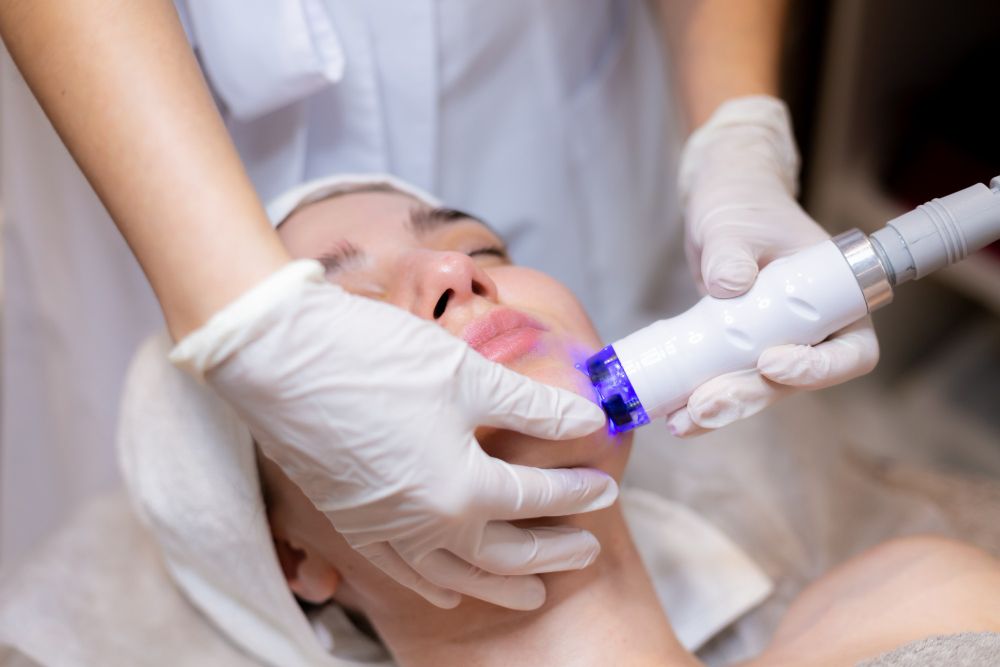
Radiofrequency, ultrasound, and cryolipolysis each offer their own unique benefits when it comes to eye bag removal. But when combined? The results can be truly game-changing.
Perfect Medical’s R6 Miracle Eye Rescue Treatment uses a triple-action approach:
• RF helps tighten and firm the skin
• Ultrasound boosts collagen regeneration
• CYRO cooling technology freezes and breaks down stubborn under-eye fat
This all-in-one treatment addresses puffiness, wrinkles, and sagging in a single session — a comprehensive and powerful way to rejuvenate the entire eye area. Curious to see the results for yourself? Perfect Medical offers a free trial session to experience the R6 Miracle Eye Rescue Treatment’s full effect.
6. 4 Pressure Points to Target Eye Bags
1. Zan Zhu (攢竹)
Located at the inner ends of both eyebrows, massaging this point helps relieve eye fatigue, headaches, and dryness.
2. Jing Ming (睛明)
Found at the inner corners of the eyes, this point promotes better circulation and blood flow around the eyes, easing eye strain and preventing dryness or blurriness.
3. Cheng Qi (承泣)
Located directly below the pupils, massaging this point can brighten the eyes, boost blood circulation, and reduce fatigue.
4. Tai Yang (太陽)
This point sits in the temple area, slightly behind the brow. Massaging it may ease headaches and improve tired or dry eyes.
How It Works: Stimulating these pressure points helps activate blood and lymph circulation around the eyes, encouraging the drainage of fluids and toxins. Over time, this can tighten the skin, reduce dark circles, and improve pigmentation.
Best For: Those who experience frequent eye strain from prolonged screen time, dry eyes, or puffiness caused by poor circulation.
Recovery Time: None.
Pros: Cost-free and simple. Encourages better blood flow and helps prevent recurring eye bags or dark circles over time.
Cons: Only effective for puffiness or pigmentation caused by fluid retention. Not suitable for fat-based eye bags. Results vary depending on individual constitution and technique.
Overview of Eye Bag Treatment Options
| Treatment | How It Works | Best For | Recovery Time | Duration of Results | Pros | Cons |
|---|---|---|---|---|---|---|
| 1. Surgical Removal | Surgically removes under-eye fat; may reposition fat to correct tear troughs | Severe eye bags, loose or sagging skin | 1–2 months | Long-lasting (up to 10+ years) | Immediate, dramatic results; long-lasting | Invasive; long recovery; post-op care needed |
| 2. Radiofrequency (RF) | Uses RF energy to heat skin and stimulate collagen | Mild to moderate sagging | Minimal; makeup can be applied | 6 months to 1 year | Non-invasive; improves elasticity | Less effective for fat-based eye bags |
| 3. Ultrasound Therapy | Heat energy stimulates collagen and tightens skin | Sagging-type eye bags | Mild redness/swelling (1–2 days) | Several months to 6 months | Non-invasive; targets skin elasticity at its source | Minimal impact on fat-based eye bags |
| 4. Cryolipolysis | Cold energy breaks down fat cells; removed via lymphatic drainage | Fat-based eye bags | Temporary redness/swelling | Permanent fat reduction | Non-invasive; specifically targets fat | Less effective for loose or sagging skin |
| 5. Light Therapy | Light wavelengths improve lymph flow and metabolism | Mild puffiness or dark circles | None | 1–2 weeks per session | Gentle; at-home options available | Limited effectiveness for severe cases |
| 6. HA Fillers | Fills tear troughs, hydrates skin, and improves elasticity | Eye bags + deep tear troughs | Around 2 weeks | 6 months to 1 year | Smooths hollows; hydrates skin | Doctor-dependent; risk of swelling or unevenness |
| 7. Botox | Relaxes orbicularis oculi muscle to reduce muscle-based puffiness | Inherited or muscle-related puffiness | 2–4 weeks to see effect | 3–6 months | Reduces dynamic wrinkles and muscle puffiness | Risk of unnatural or stiff appearance |
| 8. TCM (Traditional Chinese Medicine) | Acupressure and dietary therapy to boost circulation and qi | Eye bags from poor blood/spleen function | None | Varies; long-term possible | Holistic approach; improves overall wellness | Slower, subtler results; not always dramatic |
免費體驗
R6 Miracle Eye Rescue Treatment
1 Minute Self-Registration
Date should not be before minimal date
Final Thoughts: What’s the Best Eye Bag Treatment?
There’s no one-size-fits-all solution. The most effective treatment depends on the type of eye bags you have, your skin condition, personal preferences, and budget. It's best to consult a professional who can assess your condition and recommend the most suitable option — remember, "the best treatment is the one that works for you."
免費體驗
R6 Miracle Eye Rescue Treatment
1 Minute Self-Registration
Date should not be before minimal date
FAQ

How can I tell the difference between eye bags, dark circles, and eye pouches (aegyo-sal)?
Eye bags are puffy areas caused mainly by fat under the eyes. Dark circles are due to poor circulation, often appearing bluish or purplish. Aegyo-sal is a small roll of muscle just below the eyes that becomes more pronounced when smiling — it adds charm, not fatigue.
Is external or internal incision surgery better for eye bag removal?
External incisions may leave scars but can be more effective for severe sagging or excess skin. Internal incisions are scar-free but may not be ideal for all cases. The best method depends on your specific eye bag type and skin laxity.
Can Botox remove eye bags?
Botox can relax overactive muscles like the orbicularis oculi, reducing muscle-based eye bags and smoothing dynamic wrinkles.
Are there side effects from HA fillers under the eyes?
Possible redness, swelling, or lumpiness after injection. Results depend heavily on the injector’s experience. There’s also a risk of infection at the injection site.
What are non-invasive options for treating eye bags?
Radiofrequency, ultrasound, and cryolipolysis (fat freezing) are popular non-invasive treatments. For example, Perfect Medical’s R6 Miracle Eye Rescue Treatment combines ultrasound, monopolar RF, and fat-freezing probes to target fat, stimulate collagen, and reduce puffiness for a tighter, fresher look.