- Home
- Trend
- Weight Loss Strategies
- Acne Tips
- Hair Health Information
- Blemish Removal Tips
- Acne Scar Removal Tips
- Muscle Building Techniques
- Intimate Care Tips
- Postpartum Intimate Care
- Eye Bags Wiki
- Tips for Face Slimming
- Secret of Permanent Hair Removal
- Breast Enlargement Tips
- Cure to Snoring
- Marionette Lines
- Skin-Tightening Secrets

Asymmetrical eyes — often called “uneven eyes” — are a concern for many, and not just for cosmetic reasons. In more serious cases, uneven eyes can narrow your visual field and even affect your vision. People with noticeable asymmetry may also feel self-conscious or struggle with confidence issues.
There are many possible causes behind uneven eyes, ranging from natural to medical. And before you can fix the issue, you need to understand why it’s happening in the first place. In this blog, we’re breaking down the key causes of uneven eyes, the types of asymmetry, and 4 practical ways to improve the condition — including one unexpected solution that might surprise you!

What Exactly Are Uneven Eyes?
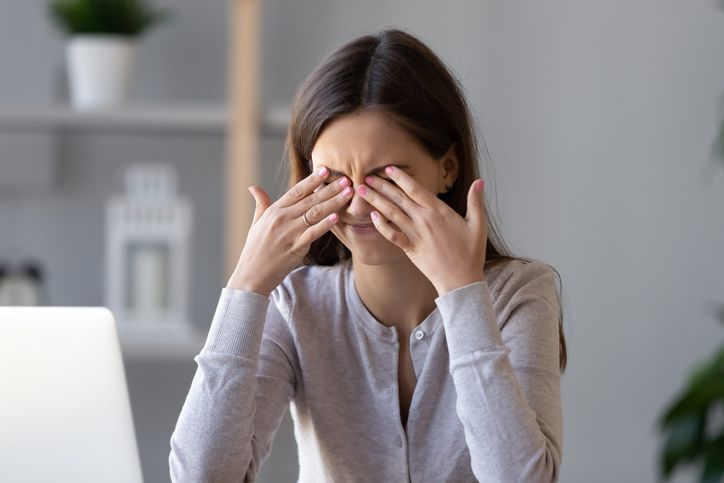
The medical term for this condition is ptosis, which refers to a drooping upper eyelid that makes one eye look smaller than the other. That droop causes the eyes to appear lopsided or asymmetrical.
Here’s the thing: nobody’s face is perfectly symmetrical. Almost everyone has some degree of imbalance between the two sides — and that includes the eyes. In fact, up to two-thirds of people have slight unevenness in their eye shape or size. The real issue comes when the imbalance is noticeable or begins to worsen over time due to age, screen usage, or other lifestyle factors.
From a clinical perspective, doctors don’t just look at which eye looks "bigger." A more accurate test is to observe the distance between the base of your eyelashes and the center of your pupil when your eyes are open normally. Ideally, your upper eyelid should only cover about 1mm of the upper part of your pupil. If it's covering 2–3mm or more, the eye can appear tired, dull, or droopy — classic signs of ptosis. Eye doctors use this measurement to determine whether you actually have uneven eyes and how severe the condition might be.
Common Non-Medical Causes of Uneven Eyes
i. Genetics
Just like you inherit your eye color, you can also inherit uneven eyelids. If family members have a noticeable asymmetry, chances are higher that you might, too. Some people are born with weak or underdeveloped levator muscles (the muscles that lift your eyelids), which makes it harder for one eye to open fully. Others naturally have excess fat in the upper eyelid, making one eye appear puffier or smaller.
ii. Aging
Your eyes may have been perfectly symmetrical in your youth — but as time goes by, that can change. With age, we lose collagen and muscle strength, especially in the delicate eye area. The eyelids can start to sag, making one eye appear smaller than the other. In some cases, fat tissue around the eyes may shift or droop as well, putting extra strain on the muscles and worsening the asymmetry.
iii. Wearing Contact Lenses or Circle Lenses
Frequent use of contact lenses — including cosmetic lenses like circle lenses or colored contacts — can put stress on the eyelids. Pulling and stretching the skin while inserting or removing lenses can weaken the skin’s elasticity over time, leading to sagging. Also, because contacts reduce oxygen flow to the eyes, prolonged wear can make your eyes tired, which may contribute to a droopy eyelid.
iv. Prolonged Screen Time
Modern life means we’re glued to screens — phones, laptops, tablets — all day long. The blue light from these devices can dry out and irritate your eyes. If you constantly rub your eyes due to dryness or fatigue, the delicate eyelid skin can lose elasticity, increasing your chances of developing uneven eyelids.
v. Heavy or Frequent Eye Makeup
Many of us rely on makeup to enhance or balance out our eye shape. But over time, applying eyeliner, false lashes, or eyelid tape can put stress on the skin and muscles. Wearing and especially removing eye makeup (especially if you rub aggressively) can cause the eyelids to sag. Leaving residue on the eyes by not cleansing thoroughly can also cause inflammation and, in some cases, even styes.
免費體驗
R6 Miracle Eye Rescue Treatment
1 Minute Self-Registration
Date should not be before minimal date
Medical Causes of Uneven Eyes
i. Eyelid Muscle Weakness (Ptosis)
Ptosis can be caused by nerve damage, weak muscles, or issues with the eyelid’s connective tissue. If the nerve pathways that control the eyelid are disrupted — due to congenital defects or other health issues — the muscle can't function properly, resulting in drooping.
ii. Myasthenia Gravis (MG)
This autoimmune condition disrupts the communication between nerves and muscles, leading to fatigue and weakness. One of the first visible symptoms is eyelid drooping. Many patients notice the ptosis is worse at night compared to the morning, as the muscle weakens with use throughout the day.
iii. Thyroid Eye Disease
If left untreated, thyroid issues — especially hyperthyroidism — can spread to the eye area. This can cause dryness, swelling, eye bags, sensitivity to light, and asymmetry, including uneven or bulging eyes.
iv. Stroke (Cerebral Vascular Accident)
Sudden changes in eye symmetry, especially if accompanied by vision problems, drooping eyelids, or changes in facial expression, could be early signs of a stroke. A stroke can affect nerves or blood vessels that control the eyes, often causing one-sided ptosis.
How to Fix Uneven Eyes: 4 Natural Remedies
i. Give Your Eyes a Break
Too much screen time leads to eye fatigue — one of the biggest causes of eyelid sagging. The 20-20-20 rule is a lifesaver: every 20 minutes, look at something 20 feet away for at least 20 seconds. This helps relax your eye muscles and reduce stress on your eyelids.
ii. Avoid Rubbing Your Eyes
Rubbing your eyes stretches the skin, damages elasticity, and increases fine lines. If your eyes feel itchy or irritated, resist the urge to rub. Instead, apply a cold compress or use an eye mask to calm the area.
iii. Try Warm Compresses or Eye Masks
A warm towel placed over your closed eyes for 10–15 minutes can improve blood circulation, ease tension, and relieve eye fatigue. Just make sure the towel isn’t hotter than 40°C to avoid burns. Eye masks with nourishing ingredients can also help firm up the delicate skin and slow down sagging.
iv. Do Eye Exercises or Massage
Gentle massage can relax tired muscles and support better circulation. Try these simple techniques:
• Eyeball Pressure Massage: Close your eyes and gently press your fingertips on your eyelids for 20 seconds. Use small circular motions but be careful not to apply too much pressure.
• Forehead Sweep: Place your index, middle, and ring fingers on your forehead and sweep outward toward your temples while gently massaging the skin.
• Brow Pinch: Use your thumbs to press gently at the inner corners of your eyebrows and hold for 10 seconds. This helps relax tension in the upper face and brow area.
What Kinds of Surgery Can Permanently Correct Uneven Eyes?
i. Double Eyelid Surgery (Blepharoplasty)
One of the most common reasons for uneven eyes is ptosis (droopy eyelids), usually affecting just one side. That’s why many people opt for double eyelid surgery to correct the imbalance. This procedure is also suitable for those with weak eyelid muscles, excessive fat in the upper eyelid, or naturally thick eyelid skin.
A trained plastic or ophthalmic surgeon will typically make an incision along the eyelid crease to remove excess skin, fat, and orbicularis oculi muscle tissue. Then, the sagging eyelid is lifted and reattached at a higher position, restoring symmetry and enhancing eye proportions. This can effectively resolve the appearance of uneven eyes.
That said, be aware of the potential downsides. Swelling after surgery is common — often more noticeable in the morning. The recovery period can also be lengthy and may include symptoms like eye pain, bruising, swelling, dryness, or even temporary blurred vision.
ii. Eyelid Muscle (Levator) Surgery
This is another go-to option for treating uneven eyes, especially in cases caused by drooping eyelids or muscle weakness. Levator surgery is a minimally invasive procedure where the surgeon works from behind the eyelid, carefully exposing the levator muscle and tarsal plate (the cartilage structure in your eyelid). They then stitch the tarsal plate to a higher point on the levator muscle to elevate the eyelid.
The result? Both eyes regain a more balanced, symmetrical look — making this a highly effective solution for many ptosis cases.
iii. Botox Injections
Botulinum toxin (Botox) is a neurotoxin that temporarily blocks nerve signals to specific muscles. In cosmetic use, this helps lift sagging skin and smooth fine lines by relaxing overactive muscles. In the context of uneven eyes, Botox can provide a lifting effect and help adjust eye symmetry.
However, it comes with some caveats. Because Botox works by interfering with nerve activity, muscle weakness can sometimes occur, which may lead to a stiff or unnatural expression. Improper technique or incorrect dosage could also make the asymmetry worse rather than better — causing uneven eyelid shapes or inconsistent eye size.
iv. Thread Lifting
Thread lifts are generally better suited for people with thin eyelid skin, minimal fat around the eyes, and no severe skin laxity. This non-surgical method involves making tiny punctures in the eyelid and inserting fine threads to lift and tighten the skin. These threads help reshape the eyelid fold and restore symmetry between both eyes.
Since no incisions are made, the recovery time is shorter — most people see the swelling subside within two weeks. However, thread lifts aren't permanent. The results typically last 3 to 5 years, after which the threads may loosen or break down gradually.
免費體驗
R6 Miracle Eye Rescue Treatment
1 Minute Self-Registration
Date should not be before minimal date
Don’t Want Surgery? Try Perfect Medical’s R6 Miracle Eye Rescue Treatment Instead!
While surgical procedures can effectively correct uneven eyes, many people are understandably hesitant to go under the knife — especially when it comes to such a delicate area as the eyes. And they’re right to be cautious. Eye surgery carries risks and requires serious consideration.
If you’re not ready to take that step but still want a safe and effective solution to address your eye asymmetry, Perfect Medical’s R6 Miracle Eye Rescue Treatment is worth a try!
This non-invasive, surgery-free treatment uses a triple-radiofrequency (RF) technology to target multiple skin layers — from the surface down to the deeper tissues. It works by melting away excess fat around the eyes (a common cause of droopy eyelids and uneven eyes), while also stimulating collagen regeneration to tighten the skin.
Not only does R6 visibly improve ptosis-related asymmetry, but it also enhances blood circulation, helping to flush out fluid retention and toxins — which means it can reduce puffiness, eye bags, and even dark circles. It’s a holistic eye rejuvenation treatment rolled into one!
Even better? First-time users can now enjoy a free trial session of the R6 Miracle Eye Rescue Treatment. Just click the link below to book your appointment today!
免費體驗
R6 Miracle Eye Rescue Treatment
1 Minute Self-Registration
Date should not be before minimal date
FAQ

How can I tell if I have uneven eyes?
According to ophthalmologists, the easiest self-check is to look in the mirror with your eyes fully open and observe the distance between the lash line and the center of your pupil. Ideally, your upper eyelid should only cover about 1mm of your pupil. If it covers 2–3mm or more, your eye may appear dull, tired, or smaller — signs that you may have ptosis.
What causes uneven eyes?
Causes are usually divided into non-medical and medical factors: Non-medical: genetics, aging, frequent makeup use, long hours of screen time. Medical: eyelid muscle weakness, stroke, myasthenia gravis, and thyroid eye disease.
Why does eyelid muscle weakness cause asymmetry?
The eyelid is controlled by nerves, muscles, and skin. If any of these structures malfunction — especially due to nerve damage or congenital issues — the levator muscle may become too weak to fully lift the eyelid. This leads to partial opening or drooping, which causes noticeable asymmetry. Skin laxity and general muscle fatigue can make the problem worse over time.
What non-surgical methods help with uneven eyes?
If surgery isn’t your thing, you can still take steps to improve the issue: Get adequate rest to avoid eye strain. Use warm compresses. Avoid rubbing your eyes. Practice eye exercises or massage: These methods may not create dramatic changes overnight, but over time, they can strengthen the eye area and reduce mild asymmetry.
Which surgeries are commonly used to treat uneven eyes?
The most common procedures include: Double eyelid surgery (blepharoplasty). Levator (eyelid muscle) surgery. Thread lifting. Botox injections. That said, each comes with its own set of risks and side effects. Always consult a qualified medical professional before deciding on any procedure.