- Home
- Trend
- Weight Loss Strategies
- Acne Tips
- Hair Health Information
- Blemish Removal Tips
- Acne Scar Removal Tips
- Muscle Building Techniques
- Intimate Care Tips
- Postpartum Intimate Care
- Eye Bags Wiki
- Tips for Face Slimming
- Secret of Permanent Hair Removal
- Breast Enlargement Tips
- Cure to Snoring
- Marionette Lines
- Skin-Tightening Secrets

Thread-based breast enhancement has remained a hot topic among modern women seeking fuller busts. This procedure involves inserting medical threads under the skin to achieve immediate lifting and volume. However, it’s not limited to Western techniques—many Traditional Chinese Medicine (TCM) clinics offer acupuncture-based breast enhancement, which focuses on non-invasive, natural ways to stimulate breast growth.
In this guide, we’ll compare thread-based enhancement in Eastern and Western medicine, share expert dietary and nutritional recommendations, and introduce 3 alternative daily methods for boosting your bust—perfect for anyone dreaming of a larger cup size.

What Is Thread-Based Breast Enhancement? Comparing Medical Treatments vs. TCM Approaches
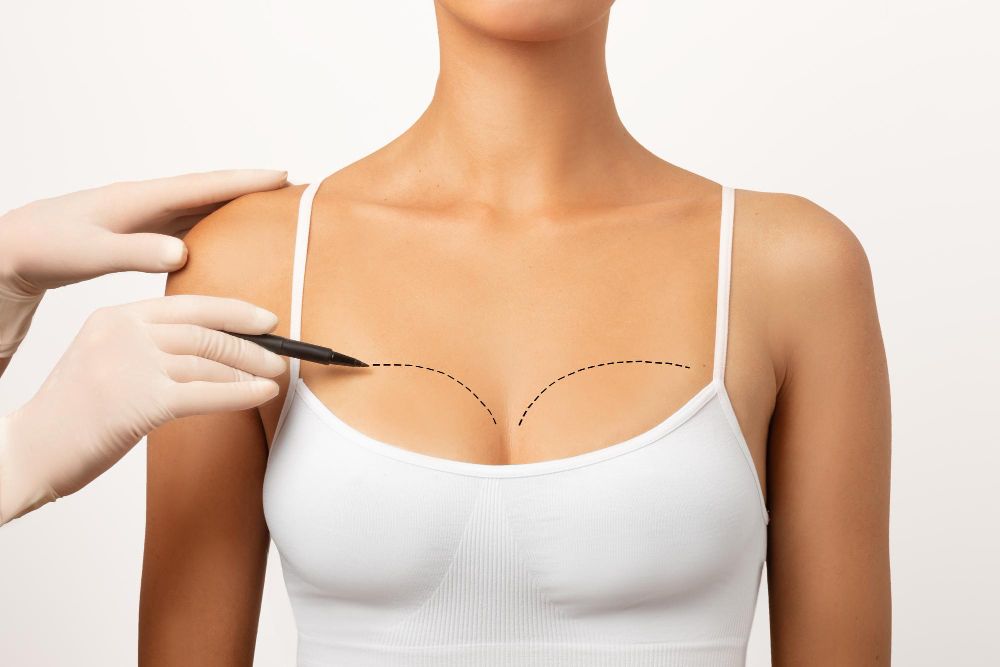
Thread-based breast enhancement is a minimally invasive procedure that uses absorbable medical threads, like PDO threads, inserted under the breast skin. These threads stimulate collagen production and improve blood and qi circulation, supporting breast tissue and shaping the bust for a fuller appearance.
However, there are potential risks: allergic reactions, uneven absorption, localized pain, or feeling foreign objects under the skin. Women with hormonal imbalances or estrogen deficiency may be at higher risk. Professional consultation and careful evaluation are essential before undergoing treatment.
TCM perspective on natural breast enhancement
Unlike surgical approaches, TCM focuses on acupuncture, cupping, and herbal therapies to balance internal functions, improve circulation, and support natural breast development. TCM emphasizes whole-body health, considering breast growth closely tied to qi, blood, and liver/kidney function. Gentle qi-boosting and blood-nourishing techniques help promote natural estrogen secretion and tissue development, making this approach ideal for women seeking a gradual, natural enhancement.
How Thread-Based Breast Enhancement Works: 4 Problems It Can Improve

This minimally invasive, non-surgical technique uses absorbable threads (e.g., PDO) under the breast skin to achieve multiple benefits:
• Supportive network: Threads create a mechanical lift that can improve mild sagging.
• Collagen stimulation: Threads promote tissue firmness, fullness, and a natural, soft feel.
• Ideal for uneven or smaller busts: Especially effective for those with mild asymmetry or small cup sizes.
Specific cases it can address:
• Mild sagging: Threads lift and centralize the breast, ideal for early sagging post-pregnancy or with age.
• Asymmetry: Adjusting thread number and placement can correct slight left-right size differences.
• Mildly flat or small breasts: If basic fat tissue exists, collagen stimulation can enhance fullness and elasticity.
• Natural enhancement seekers: Non-surgical with short recovery, perfect for women avoiding traditional implants.
Who is suitable vs. who is not:
• Suitable: Women with generally good breast shape but slight sagging, seeking a small cup increase, or mild asymmetry, who want a natural look.
• Not suitable: Severely flat breasts, major sagging, very thin fat layers, gynecological issues, hormonal imbalance, or special medical conditions. Professional evaluation is essential.
免費體驗
B6 Bust Enhancement Treatment
1 Minute Self-Registration
Date should not be before minimal date
Thread-Based Enhancement Procedure & Aftercare
Pre-procedure preparation:
• Discuss procedure details and risks with a doctor.
• Stop blood-thinning medications (like aspirin) at least 1 week prior.
• Avoid scheduling during menstruation.
• Ensure sufficient rest before the procedure.
Procedure steps:
• Doctor marks thread placement on the breast.
• Local anesthesia is applied.
• Threads are inserted under the skin.
• Procedure duration: ~30–60 minutes.
Post-procedure care:
• Keep the area clean; rinse with saline twice daily.
• Avoid pressure on the breasts for 3–5 days.
• Avoid heavy lifting or vigorous exercise for 1 week.
• Wear non-underwire bras for 1 month.
• Follow up regularly with your doctor to monitor recovery.
6 Potential Risks and Side Effects of Thread-Based Enhancement
Common, mild side effects:
• Swelling or bruising: usually resolves within days to weeks.
• Pain: mild discomfort treatable with over-the-counter analgesics.
• Foreign object sensation: normal initially, diminishes over time.
Rare but serious risks:
• Infection: improper wound care may lead to infection.
• Thread extrusion: threads may emerge from the skin and require professional attention.
• Skin indentation: excessive tension may cause dimpling.
Risk reduction: Choose a reputable clinic, experienced doctor, communicate thoroughly pre-procedure, and strictly follow post-procedure care instructions.
Key Differences Between TCM and Thread-Based Methods
TCM philosophy:
TCM emphasizes holistic body balance. The principle “smooth flow equals fullness” guides treatments that improve blood and qi circulation and organ function to promote natural breast development. Breast fullness depends not only on local tissue but also on kidney qi, spleen function, and liver flow. Treatments focus on whole-body regulation rather than just the breast area.
Acupoint thread therapy & acupuncture:
Common non-invasive methods include acupoint thread therapy and acupuncture. By stimulating points like Qu-Pen, Qi-Hu, Ku-Fang, Shanzhong, Tianxi, Ying-Chuang, Wu-Yi, and Rugen, qi and blood flow to the breast is enhanced, collagen production is stimulated, and mammary function is activated.
Personalized treatment:
Each woman’s constitution, hormonal state, and lifestyle are unique. TCM uses diagnostic differentiation to identify qi deficiency, blood stasis, liver stagnation, or kidney deficiency, and tailors therapies accordingly. Systematic TCM treatment gradually improves breast condition for natural, healthy enhancement.
免費體驗
B6 Bust Enhancement Treatment
1 Minute Self-Registration
Date should not be before minimal date
3 Additional Breast-Enhancement Methods: Nutrition & Massage
1. Breast massage: Regular massage promotes blood and lymph circulation, stimulating glandular tissue and enhancing contours. Use gentle techniques with massage oils for best results.
2. Dietary support: Focus on protein and phytoestrogens. Foods like eggs, soy products, nuts, and seafood help nourish the body and support breast development.
- Papaya tip: Green papaya is rich in enzymes and plant hormones. Combined with milk or pork rib soup, it’s a popular natural breast-boosting dish.
3. Herbal TCM therapy: TCM herbs can regulate qi, blood, and hormones, especially for slow-developing breasts due to deficiency or stagnation. Common herbs include dang gui, chuan xiong, and huang qi.
Safe, Effective Enhancement for Everyone: Perfect Medical B6 Breast Enhancement Treatment
Concerned about failed thread procedures or slow TCM results? The Perfect Medical B6 Breast Enhancement Treatment is 100% non-invasive and painless, requiring no needles or threads.
• No recovery period and no psychological burden.
• Quickly improves most breast shape concerns.
• Hand massage stimulates acupoints while you relax and enjoy the experience.
• Corrects asymmetry, underdeveloped breasts, sagging, and outward expansion.
Sign up now for: Professional Skin Analysis + Perfect Medical B6 Breast Enhancement Treatment
免費體驗
B6 Bust Enhancement Treatment
1 Minute Self-Registration
Date should not be before minimal date
FAQ

1. How long do thread-based results last?
Approximately 1–2 years, varies by individual.
2. Will thread-based enhancement leave scars?
Incisions are minimal, almost invisible.
3. Does it affect breastfeeding?
Typically no, if mammary tissue is not harmed. Consult a doctor to be sure.
4. How many threads are needed?
Depends on personal anatomy; usually 4–8 threads per breast.
5. Should I massage after threads?
Avoid strong massage post-procedure, as it may shift thread placement.