- Home
- Trend
- Weight Loss Strategies
- Acne Tips
- Hair Health Information
- Blemish Removal Tips
- Acne Scar Removal Tips
- Muscle Building Techniques
- Intimate Care Tips
- Postpartum Intimate Care
- Eye Bags Wiki
- Tips for Face Slimming
- Secret of Permanent Hair Removal
- Breast Enlargement Tips
- Cure to Snoring
- Marionette Lines
- Skin-Tightening Secrets

“Acne scar filling” is one of the most talked-about skin concerns among beauty-conscious individuals. When acne leaves damage in the dermal layer, it can result in uneven, crater-like texture often described as a “moon surface.” To truly improve these depressed acne scars, treatment must target the dermis by stimulating collagen regeneration, allowing the skin to regain a smoother and firmer appearance.
Curious about today’s most popular acne scar treatments and filling solutions? Below, we break down the three major types of acne scars and their causes, along with an analysis of commonly used treatment methods, to help you restore smooth, refined skin texture.

A Breakdown of the 3 Major Types of Depressed Acne Scars: Understanding the True Causes of Uneven Skin Texture
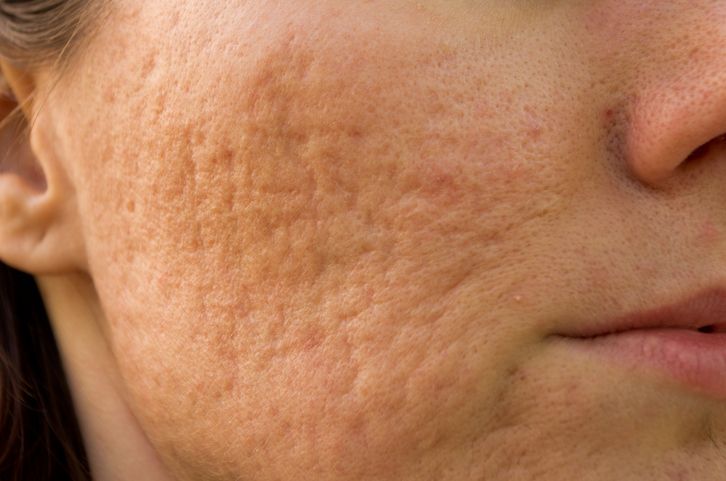
How Depressed Acne Scars Form: From Acne to Dermal Damage
Depressed acne scars are most commonly caused by inflammation from acne. When inflammation becomes severe, collagen and elastic fibers in the dermis are damaged, preventing the skin from repairing itself properly and resulting in visible indentations or uneven texture.
Not only acne can cause this issue — other skin trauma such as chickenpox, injuries, or improper squeezing of pimples can also lead to uneven wound healing and scar tissue formation. Individuals with oily or acne-prone skin are generally at a higher risk of developing depressed scars.
1. Ice Pick Scars
Ice pick scars are the easiest to identify. They appear as deep, narrow vertical indentations that resemble puncture wounds made by a sharp object. These scars result from severe follicular damage and are the most difficult type to treat.
Because they extend deep into the dermis, improvement often requires a combination of treatments such as laser therapy, microneedling, and dermal fillers.
2. Boxcar Scars
Boxcar scars have clearly defined edges and a flat base, resembling small box-shaped depressions. They are usually caused by widespread tissue damage and are often accompanied by acne marks or pigmentation.
Compared to ice pick scars, boxcar scars are generally shallower and respond better to treatment. Noticeable improvement can often be achieved through filler injections or laser treatments.
3. Rolling Scars
Rolling scars create a wave-like, uneven surface that gives the skin a gently undulating appearance. This type of scarring is caused by fibrous bands beneath the skin pulling the surface downward.
Effective treatment requires releasing these fibrous attachments first, followed by collagen-stimulating procedures to restore smoothness and elasticity.
Three Common Treatments for Depressed Acne Scars
1. Laser Treatment
Reactivating the Skin’s Repair Mechanism
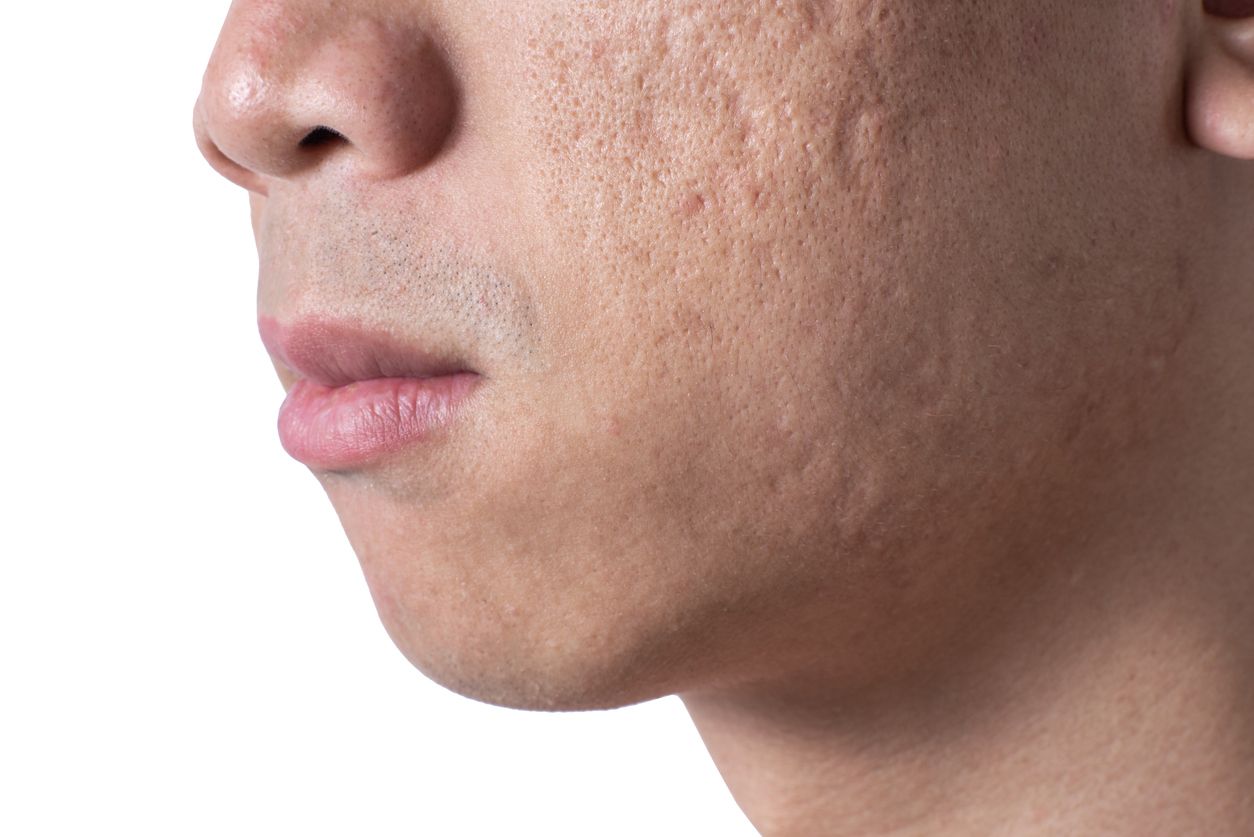
Laser therapy is one of the most common treatments for depressed acne scars. It uses high-energy light to stimulate the dermal layer, breaking down aged scar tissue while encouraging the production of new collagen and elastin. This process restructures the skin and improves overall smoothness.
• Picosecond Laser: Precisely breaks down pigmentation and scar tissue, making it especially suitable for acne scars accompanied by acne marks. It offers a short recovery time and minimal irritation, ideal for those seeking gradual, gentle improvement.
• RF Microneedling (Gold Microneedling): Combines radiofrequency energy with microneedle stimulation to penetrate deep into the dermis and promote collagen regeneration. This minimally invasive treatment effectively improves scar depth and skin firmness.
These treatments should be performed by experienced professionals who can adjust energy levels and penetration depth according to skin type and scar severity to ensure both safety and effectiveness.
2. Filler Treatments
Instantly Improving Depressed Areas
Filler treatments work by injecting substances into sunken areas to lift the skin surface and restore smooth contours. Results are visible quickly and fillers are often combined with laser treatments for enhanced outcomes.
• Hyaluronic Acid: A naturally occurring moisturizing molecule that instantly fills depressed areas, making the skin appear plumper and smoother. It is safe, natural-looking, and reversible if needed.
• Collagen Fillers: These not only fill scars but also stimulate collagen and elastin production, providing longer-lasting and more natural results.
• Poly-L-lactic Acid (PLLA): A biostimulatory agent that activates collagen production from within, gradually improving skin structure. Results develop progressively but are long-lasting, making it suitable for moderate to deep scars.
• Autologous Fat Grafting: Uses the patient’s own purified fat as a filler. It is natural and biocompatible, though some fat may be reabsorbed over time, requiring multiple sessions to maintain results.
3. Regenerative Support Treatments
Stem Cell and Repair-Oriented Therapies
Beyond lasers and fillers, modern aesthetic medicine increasingly incorporates regenerative therapies such as stem cell treatments to support skin repair.
For example, combining laser treatments with stem cell injections or collagen-inducing agents can enhance dermal and fascia-layer repair simultaneously, strengthening skin structure while improving elasticity and refinement.
Summary: Choosing the Right Method to Restore Smooth, Confident Skin
Because skin type and scar patterns vary, treatment strategies should be individualized.
• Shallow scars may respond well to hyaluronic acid fillers or picosecond laser treatments.
• Deep or severe scarring may require poly-L-lactic acid, fat grafting, or RF microneedling for deeper structural repair.
Most importantly, seek evaluation from an experienced professional who can assess skin layers (epidermis, dermis, and fascia) and facial contours before recommending the most suitable treatment plan. This ensures safer procedures and more effective, natural-looking results.
免費體驗
Acne Scarring Treatment
1 Minute Self-Registration
Date should not be before minimal date
Precautions and Potential Risks of Acne Scar Filling
Potential Risks and Side Effects
Although acne scar filling is generally considered a safe minimally invasive procedure, some mild or rare side effects may occur:
• Redness and bruising: The most common short-term reactions, typically resolving within a few days
• Infection: May occur if sterilization or post-treatment care is inadequate
• Filler displacement or lumping: Improper injection technique may result in uneven texture
• Allergic reactions: Rare, but may include redness, swelling, or itching in sensitive individuals
Acne Scar Filling Procedure: Step-by-Step Overview
Acne scar filling typically involves five key stages, each directly affecting the final outcome:
1. Pre-Treatment Assessment and Consultation: The doctor evaluates skin type, scar patterns, and desired results to create a personalized treatment plan, selecting the appropriate filler type and injection depth.
2. Skin Cleansing and Disinfection: The face is thoroughly cleansed and disinfected to reduce infection risk and maintain a sterile environment.
3. Local Anesthesia: Topical or injectable anesthetic is applied to minimize discomfort during the procedure.
4. Precise Filler Injection: Based on scar depth and location, fillers such as hyaluronic acid, collagen, or autologous fat are injected into the dermis or subcutaneous tissue to lift depressed areas and smooth the skin surface.
5. Post-Treatment Care Guidance: After treatment, detailed aftercare instructions are provided, including skincare advice, recovery precautions, and follow-up schedules to ensure stable and natural-looking results.
Looking for the Acne Scar Treatment That Truly Suits You? Experience Perfect Medical’s Acne Scarring Treatment — No Downtime, Visible Results in a Short Time
No need to overanalyze acne scar causes or research filler procedures. No surgery. No injections. Simply relax and enjoy the experience at Perfect Medical.
Perfect Medical’s Acne Scarring Treatment uses non-invasive, painless 1064nm wavelength laser technology that penetrates deep into the dermis to precisely target pigment beneath acne scars. It effectively treats dark, brown, and red acne marks while allowing pigment particles to naturally break down and be eliminated through metabolism.
At the same time, the treatment reduces excess sebum, stimulates collagen production, and improves depressed scars and enlarged pores. Over time, oil and moisture balance is restored at the root level, helping prevent pores and acne marks from recurring.
Register now to enjoy a professional skin analysis + Perfect Medical Acne Scarring Treatment.
免費體驗
Acne Scarring Treatment
1 Minute Self-Registration
Date should not be before minimal date
FAQ

1. Is acne scar filling painful?
Local anesthesia is applied before treatment, so discomfort is minimal.
2. How many sessions are needed for acne scar filling?
The number of sessions varies depending on scar type and severity and should be determined by a doctor.
3. How soon can results be seen after treatment?
Hyaluronic acid and collagen fillers show immediate results, while poly-L-lactic acid takes several months.
4. Are acne scar filling results permanent?
Results are not permanent and require maintenance treatments to sustain effects.
5. Can I wear makeup after acne scar filling?
Makeup can usually be applied a few hours after treatment, but rubbing the area should be avoided.