- Home
- Trend
- Weight Loss Strategies
- Acne Tips
- Hair Health Information
- Blemish Removal Tips
- Acne Scar Removal Tips
- Muscle Building Techniques
- Intimate Care Tips
- Postpartum Intimate Care
- Eye Bags Wiki
- Tips for Face Slimming
- Secret of Permanent Hair Removal
- Breast Enlargement Tips
- Cure to Snoring
- Marionette Lines
- Skin-Tightening Secrets

What exactly are age spots? We often see older adults with small to large brownish spots on their face, arms, or hands. These spots are commonly referred to as age spots. Because of the name, many people assume age spots only appear in the elderly. However, this is not entirely true! In fact, many young people in their 20s and 30s also develop age spots. So, what causes age spots? How can you identify them? And if you want to avoid developing age spots at a young age, what prevention and treatment methods are effective? Let’s answer these questions step by step.

What Are Age Spots? Can They Grow Larger?
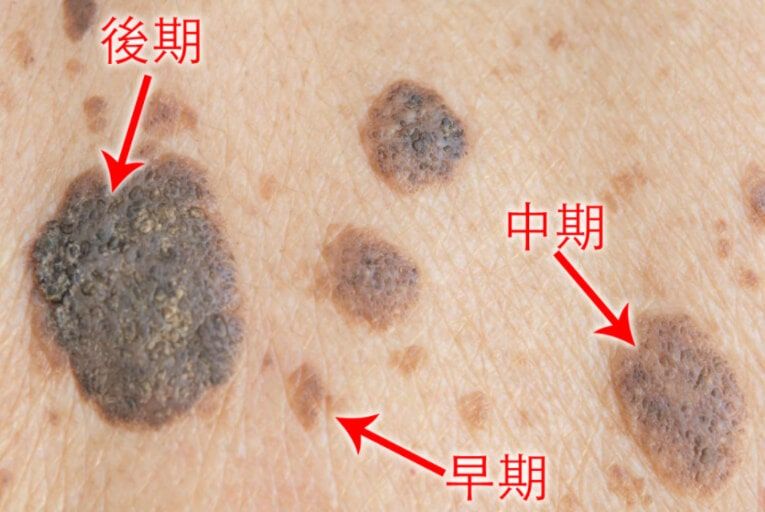
Age spots, also known as liver spots or lentigines, are medically referred to as seborrheic keratosis. They are benign skin growths, ranging in color from light brown to dark brown or even black. Their size can be as small as a soybean or larger. They may appear as papular, slightly raised, thickened, or smooth and flat — there’s no fixed pattern. Age spots commonly appear on exposed areas such as the face, hands, chest, upper back, and neck.
Age spots can appear alongside sunspots, making it difficult to distinguish between the two. Newly developed age spots tend to be lighter in color with clear edges and a flat surface, often easily confused with freckles. As people age, the spots can darken, grow larger, and become more raised, making them more noticeable and unsightly — which is why many women choose to undergo treatment for age spots.
How to Differentiate Age Spots, Freckles, and Melasma
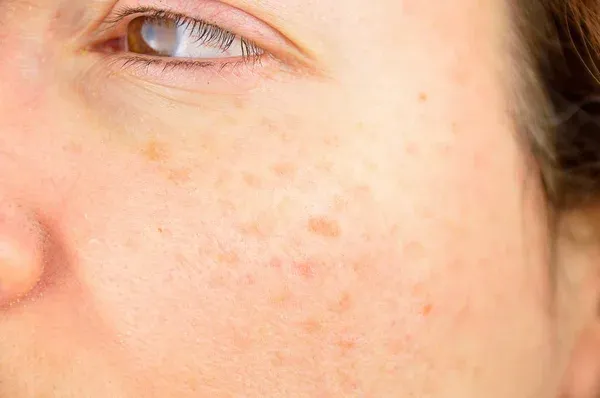
Freckles vs. Age Spots
Age spots are often mistaken for freckles because they initially look similar and both appear on sun-exposed areas. Freckles are usually 2–3 cm in diameter, flat, and have sharper edges than age spots. Their color may also darken during intense sunlight in spring and summer.
Melasma vs. Age Spots
Melasma, also called hormonal or liver spots, is another common type of pigmentation. Like age spots, melasma appears on sun-exposed areas, especially the cheeks, forehead, and around the eyes. However, melasma tends to be darker brown or blackish, covers larger areas, has blurry edges, and is primarily caused by genetics, sun exposure, and sleep deprivation.
免費體驗
PicoCure Pigmentation Removal Treatment
1 Minute Self-Registration
Date should not be before minimal date
What Causes Age Spots?
Cause 1: Aging
Skin aging is a major cause of age spots. As people reach middle and older age, skin metabolism slows, cell function declines, and the ability to eliminate free radicals decreases. Dietary changes and other factors contribute to the accumulation of lipofuscin, brown pigment granules in the basal layer of the skin, leading to visible pigmentation. The natural thickening of the skin’s keratin layer can also result in raised age spots that grow larger, thicker, rougher, and more noticeable with age.
Cause 2: Lack of Sun Protection
Age spots are not solely caused by aging but are largely due to cumulative UV damage. Long-term sun exposure triggers melanin production in the skin, which gradually accumulates to form visible spots. This explains why age spots predominantly appear on sun-exposed areas. Without proper sun protection, people are more likely to develop age spots than those who take preventive measures.
Cause 3: Genetics
Pigmentation can be congenital or acquired. While age-related and UV-related age spots are acquired, genetic predisposition plays a role in congenital spots. People with a family history of age spots may develop them earlier or more extensively than peers due to genetic differences in UV sensitivity and skin metabolism.
Young People Beware! Age Spots ≠ Just for the Elderly
Despite the name, age spots are not limited by age. Statistics show that approximately 70% of age spot cases are in individuals over 40, and 90% in those over 50. Yet, due to genetics, lifestyle, or skin type, some people in their 20s or 30s also develop age spots early.
Technically, age spots (seborrheic keratosis) are benign epidermal growths combined with pigment deposition, resulting in raised brown spots. Everyone develops them at different rates, so being young does not guarantee immunity.
Can Age Spots Turn into Skin Cancer?
Age spots are primarily caused by UV exposure, skin aging, and keratin growth. They are usually benign and rarely malignant, posing little health risk. However, age spots can resemble early-stage skin cancer. Dermatologists recommend caution if the following occurs:
1. A sudden appearance of numerous spots within 1–2 months, resembling age spots in shape and appearance, potentially in the tens or hundreds, especially on the head, neck, or abdomen — this may signal internal issues.
2. Redder patches resembling actinic keratosis, an early-stage precancerous lesion. These rough, uneven, scaly patches may coexist with age spots. Early treatment is crucial to prevent cancer progression.
免費體驗
PicoCure Pigmentation Removal Treatment
1 Minute Self-Registration
Date should not be before minimal date
How to Effectively Prevent Age Spots
Prevention 1: Sun Protection
Sun protection is essential. Use SPF30+ sunscreen and reapply every two hours during outdoor activities. Protective clothing, hats, and umbrellas can further reduce UV damage.
Prevention 2: Diet-Based Prevention
From a traditional medicine perspective, age spots relate to organ function imbalance and toxin accumulation. Foods that may help include:
• Ginger: Contains antioxidants that neutralize free radicals and prevent pigment accumulation.
• Green Tea: Rich in catechins with antioxidant properties, strengthening skin immunity and reducing UV-induced pigmentation.
• Tomatoes: Contain lycopene, an antioxidant that helps prevent pigmentation.
• Carrots: Rich in provitamin A, supporting skin health and smoothness.
• Kiwi: High in vitamin C, fiber, folate, and vitamin E, preventing pigmentation and skin aging.
• Mushrooms: Provide anti-aging benefits, supporting long-term skin health.
Prevention 3: Regular Exercise
Exercise boosts immunity, promotes cell metabolism, and helps eliminate toxins, reducing the risk of pigment accumulation.
Prevention 4: Maintain a Regular Sleep Schedule
Avoid late nights to prevent excess internal heat ("fire") that contributes to age spots. Sleep disruption also hampers metabolism, allowing pigment to accumulate.
Prevention 5: Avoid Skin Irritation
Avoid over-scrubbing, extreme water temperatures, or unknown skincare products, as these can accelerate skin aging and increase age spot risk.
Must-Know: 4 Methods to Remove Age Spots
Method 1: Age Spot Creams
Prescription creams can lighten early-stage age spots over 6–12 months. However, they are less effective for thickened, raised age spots, which may require additional treatments.
Method 2: Cryotherapy
Liquid nitrogen (-196°C) freezes age spots, destroying surface cells. Only effective for superficial spots; deeper spots may not respond.
Method 3: Electrodesiccation
High heat destroys spot tissue, forming a scab that falls off naturally. Effective for single spots but less so for large areas.
Method 4: Laser Treatment
Laser treatment, especially PicoSecond Laser, is highly effective for both superficial and deep spots. Faster, more comfortable, and reduces risks of darkening or whitening post-treatment.
Safe, Painless, and Highly Effective: Perfect Medical PicoCure Pigmentation Removal Treatment Treatment
The PicoCure Pigmentation Removal Treatment combines picosecond and nanosecond laser technology with four unique wavelengths (1064nm, 650nm, 585nm, 532nm). Its energy penetrates multiple skin layers, breaking pigment into fine particles that are naturally eliminated. It treats age spots, sunspots, freckles, melasma, and stubborn congenital spots like Ota’s nevus. The treatment also stimulates collagen production, improving skin texture, elasticity, and reducing wrinkles.
This non-invasive laser is FDA Cleared and CE certified, painless, and requires no recovery time, making it ideal for both cosmetic and safety-conscious patients. One session can visibly lighten age spots while enhancing overall skin health.
Perfect Medical is currently offering a free trial—simply register via the link to experience the PicoCure treatment firsthand.
免費體驗
PicoCure Pigmentation Removal Treatment
1 Minute Self-Registration
Date should not be before minimal date
FAQ

Do age spots pose a health risk?
Generally, no. Age spots are benign and linked to UV exposure, aging, or genetics. However, actinic keratosis may resemble age spots and requires early medical attention.
Can young people develop age spots?
Yes. While most cases occur after 40, genetics, skin type, and lifestyle can lead to early onset in 20s–30s.
Who is at high risk for age spots?
Individuals over 40–50, frequent sun exposure, outdoor workers, athletes, or those without sun protection are at higher risk.
Can topical creams remove age spots?
Creams are effective for mild, early-stage spots but have limited impact on thicker, raised spots.
What is the recommended laser treatment?
Perfect Medical PicoCure Pigmentation Removal Treatment offers superior technology with multiple wavelengths, targeting various skin depths and pigment colors. It is safe, painless, and delivers visible results from the first session.