- Home
- Trend
- Weight Loss Strategies
- Acne Tips
- Hair Health Information
- Blemish Removal Tips
- Acne Scar Removal Tips
- Muscle Building Techniques
- Intimate Care Tips
- Postpartum Intimate Care
- Eye Bags Wiki
- Tips for Face Slimming
- Secret of Permanent Hair Removal
- Breast Enlargement Tips
- Cure to Snoring
- Marionette Lines
- Skin-Tightening Secrets

Acne itself is already frustrating enough, but what often follows is an even more persistent issue: acne marks. Acne marks can be mild or severe. Some fade naturally after a few months, while others may linger indefinitely. Fortunately, there are now various laser treatments designed to break down excess pigment in the skin, fade acne marks, resurface skin, and even stimulate collagen production. This guide explains how laser acne mark treatments work and provides a thorough overview of acne mark types to help you better understand how to treat them.

The 4 Types of Acne Marks: One Type Is Especially Hard to Treat
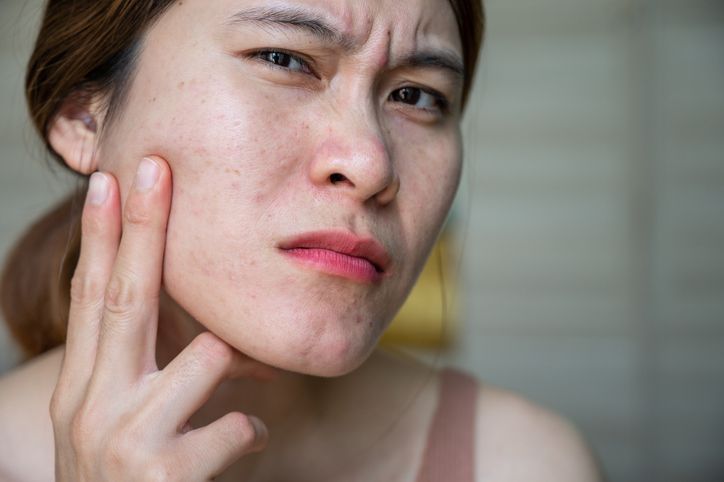
Acne marks can be grouped into four main categories based on color and appearance. Their severity varies, which means the right treatment may differ for each type.
Red Acne Marks
When bacteria, sebum, dead skin, and debris clog a pore, inflammation occurs and acne forms. During this process, the body activates its anti-inflammatory response, causing capillaries in the area to dilate and increase blood flow to fight infection.
After the acne heals, these dilated and newly formed capillaries may remain temporarily, leaving behind a red acne mark. Typically, these capillaries shrink back within one to two months, and the redness fades gradually.
Red acne marks are the mildest type and often resolve without medical intervention.
Brown Acne Marks
If red acne marks are handled incorrectly—through irritation, improper products, or picking—the inflammation worsens. To protect the still-healing skin, melanocytes begin to overproduce pigment, and keratinocytes thicken. As a result, brown or purple-brown marks form and the affected skin may feel firmer to the touch.
Because brown marks involve deeper pigment deposition, they tend to take significantly longer to fade.
Atrophic Scarring (Indented Acne Scars)
This is a severe form of acne scarring, caused by deep inflammation that damages the dermis. Conditions such as rosacea acne are especially prone to forming indentations.
If acne is squeezed during an active, inflamed stage, the trauma disrupts tissue repair. Fibrotic adhesions form as collagen, elastin, and capillaries intertwine chaotically, pulling the skin downward and creating pits.
Atrophic scars do not disappear on their own and typically require treatments such as laser resurfacing.
Hypertrophic Acne Scars
For some, the skin overproduces collagen during healing, creating raised bumps where acne once was. These hypertrophic scars result from abnormal tissue growth combined with extracellular matrix buildup.
Like atrophic scars, these are considered severe and require medical treatments such as laser therapy, surgical revision, or steroid interventions.
Can Laser Treatments Remove Acne Marks?
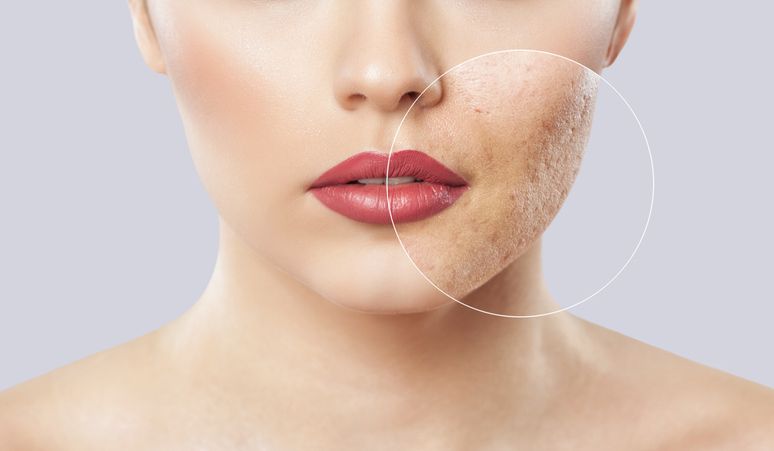
With advancements in aesthetics technology, laser treatments have become a popular solution for acne marks and scarring—and they do work.
Acne marks persist because of deeply embedded pigment. Laser devices emit specific wavelengths that break down pigment into microscopic particles, which the body gradually eliminates through lymphatic and metabolic processes.
Beyond pigment removal, many laser modalities also:
• Improve atrophic scarring
• Fade redness
• Reduce pigmentation
• Shrink pores
• Brighten skin tone
• Stimulate collagen production
免費體驗
PicoCure Pigmentation Removal Treatment
1 Minute Self-Registration
Date should not be before minimal date
Understanding 6 Major Laser Technologies: Which One Works Best?
Although all are considered “laser treatments,” each machine differs in wavelength, pulse duration, and energy delivery. Here is a breakdown of six common types.
Nanosecond Laser
A nanosecond is one-billionth of a second. Nanosecond lasers use photothermal energy to break pigment into small fragments. These particles are then metabolized naturally.
However, nanosecond lasers generate more heat, increasing the risk of redness, swelling, discomfort, and post-inflammatory hyperpigmentation (PIH).
Picosecond Laser
A picosecond is one-trillionth of a second. Picosecond lasers use photo-mechanical shockwaves to shatter pigment into dust-like particles that the body can quickly eliminate.
Because the pulse duration is shorter, heat diffusion is reduced, improving safety and decreasing the risk of PIH or hypopigmentation.
PicoSure Laser (Honeycomb Picosecond Laser)
This popular picosecond treatment utilizes a Focus Lens Array (MLA). The lens disperses light into concentrated micro-beams, creating a controlled “cavitation effect” in the dermis.
This effect activates the skin’s natural repair process and boosts collagen production, making it highly effective for acne marks, acne scars, and textural issues.
Fraxel Laser
Fraxel (fractional laser) divides the beam into numerous micro-columns that penetrate deeply into the dermis. Each micro-beam is tiny—100–200 microns—which allows it to create precise thermal zones for targeted treatment.
Because each session only treats a fraction of the skin, multiple treatments are typically required to see significant improvement.
Dye Laser
A dye laser targets redness and dilated capillaries. It is especially effective for red acne marks and red-toned atrophic scars. It works by shrinking problematic capillaries and calming inflammation.
Dye lasers also help reduce sebum production, making them beneficial for individuals experiencing recurrent breakouts.
Post-Treatment Care After Laser Acne Mark Removal
Laser treatments can irritate or mildly injure the skin. Proper aftercare is essential.
Apply Sunscreen
UV radiation interacts with free radicals, damages healthy cells, and triggers melanin production. This greatly increases the risk of post-laser hyperpigmentation. Daily sunscreen use is critical—even indoors.
Avoid Hot Water
For one week after treatment, avoid washing your face with hot water, and avoid hot springs, saunas, or facial steamers. Excess heat may irritate sensitive post-laser skin.
Maintain Hydration
Post-laser skin is often dry, itchy, or flaky due to temporary moisture loss. Increase hydration with moisturizers and hydrating masks to support barrier repair and boost recovery.
Avoid Irritating Skincare Ingredients
For at least one week, avoid products containing acids, alcohol, or fragrance to prevent further irritation.
Do Not Exfoliate
Exfoliation can disrupt the healing barrier and cause inflammation. It should be avoided until the skin has fully recovered.
Unsure Which Laser to Choose? Consider Perfect Medical’s PicoCure Ultra Picosecond Treatment
With so many options available, selecting the right clinic and device can be overwhelming. For facial treatments, choosing a reputable medical aesthetics provider is essential.
Perfect Medical’s PicoCure Ultra Picosecond Treatment combines the strengths of both nanosecond and picosecond technology. First, nanosecond energy breaks larger pigment clusters. Then picosecond pulses shatter them into ultra-fine particles for efficient elimination.
The treatment also stimulates collagen production, helping to improve acne marks, atrophic scarring, and raised scars simultaneously.
免費體驗
PicoCure Pigmentation Removal Treatment
1 Minute Self-Registration
Date should not be before minimal date
FAQ

How does laser acne mark removal work?
Laser energy targets pigment beneath the skin, breaks it into tiny particles, and assists the body in clearing it through metabolic pathways. This process fades acne marks and improves scarring.
What other benefits do laser treatments offer?
Laser treatments can also lighten pigmentation, refine pores, brighten skin tone, and stimulate collagen production.
Besides laser treatments, what other methods can help fade acne marks?
Options include scar creams, brightening serums, and vitamin C supplementation. However, these are slower and generally less effective than laser therapy.
Are there any side effects?
Possible side effects include temporary redness, swelling, itching, peeling, or post-inflammatory hyperpigmentation/hypopigmentation.
Which clinic is best for laser acne mark removal?
The key factors are technology and the ability to target both superficial and deep pigmentation. Many lasers only treat surface-level marks. For more comprehensive results, Perfect Medical’s PicoCure Ultra Picosecond Treatment uses high-velocity shockwaves to break down deep pigment while promoting collagen regeneration, improving red marks, brown marks, and acne scars more effectively.