- Home
- Trend
- Weight Loss Strategies
- Acne Tips
- Hair Health Information
- Blemish Removal Tips
- Acne Scar Removal Tips
- Muscle Building Techniques
- Intimate Care Tips
- Postpartum Intimate Care
- Eye Bags Wiki
- Tips for Face Slimming
- Secret of Permanent Hair Removal
- Breast Enlargement Tips
- Cure to Snoring
- Marionette Lines
- Skin-Tightening Secrets

Do your arms or legs feel bumpy and rough, covered in tiny whiteheads? That’s likely keratosis pilaris — not acne. And no, you should never exfoliate aggressively or attempt extractions, as it can trigger folliculitis and leave behind scarring or dark spots. Here's everything you need to know about this skin condition, along with 6 treatment options!

What Is Keratosis Pilaris — aka Chicken Skin or Bumpy Arms?
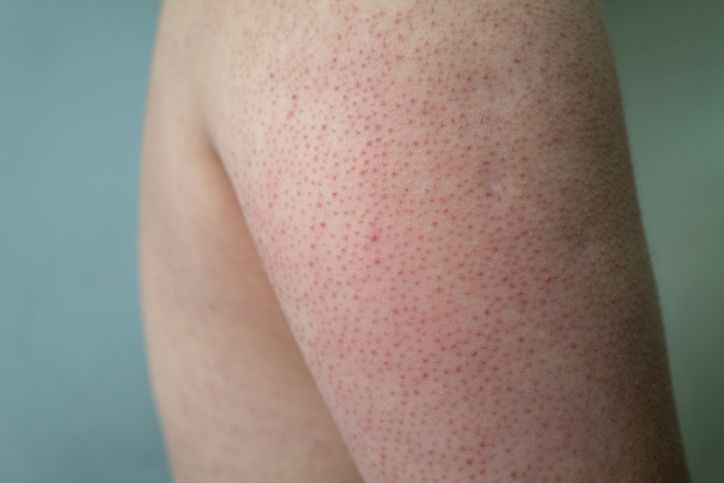
If your arms or thighs are covered in reddish or purplish bumps that feel rough to the touch, you're not alone! Studies suggest that around 40% of people globally suffer from keratosis pilaris, and about 20% of people in Hong Kong are affected.
Keratosis pilaris appears as clusters of tiny, rough bumps on areas like the upper arms, thighs, buttocks, and sometimes the back. It may even be accompanied by dark pigmentation. In some cases, the bumps become inflamed, red, or filled with pus.
Commonly mistaken for acne, these bumps — also known as “chicken skin” — are actually a skin condition called keratosis pilaris (also known as follicular keratosis or KP).
What Causes Keratosis Pilaris? — The Role of Clogged Hair Follicles
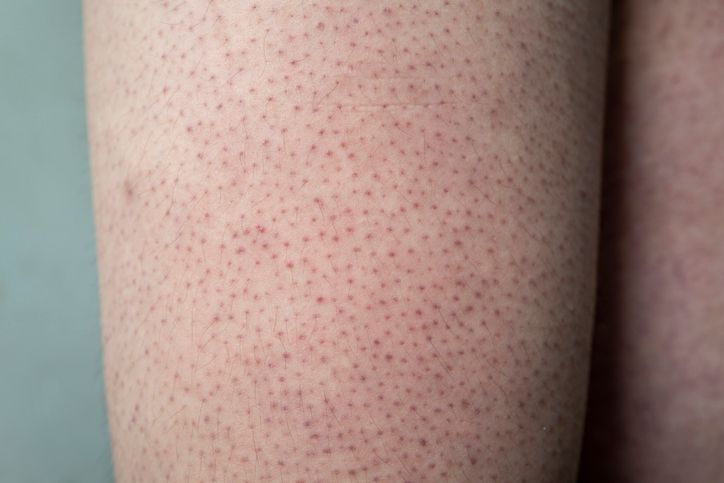
Although the exact cause is still unknown, keratosis pilaris is believed to be linked to genetics. It’s a chronic, common inherited skin condition that leads to rough patches of skin, especially on the limbs.
In affected areas, the skin doesn’t shed properly and builds up keratin, which clogs the hair follicles. This blockage causes bumps and may trap hair and sebum beneath the surface. Sometimes you might notice tiny black dots or curled hairs — these are trapped or ingrown hairs, which can trigger inflammation or folliculitis.
免費體驗
A3 Laser Hair Removal Treatment
1 Minute Self-Registration
Date should not be before minimal date
Where Keratosis Pilaris Commonly Appears
• Upper arms
• Lower legs
• Thighs
• Buttocks
• Cheeks (below the eyes)
Who’s Most at Risk for Keratosis Pilaris?
• People with chronic genetic skin conditions (e.g., ichthyosis)
• Individuals with allergies or atopic dermatitis
• Those who are malnourished
• People with vitamin A deficiency
When Is Keratosis Pilaris Most Likely to Flare Up?
During Puberty
Hormonal changes during puberty cause increased oil production and faster skin cell turnover. This accelerates keratin buildup in hair follicles. About 35% of cases begin between ages 10 and 20, with up to 40% of teens experiencing symptoms to varying degrees.
In Dry Environments Or Winter
Dry air and winter weather tend to worsen symptoms, often leading to itching. Scratching can damage the follicles and cause inflammation, pigmentation, or scarring. Interestingly, symptoms often improve during summer when the air is more humid.
免費體驗
A3 Laser Hair Removal Treatment
1 Minute Self-Registration
Date should not be before minimal date
Is Keratosis Pilaris Contagious?
No, it’s not contagious. But it can be quite visible and feel rough to the touch. Common symptoms include:
1. Clusters of raised hair follicles, possibly with redness or dark pigmentation
2. No contagious risk
3. Generally painless and not itchy, though dryness can cause itchiness
4. You might see black dots or ingrown hairs
5. Occasional folliculitis or pus-filled bumps may occur
Keratosis Pilaris vs. Acne: What’s the Difference?
Keratosis pilaris is a chronic and recurring condition. It typically doesn’t appear on the face, isn’t painful, and often goes unnoticed unless touched. However, when irritated, the bumps can become inflamed or pus-filled.
Acne, on the other hand, is an inflammatory skin condition often found on the oily areas of the face (T-zone, cheeks) and goes through active and healing phases. It can completely heal with treatment.
Keratosis Pilaris Can Cause Pigmentation and Rough, Bumpy Skin
Many people with KP don’t notice it until they touch the area. Some experience occasional itchiness. The friction from clothing or scratching may inflame the follicles and leave behind scars or dark spots.
Even those without a genetic predisposition can develop follicular blockage in areas of frequent friction. For example, the author, who spends 8 hours a day typing at a desk, developed KP on her elbows due to constant rubbing. The area became rough, pigmented, and filled with ingrown hairs — but she managed to improve her skin with consistent use of glycolic acid lotion after showers.
免費體驗
A3 Laser Hair Removal Treatment
1 Minute Self-Registration
Date should not be before minimal date
Is Keratosis Pilaris a Serious Health Issue?
No — KP is not malignant or infectious. It usually stays dormant unless irritated. But don’t underestimate its emotional impact. Many sufferers avoid short sleeves or shorts due to self-consciousness.
A foreign study revealed that up to 50% of KP sufferers experienced depressive symptoms, and 30% suffered from severe depression.
Common Mistakes in Treating Keratosis Pilaris — Never Try to Extract!
1. Scrubbing
People often try to exfoliate the bumps, hoping to remove excess keratin. But since the follicles are already raised and delicate, scrubbing can tear the skin, leading to infection and folliculitis.
2. Over-cleansing
KP isn’t caused by oiliness, so harsh soaps and scrubbing brushes do more harm than good. Strong soaps dry out the skin further and worsen the condition.
3. Popping or extraction
Don’t treat KP like facial whiteheads. Even if you manage to extract the buildup with tools or needles, this can damage the follicle, causing scarring and infection. Extraction is time-consuming, ineffective long-term, and may lead to severe folliculitis.
Daily Care for Keratosis Pilaris
1. Urea-based creams for smoothing bumps
There are many skin-softening creams available that target rough, bumpy skin on the arms, thighs, and calves—commonly referred to as “chicken skin.” These typically contain urea to soften skin, vitamin A to promote cell turnover, and anti-inflammatory ingredients like vitamin E and dipotassium glycyrrhizate. With consistent, long-term use, these creams can visibly improve skin texture.
2. Daily moisturising
Moisturising won’t cure keratosis pilaris, but it can relieve dryness and improve hydration, helping the skin shed excess keratin more easily. This can also reduce itchiness and tightness in affected areas. Apply lotion immediately after showering at night to maximise absorption.
3. Products with vitamin A or exfoliating acids
Ingredients such as retinoic acid (vitamin A), retinoid derivatives, and exfoliating acids like glycolic acid, salicylic acid, and lactic acid help dissolve the bonds between dead skin cells, making them easier to shed. This speeds up skin renewal and helps regulate keratin buildup. Consistent application can improve the appearance of keratosis pilaris over time.
4. Topical steroids for inflammation
If the affected areas become inflamed, a doctor may prescribe a mild steroid cream. It’s usually applied for just 2–3 days until the inflammation subsides. Prolonged or excessive use of steroid creams is not recommended.
5. Avoid tight clothing
Some people with keratosis pilaris try to hide their skin by wearing long sleeves and pants even in hot weather, but this actually worsens the condition by increasing friction. Tight clothing should be avoided; choose breathable fabrics and looser fits to reduce irritation.
6. Don’t use hot water when bathing
Hot water strips the skin of its natural oils, which can lead to redness and dryness. For those with keratosis pilaris, hot water can trigger sensitivity and itching. Stick to lukewarm water and try to finish your shower within 15 minutes. Avoid showering more than once a day.
7. Use low-soap or soap-free cleansers
Harsh body washes and soaps should be avoided. Instead, use gentle cleansers that are low in soap or completely soap-free. In winter, be sure to moisturise immediately after bathing to prevent dryness.
8. Consider regular laser treatments
Although there’s currently no permanent cure for keratosis pilaris, laser treatments can help. Lasers with wavelengths of 532, 585, and 595 nm can reduce redness and pigmentation in affected areas. For cases involving ingrown hairs and blocked follicles that cause frequent inflammation, hair removal lasers can shrink or destroy hair follicles and sebaceous glands, helping to reduce inflammation and even out skin tone over time.
Editor’s Personal Trial: Testing At-Home Keratosis Pilaris Remedies — Which One Works Best?
Among all the solutions out there, I know laser hair removal is probably the most effective—it not only removes hair completely but also helps brighten darkened skin. But honestly, I’m just a cheapskate by nature. I wanted to try fixing it myself at home first, and only when I had no other options would I spend money on professional help. (Not a good habit—don’t follow my example!)
Turns out, no matter what I tried at home, it was all a waste of effort. I tested out all of the following—and none worked:
1. Hair removal cream ✖
2. Shaving with a razor ✖
3. Glycolic acid ✖
4. Vitamin A cream ✖
I’ve always had keratosis pilaris and mild skin sensitivity. My at-home hair removal routine went like this:
First, I’d use a hair removal cream followed by a razor to remove most of the hair. Then I’d go over any remaining hair with the razor again, apply glycolic acid, rinse it off, and finish with a light moisturiser.
As you can probably guess, shaving alone leaves behind tiny dark dots—so I added exfoliating acid (glycolic) to my routine and followed that with vitamin A cream. But no matter how much I did, those black dots were still clearly visible. All that work... for nothing.
On top of that, keratosis pilaris symptoms would sometimes flare up after shaving. And once it flares up, I have to stop shaving for a very, very, very long time and exfoliate every other day just to gradually calm the inflammation and smooth out my skin again. Honestly, having skin prone to KP is such a hassle!
It’s not just the bumps. The dark, patchy pigmentation under my arms also really bothered me—it looked dirty and almost like a skin condition.
The final push that made me cave and start laser hair removal? I went to a hot spring with some friends, and I was the only one with dark, discoloured underarms. Everyone else had already completed laser hair removal and had smooth, clean, bright skin all over.
No matter how carefully I shaved or how many steps I followed at home, the results just couldn’t compare to laser hair removal. Plus, shaving tends to trigger KP for me. Honestly, only laser hair removal could get rid of the dark spots and pigmentation. And an added bonus? I never have to worry about forgetting to shave before swimming or hitting the hot springs!
This is the laser hair removal treatment I’ve been using—it’s super cost-effective and has amazing value. Highly recommend checking it out!
免費體驗
A3 Laser Hair Removal Treatment
1 Minute Self-Registration
Date should not be before minimal date
Say Goodbye to Ingrown Hairs: A3 Laser Hair Removal Treatment for Keratosis Pilaris
Do keratosis pilaris, bumpy arms, or clogged follicles keep you from wearing short sleeves in the summer? Ever scratched an itchy spot just once and ended up with inflamed follicles? Perfect Medical’s A3 Laser Hair Removal Treatment is here to help—designed to tackle recurring folliculitis and ingrown hair issues!
The A3 Laser Hair Removal treatment uses Sapphire crystal technology, allowing the laser to penetrate deep into the root of the hair follicle. This effectively destroys the hair's ability to regrow by shrinking the blood vessels that supply the follicle. The result? Smooth, hair-free skin—no more ingrown hairs or follicle inflammation!
The A3 laser is safe for use on both the face and body. It’s non-invasive and painless, with no irritation to the skin. In fact, it even boosts skin metabolism, helps reduce redness and pigmentation, and leaves KP-prone areas looking clearer and brighter.
Perfect Medical is currently offering a limited-time promotion—just book online to enjoy a free trial of the A3 Laser Hair Removal Treatment. Planning to wear short sleeves or skirts this summer? Now’s the perfect time to get started!
免費體驗
A3 Laser Hair Removal Treatment
1 Minute Self-Registration
Date should not be before minimal date
FAQ

What is keratosis pilaris?
Also known as chicken skin, keratosis pilaris (KP) resembles the look of raised hair follicles when you get goosebumps—except it’s permanent and appears on areas like the arms, thighs, buttocks, or lower face. Around 20% of people in Hong Kong have KP. It shows up as clusters of small bumps, sometimes reddish or purplish, occasionally with pigmentation. It’s not painful or itchy for most, and while it doesn’t affect your health, there’s no known cure to eliminate it entirely.
What causes keratosis pilaris?
The exact cause is unknown, but it’s generally considered a genetic skin condition. It occurs when skin cells in certain areas undergo abnormal keratinisation, causing keratin to build up and block hair follicles. This prevents hairs and sebum from escaping the pore, pushing the skin upward. This blockage can also lead to ingrown hairs. KP is usually painless but can get itchy or worse in dry conditions, and improper care can lead to folliculitis.
How should I care for keratosis pilaris daily?
Avoid tight clothing or friction against affected areas. Use urea-based creams. Stick to skincare products with vitamin A, exfoliating acids, or brightening ingredients. Keep the skin well moisturised. Avoid hot water when bathing. Use low-soap or soap-free cleansers. Get regular laser treatments to reduce ingrown hairs, pigmentation, and inflammation. When inflammation flares up, consult a doctor and use steroid creams to calm it.
What are the treatment options at different stages of KP?
Pigmentation phase: Laser treatment, glycolic acid, vitamin A, brightening agents (e.g., hydroquinone, azelaic acid). Inflamed/red phase: Steroid creams. Ingrown hairs or blocked follicles: Laser hair removal. Severe keratin buildup: Glycolic acid, vitamin A. Dark red/purple spots: Pulsed dye laser. General KP symptoms: Laser treatment
How does laser hair removal help with keratosis pilaris?
Although there’s no cure for KP, in addition to exfoliating regularly, laser hair removal can address the issues of ingrown hairs and blocked follicles that often cause inflammation. When hair can’t escape the follicle, it curls and pushes upward, sometimes triggering infection. Laser energy penetrates the base of the follicle, shrinking blood vessels, destroying melanin, and reducing oil gland activity. This starves the follicle, preventing hair regrowth. The result is smoother skin, less inflammation, and faded pigmentation—along with permanent hair removal!