- Home
- Trend
- Weight Loss Strategies
- Acne Tips
- Hair Health Information
- Blemish Removal Tips
- Acne Scar Removal Tips
- Muscle Building Techniques
- Intimate Care Tips
- Postpartum Intimate Care
- Eye Bags Wiki
- Tips for Face Slimming
- Secret of Permanent Hair Removal
- Breast Enlargement Tips
- Cure to Snoring
- Marionette Lines
- Skin-Tightening Secrets

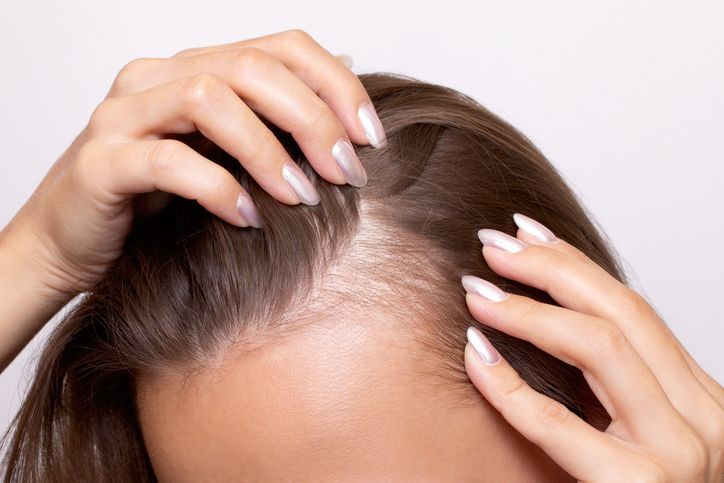
A hairline transplant is one of the most effective ways to address a high or receding forehead. This minimally invasive procedure relocates healthy, active hair follicles to thinning areas, restoring the natural hair growth cycle and permanently resolving hairline concerns. Many people worry about ending up with an unnatural “Qing Dynasty” look — especially women, since a receding hairline can affect facial proportions and make the face look larger. If you want a long-term solution to rebuild a fuller, denser hairline, read on. Here we break down the 3 major hairline transplant methods used in Hong Kong, important aftercare tips, and everyday hairstyle tricks that help conceal a receding hairline. There’s also an unexpected surprise at the end!

4 Major Advantages of Hairline Transplants: Why This Procedure Has Remained Popular for Years
1. Long-lasting, permanent results
Unlike wigs or topical growth serums, hairline transplants use your own healthy donor follicles from the back of your head. These follicles have strong longevity and continue to grow naturally once transplanted. This eliminates the need for constant wig maintenance or long-term dependence on hair growth serums. One procedure can provide lifelong benefits.
2. Natural, seamless appearance
Your hairline is designed according to your facial shape and aesthetic preferences. The transplanted follicles blend seamlessly with your natural hair — matching in texture, color, and growth direction — delivering natural-looking results that are difficult for others to detect.
3. Improved facial proportions
The position and contour of your hairline have a major impact on facial balance. By lowering or reshaping the hairline, the forehead appears smaller, facial lines become softer, and features look more refined overall.
4. Boosted confidence
Eliminating issues like an M-shaped hairline or a high forehead naturally enhances confidence. Whether in social settings or at work, many individuals feel more assured in their appearance after restoring their hairline.
The 3 Most Common Hairline Transplant Techniques: Higher Success Rates Than Traditional Methods
1. FUE (Follicular Unit Extraction)
FUE is one of the most popular modern transplant methods. It involves extracting individual follicular units from the donor area without cutting or stitching. This results in tiny wounds, minimal downtime, and almost no visible scarring. FUE maintains natural hair flow and density, making it ideal for those seeking a scar-free solution.
2. DHI (Direct Hair Implantation)
DHI uses a specialized implanter pen, allowing follicles to be inserted directly into the scalp without pre-made incisions. This improves precision in angle, depth, and density, enhancing follicle survival rates and helping create a fuller, more natural hairline. Since follicles spend less time outside the body, the risk of damage is reduced.
3. FUT (Follicular Unit Transplantation)
FUT is a more traditional method where a strip of scalp is removed from the donor area and dissected into individual follicles. It allows a large number of follicles to be harvested at once — ideal for severe recession — but may leave a linear scar and generally requires a longer recovery period than FUE.
免費體驗
F8 Hair Regrowth Treatment
1 Minute Self-Registration
Date should not be before minimal date
Step-by-Step: What the Hairline Transplant Procedure Actually Looks Like
Hairline transplant surgery typically involves the following five steps:
1. Pre-procedure assessment: The doctor evaluates scalp health, hair density, and designs a suitable hairline based on your anatomy and expectations.
2. Follicle extraction: Using FUE, DHI, or robotic extraction systems like ARTAS, healthy follicles are harvested from the back of the head.
3. Follicle preparation: Extracted follicles are carefully separated into single or small units to prepare them for implantation.
4. Follicle implantation: Using precise techniques, follicles are implanted into the hairline zone with attention to direction, depth, and density for a natural result.
5. Local anesthesia: Local anesthetic ensures the procedure is comfortable and virtually painless.
Post-Procedure Don’ts: 4 Mistakes to Avoid for a Faster Recovery
Managing pain & swelling
Mild swelling or discomfort may occur. Follow your doctor’s instructions for prescribed pain relievers and apply cold compresses.
Proper cleansing
Avoid washing your hair for the first few days. Later, use gentle, doctor-recommended shampoo and avoid rubbing the scalp.
Balanced diet
Eat nutrient-rich meals including protein and vitamins to support follicle recovery and new hair growth.
Avoid strenuous exercise
For at least one month, avoid vigorous activities to prevent affecting the growth of newly implanted follicles.
5 Everyday Lifestyle Tricks to Help Women Conceal a Receding Hairline
1. Use fringe hairstyles to soften the forehead
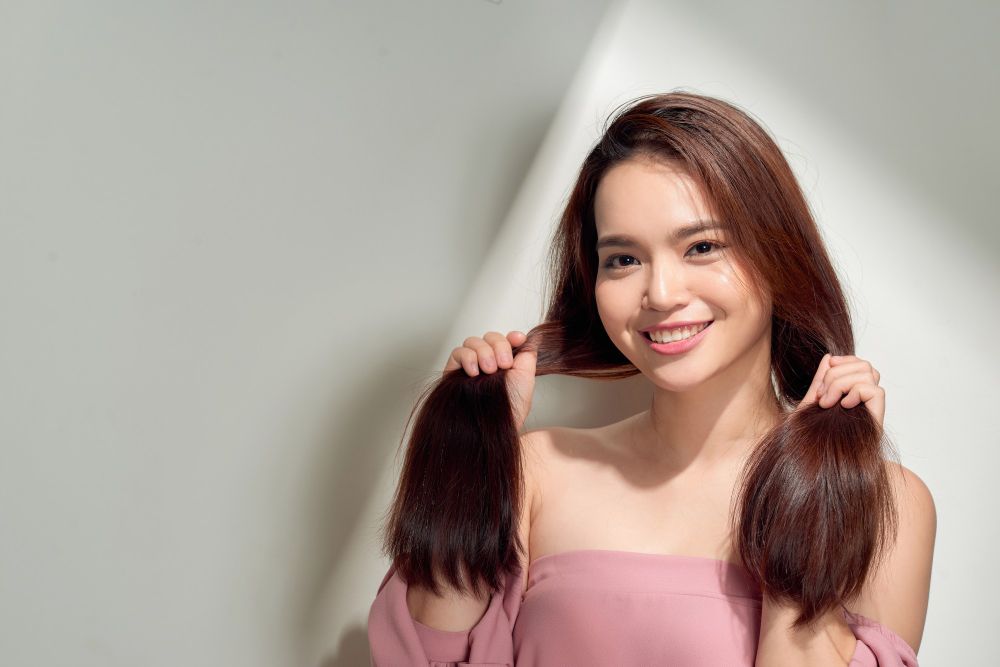
Bangs are one of the quickest ways to camouflage a high or uneven hairline. Side bangs, airy bangs, and French bangs can all soften facial contours and make the forehead appear smaller.
2. Use hair powder to fill sparse areas
Hair powder helps instantly fill gaps around the hairline. Lightly tapping the powder along sparse zones increases visual density. Choose shades that match your natural hair for a seamless finish.
3. Adjust hair flow and volume through styling
By altering hair direction or adding volume at the roots, stylists can visually minimize a receding hairline. Soft waves, root-lifting techniques, or texturizing can help create a fuller appearance.
4. Use hair accessories
Headbands, clips, or hairbands can instantly shift attention away from the hairline. These can correct asymmetry and add style at the same time.
5. Nourish the scalp and strengthen the roots
Using shampoos and scalp serums with ingredients like caffeine, ginger extract, or amino acids can support long-term scalp health. Combined with regular scalp massages, these help maintain strong follicles and slow hairline recession.
Concerned About Hairline Transplant Risks? Try a Non-surgical, Painless Alternative: Perfect Medical F8 Hair Regrowth Treatment
Completely painless & non-invasive — lie down, relax, and treat hair loss without stress or aftercare!
Although hairline transplants and scalp micro-pigmentation offer high success rates, they still carry risks. If you want to adjust your hairline without surgery, Perfect Medical’s F8 Hair Regrowth Treatment is a highly safe, 100% painless alternative that can ease the anxiety caused by recession or androgenetic alopecia.
The F8 treatment uses low-energy medical-grade soft laser technology that does not irritate sensitive scalps, making it beginner-friendly. This laser penetrates the follicles to activate hair growth cells, awaken dormant follicles, and reset the growth cycle. It effectively addresses androgenetic alopecia, diffuse thinning, receding hairlines, telogen effluvium, seborrheic hair loss, postpartum shedding, stress-related shedding, and more.
Sign up now to enjoy a professional scalp analysis + Perfect Medical F8 Hair Regrowth Treatment — the perfect solution to regain confidence and restore thick, healthy hair.
Get Your Analysis: Perfect Medical F8 Hair Regrowth Treatment免費體驗
F8 Hair Regrowth Treatment
1 Minute Self-Registration
Date should not be before minimal date
FAQ

1. Does a hair transplant hurt?
Local anesthesia is used, so you shouldn’t feel significant pain. Mild discomfort afterward is normal and manageable with medication.
2. Will the newly transplanted hair fall out?
It’s normal for transplanted hairs to shed during the initial resting phase. New growth will follow afterward.
3. How long do hair transplant results last?
Results are generally permanent because donor follicles from the back of the head are resistant to hormonal hair loss.
4. Are there risks?
As with any surgery, risks include infection, bleeding, or swelling. Choosing an experienced clinic significantly reduces these risks.
5. When will I see visible results?
New hair typically begins growing between 3–6 months post-surgery, with full results visible after 9–12 months.