- Home
- Trend
- Weight Loss Strategies
- Acne Tips
- Hair Health Information
- Blemish Removal Tips
- Acne Scar Removal Tips
- Muscle Building Techniques
- Intimate Care Tips
- Postpartum Intimate Care
- Eye Bags Wiki
- Tips for Face Slimming
- Secret of Permanent Hair Removal
- Breast Enlargement Tips
- Cure to Snoring
- Marionette Lines
- Skin-Tightening Secrets

Is breast augmentation surgery really the only way to achieve a fuller, curvier figure? Many women believe implants are the fastest path to going up a cup size, but the risks and long-term complications are often overlooked. Even with advancements in medical technology and more implant options available, not every woman is a good candidate — after all, inserting a foreign object into the body may trigger rejection or side effects.
The truth is, breast augmentation isn’t the only option. If you’re dreaming of beautiful curves, there are actually safer, non-invasive ways to enhance your bust. But first, let’s break down the facts about implants.

Before Considering Surgery: What Is the “Perfect Bust Shape”?
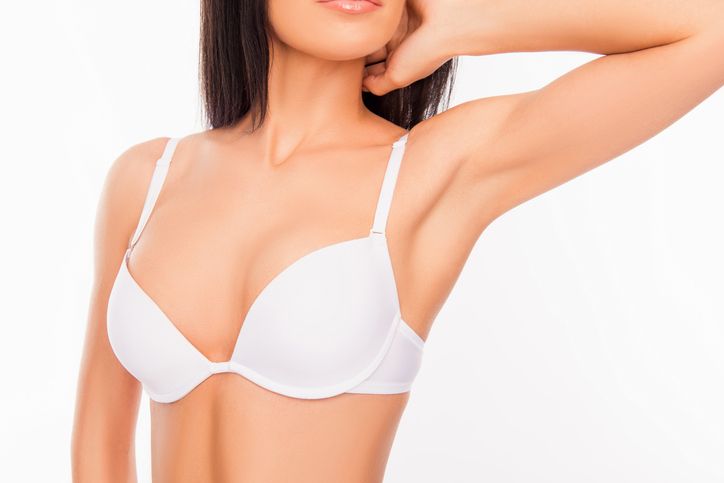
Plenty of women strive for perky, full breasts and may have considered implants to achieve that look. But before making a decision, it’s important to understand what really defines the ideal breast shape.
Bigger doesn’t always mean better. A beautiful bust is about proportion, contour, and firmness. Many women chase larger cup sizes, only to neglect breast symmetry and silhouette — which can look unnatural even if the breasts are big.
A “perfect bust” should meet the Golden Triangle standard:
• The distance from the center of the collarbone to each nipple, combined with the distance between both nipples, should form an equilateral triangle.
• From the side view, the nipple should sit at the mid-point of the breast mound — not too high or too low.
Only when both proportions and firmness are in balance can the bust be considered truly beautiful.
Why Do Women Choose Breast Implants?
Most women think of breast augmentation simply as a way to increase cup size. But in reality, there are several reasons why women undergo surgery beyond just “wanting bigger breasts.”
1. Naturally small breasts
Some women are born with less fatty tissue due to genetics, resulting in a smaller bust. For them, breast implants offer a quick and effective solution to achieve their desired size without relying solely on diet or exercises.
2. Post-breastfeeding changes
Pregnancy and breastfeeding place heavy strain on the mammary glands. Over time, this stretching may cause sagging, uneven breasts, or loss of firmness. In these cases, implants can restore shape, fullness, and elasticity that regular bust-enhancement methods may not fix.
3. Congenital breast tissue defects
Not all women choose implants because of small size. Some may have underdeveloped or asymmetrical breast tissue, or even indentations, which implants can correct by filling out the breast and restoring symmetry.
免費體驗
B6 Bust Enhancement Treatment
1 Minute Self-Registration
Date should not be before minimal date
The 3 Main Types of Breast Augmentation — Which Is Safest?
Over the years, breast augmentation has evolved, giving women multiple options. Each method has its own differences in results, feel, aftercare, and cost. The right choice depends on your goals and your surgeon’s professional advice.
1. Saline implants
The earliest type of implant, filled with sterile saltwater. They’re lower in cost and create a fairly natural effect. However, they’ve fallen out of favor due to risks like leakage, deflation, or even rupturing during flights. Today, saline implants are rarely used.
2. Silicone implants
Currently the most common option. Silicone implants come in three textures: smooth, textured, and micro-textured. They feel more natural to the touch and have become the mainstream choice.
• Smooth implants were phased out due to high risk of shifting.
• Textured implants provided grip but were linked to bacterial growth.
• Micro-textured implants solve both problems, making them the safest and most widely used today.
3. Fat transfer (autologous fat grafting)
For women who don’t want a foreign object in their body, fat transfer is an alternative. About 200–300ml of fat is liposuctioned from areas like the thighs or abdomen, then injected into the breasts. While this method looks natural, it’s limited in volume. A one-cup increase (e.g. B to C cup) is usually achievable, but women seeking multiple-cup jumps may require several procedures.
Inside a Breast Augmentation Surgery: Implants, Incisions & Options
One of the biggest concerns women have about breast augmentation is whether scars will be visible. Since it’s a surgical procedure, scarring is inevitable — but the size and location of scars can vary. Breast augmentation typically involves placing an implant either above or below the chest muscle, or transferring fat from another part of the body into the breasts. No matter the method, some scars will remain, but you can choose the incision site to keep them as discreet as possible.
The most common incision options are:
• Areola (around the nipple)
• Inframammary fold (under the breast)
• Armpit (axillary fold)
The areola and under-breast incisions are more convenient since they’re closer to the implant site, but scars here can be more noticeable if healing is poor. The underarm incision, though technically more complex and often requiring an endoscope, tends to leave less visible scarring — hidden in natural skin folds, even when wearing bikinis or tank tops.
Who Should Avoid Breast Augmentation?
The results of breast augmentation can be dramatic — even women with very small busts can achieve fuller, more defined cleavage. However, since it’s still an invasive surgery involving anesthesia and incisions, there are health risks.
Generally, breast augmentation is not recommended for women with:
• Chronic illnesses such as kidney disease, diabetes, hypertension, or hepatitis
• Blood clotting disorders
• Those taking blood-thinning medication (particularly risky for fat transfer procedures due to risk of fat embolism)
A thorough consultation and medical evaluation with a qualified surgeon is essential before proceeding.
免費體驗
B6 Bust Enhancement Treatment
1 Minute Self-Registration
Date should not be before minimal date
Myth or Truth: Can Breast Implants Cause Cancer?
Some women worry that breast implants increase the risk of breast cancer or other cancers. Research has shown that textured (rough-surface) implants may be associated with a higher risk of developing a rare type of lymphoma. This is thought to be due to bacteria accumulating in the textured surface, which can trigger immune reactions.
Cases of implant-associated lymphoma are very rare, typically appearing more than 7 years after surgery. Warning signs may include swelling around the implant, persistent rashes on the breast, or noticeable asymmetry.
Currently, there is no solid evidence that implants directly cause breast cancer. Still, doctors recommend women with implants undergo annual breast screenings to ensure early detection of any abnormalities.
Shocking Side Effects & Risks of Breast Augmentation
As with any invasive procedure, breast augmentation carries risks and possible long-term complications. Some women have reported serious post-surgery issues — here are the most concerning ones:
1. Scarring – Even with discreet incision placement, scars are inevitable. For women prone to keloids, scars may become raised and uncomfortable.
2. Implant rupture – Although implants are designed to be durable, both saline and silicone implants can rupture. In rare cases, pressure changes (like air travel) have been reported to cause leakage or rupture.
3. Capsular contracture (“Stone breast”) – If the body overreacts to the implant as a foreign object, scar tissue may harden around it, making breasts feel firm or distorted. Similarly, transferred fat can calcify over time, leading to uneven shapes or hardness.
4. Implant removal – Breast implants are not lifetime devices. Most women require removal or replacement after 10–20 years, due to issues like sagging, displacement, or discomfort.
5. Death (rare but possible) – As with any surgery involving general anesthesia, there are risks of infection, complications, or fat embolism (for fat transfer). Though rare, fatal cases have occurred.
Say No to Surgery: Non-Invasive Alternatives
Breast implants aren’t the only way to achieve a fuller bust. In Hong Kong, many women are turning to non-invasive medical aesthetic treatments that stimulate natural breast tissue growth.
At Perfect Medical, the B6 Breast Enhancement Treatment uses a non-invasive device to stimulate the mammary glands and promote estrogen release, encouraging natural breast development. A special massage function also helps reposition fat to the chest, improve side-boob and back-fat issues, and lift sagging tissue for a perkier, more centered bust.
Unlike surgery, the B6 treatment is pain-free, scar-free, and requires zero downtime — it feels more like a relaxing chest massage than a medical procedure, making it suitable for most women.
Right now, Perfect Medical is offering a limited promotion: register today to try the B6 Breast Enhancement Treatment at a special price, plus receive a complimentary bust-care gift set!
免費體驗
B6 Bust Enhancement Treatment
1 Minute Self-Registration
Date should not be before minimal date
FAQ

What types of implants are there?
Saline implants (first generation): once popular, but issues like leakage and rupture (even during flights!) made them less common. Silicone implants: now standard, with three types — smooth, textured, and micro-textured. Smooth ones tend to shift, while textured carry bacterial risks, so micro-textured are currently the most widely used for a natural feel with fewer complications.
Is everyone suitable for breast augmentation?
Not all women are candidates. Those with chronic diseases (e.g., diabetes, hypertension, kidney disease, hepatitis) or clotting issues should avoid it. Women on blood thinners are especially unsuitable for fat transfer augmentation.
Do implants need to be removed later?
Yes — implants usually require removal or replacement within 10–20 years, due to changes in body shape, sagging, or implant displacement.
What about fat transfer breast augmentation?
This involves extracting 200–300ml of fat from areas like thighs or abdomen and injecting it into the breasts. It’s a good option for women who want a modest increase (e.g., from B cup to C cup). For multiple cup sizes, several sessions may be needed.
What are the main side effects?
Potential issues include implant rupture, stone breast (capsular contracture or fat calcification), breast deformation, or unusual texture changes. Risks are lower with skilled surgeons but never completely eliminated.